Happy New Year!

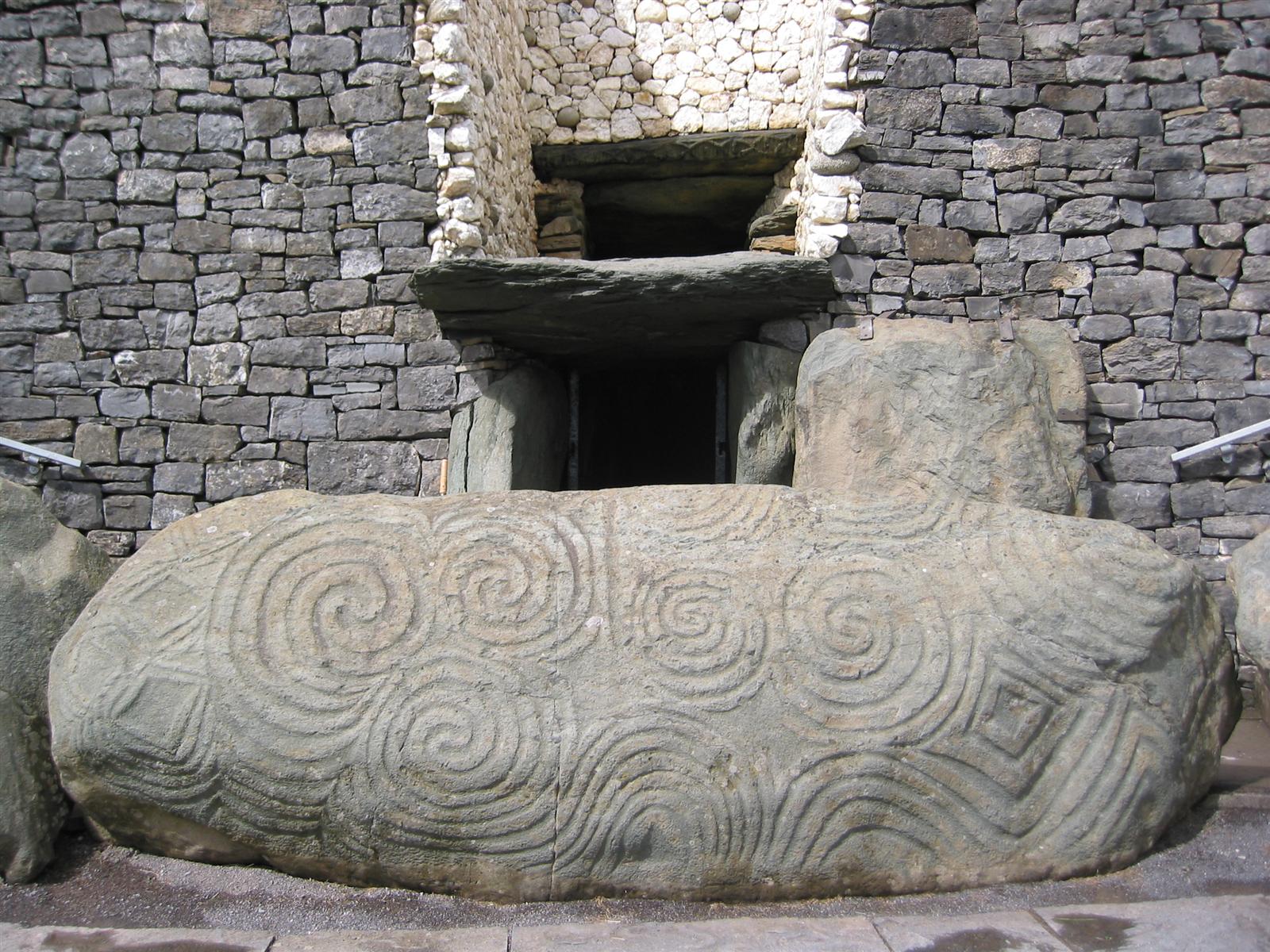
The entrance to the neolithic tomb of Newgrange in Ireland, which is older than Stonehenge and the Great Pyramid of Giza in Egypt.

The entrance to the neolithic tomb of Newgrange in Ireland, which is older than Stonehenge and the Great Pyramid of Giza in Egypt.

The triple spirals found in much Celtic art and at many Celtic monuments, such as the Newgrange tomb, are thought to represent fertility (the nine months of human pregnancy), the past-present-future, the realms of land-sea-sky, or the goddess Brigid  (celebrated at the beginning of spring).

Fetrility and the passage of time are deeply embedded in the celebration of the New Year, especially when the vernal equinox was observed as New Year’s Day. (January 1 became the New Year’s Day gradually. Regions of Denmark were the first to make the change in the 1100s and the British Empire was the last, in 1752.) We still number the months as if New Year’s Day fell during March: SEPTember is the seventh month, OCTober is eighth, NOVember is ninth, and DECember is the tenth. New Year’s also marked the beginning of “lent,” the Anglo-Saxon word for “Springtime.”

To promote fertility on the springtime New Year, the pomegranate can be put to many uses. It seeds can be eaten to increase fertility and its skin, dried, can be burned as an incense to attract wealth. A branch of pomegranate can also be used as a “dowsing rod” to locate buried or hidden treasures. Daffodil, one of the flowers most associated with March, can also be used to increase fertility. To attain immortality and overcome the passage of time, eat apples or carry charms made of apple wood. Linden leaves and sage can also be used to lengthen life or achieve immortality.

Annunciation


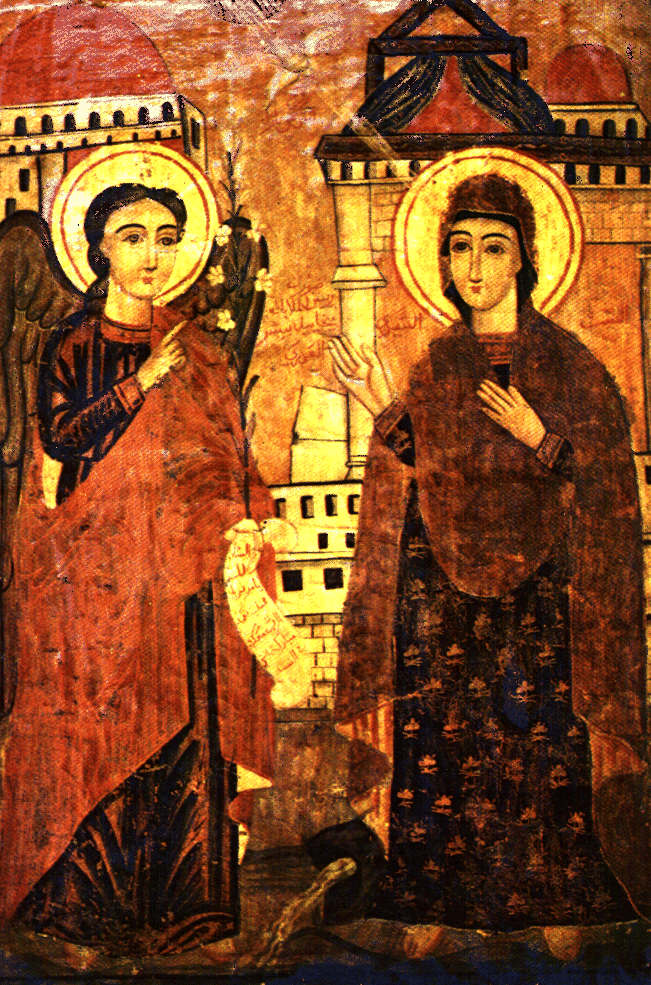
A Coptic icon of the Annunciation, showing the angel Gabriel presenting a lily as he announces the Incarnation to the Mother of God.

A Coptic icon of the Annunciation, showing the angel Gabriel presenting a lily as he announces the Incarnation to the Mother of God.

 Lilies are often associated with the celebration of Annunciation. When Eve was driven from Paradise, lilies bloomed wherever her tears fell onto the earth and Gabriel presented lilies to the Virgin Mary when he announced that her Son would re-open Paradise to mankind. Other legends say that lilies blossomed from drops of milk from Hera’s breasts that fell upon the earth and that the lily was therefore the only flower with a soul. Lilies are traditionally considered to drive away ghosts and evil (esp. the Evil Eye) and can break love spells. The first lily of the season strengthens whoever finds it. 

Roses are also associated with Annunciation and are used to cast love spells or in healing magic. If you plant roses in your garden, they are said to grow best if you have stolen the seeds from someone else and will then attract the faerie folk.

The Annunciation is celebrated on March 25 (the traditional date of the springtime equinox). Not only was Annunciation — and the equinox — vital to keeping track of time for secular purposes, many ancient and medieval authors claimed that the Annunciation/equinox date were vital at many points of salvation history: the birthday of Adam and the Crucifixion were said to have occurred on March 25 as well. Some also said that March 25 marked the fall of Lucifer, the parting of the Red Sea, as well as the day on which God said, “Let there be light!”

Sometimes called “Lady Day,” the Annunciation was kept as New Year’s Day in many places; the last to give up Annunciation as the New Year’s Day was England and its American colonies in 1752. The correct synchronization of the equinox with the Annunciation is a critical element in the calculation of the date of Easter and the medieval and Renaissance disconnect between the Annunciation and the equinox prompted Pope Gregory XIII to reform the calendar in 1582.

Aries the Ram

Aries, the ram, is the first sign of the zodiac in western astrology.

Aries, the ram, is the first sign of the zodiac in western astrology.

The sign Aries, the ram, is the first sign of the zodiac in traditional western astrology. The sun enters this constellation on or about the vernal equinox, which was the New Year Day of the Middle Ages. Today, those born between March 20 and April 19 are considered to be born in Aries. The sign is ruled by Mars (which means it is associated with confidence and self-assertion, aggression, sexuality, energy, strength, ambition and impulsiveness) and considered a “fire” sign (i.e. with positive, extrovert characteristics).

Certain acts of ritual magic were considered especially effective if performed during the days of Aries. Strength, authority, and leadership could be supported and increased — or decreased and made weak — with magic while the sun or the moon passed through this sign. Divination concerning attacks of various sorts or aggression would be performed during this period. Nations and places — not only people — were considered to be under the protection of specific signs of the zodiac and England, Germany, Poland, Palestine, Syria,  Lithuania belonged to Aries.

In general terms, an Aries personality is often enthusiastic, outward looking, brave and adventure-loving. The dark side of these traits, however, might also be present, to a greater or lesser extent: selfishness, quick to be angry, impatient or foolhardy.

A complete horoscope would include not only the birthsign and ruling planet but the position of the other planets in the various other constellations and signs of the zodiac. All these impact the final reading and the skilled interpretation of the chart is what most people consider “real” astrology.