

Pussy willow


Pussywillows, used in Central and Eastern Europe instead of palms on Palm Sunday, are considered sacred to goddesses of the moon, death, and royal power.

Pussywillows, used in Central and Eastern Europe instead of palms on Palm Sunday, are considered sacred to goddesses of the moon, death, and royal power.

Pussy willows are often used in Central and Eastern European churches on Palm Sunday instead of the nearly-impossible to obtain palms. They bloom in early spring and the branches are supple enough to use in the holiday decorations and festivities.

Pussy willows are also associated with the moon and water, often used when invoking Hecate, Artemis/Diana, Ceres, Persephone, Hera, or Mercury/Hermes for protection. All these are deities associated with the night and the dead, ex. Hermes leading the newly-departed to their abode in the Otherworld. Early British burial mounds, near marshes or lakes, are often lined with willow branches. It is said that if you plant a willow and it — or a cutting taken from it — is thriving when you die, you will be protected in your journey to the Otherworld and throughout the afterlife.

To conjure spirits, burn willow bark and sandalwood outdoors at night during the waning moon. “Knock on wood” (i.e willow trees or bark) to protect yourself from evil or attract good luck. Willow is also considered appropriate for a magical staff (the infamous “magic wand”) or to bind a broom to be used for magical purposes.
St. Mark’s Eve


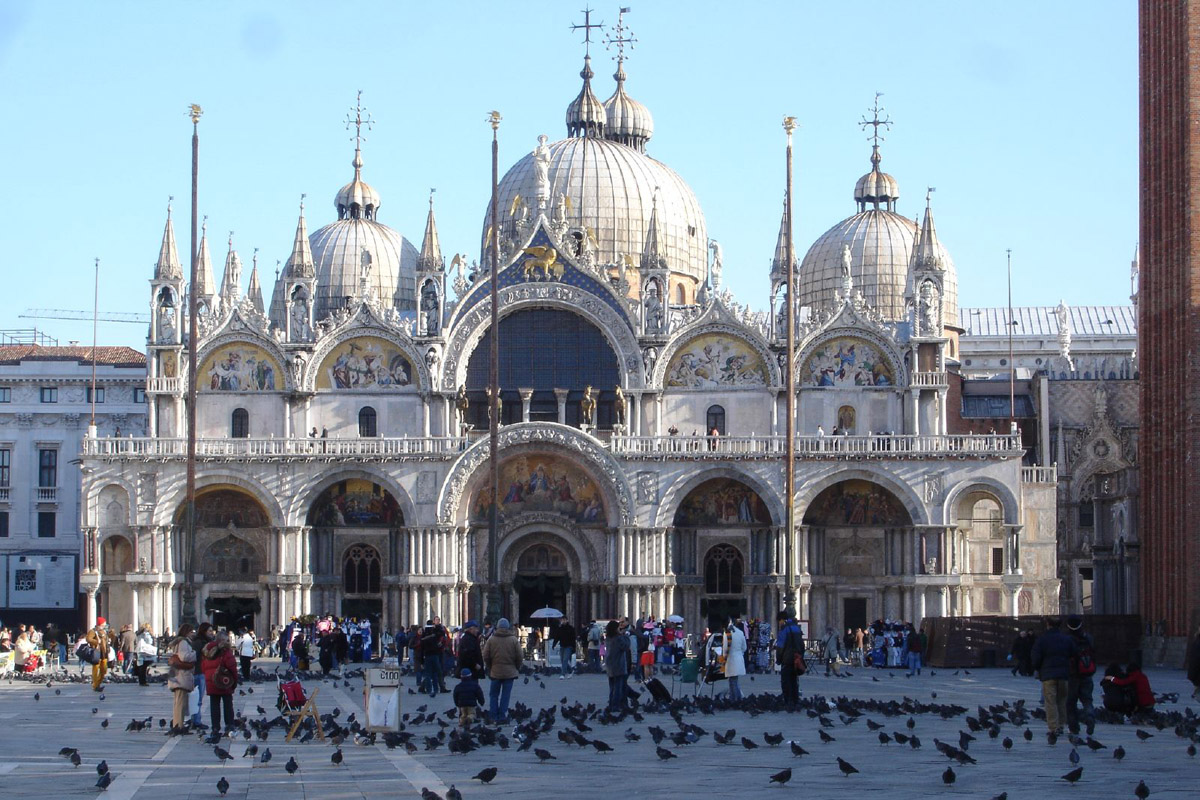
St. Mark's in Venice (begun in 832 and burned in a rebellion in 976, was rebuilt in 978 and completed in 1647) is full of treasures taken from Constantinople in 1204 by the Fourth Crusade.

St. Mark’s in Venice (begun in 832 and burned in a rebellion in 976, was rebuilt in 978 and completed in 1647) is full of treasures taken from Constantinople in 1204 by the Fourth Crusade.


St. Mark’s Eve is the day before the feast day of St. Mark the Evangelist. His feast is observed on April 25 of each year; thus St. Mark’s Eve is April 24.

On St. Mark’s Eve it was the custom in the villages of England, from the 17th century to the late 19th century, to sit in the church porch between the hours of 11.00 p.m. and 1.00 a.m. for three successive years. On the third such sitting, it was said that the ghosts of those to die during the coming year would be witnessed passing into the church. This practice took place throughout England, but was most prevalent in northern and western counties. Some accounts of the custom state that the watchers must be fasting, or must circle the church before taking up position. The ghosts of those who were to die soon would be the first observed, while those who would almost see out the year would not be witnessed until almost 1.00 a.m. Other variations of the superstition say that the watchers would see headless or rotting corpses, or coffins approaching.

Another, one might say opposite, tradition holds that a young woman can see the face of her future husband appear on her smock by holding it before the fire on St Mark’s Eve.

Taurus the Bull

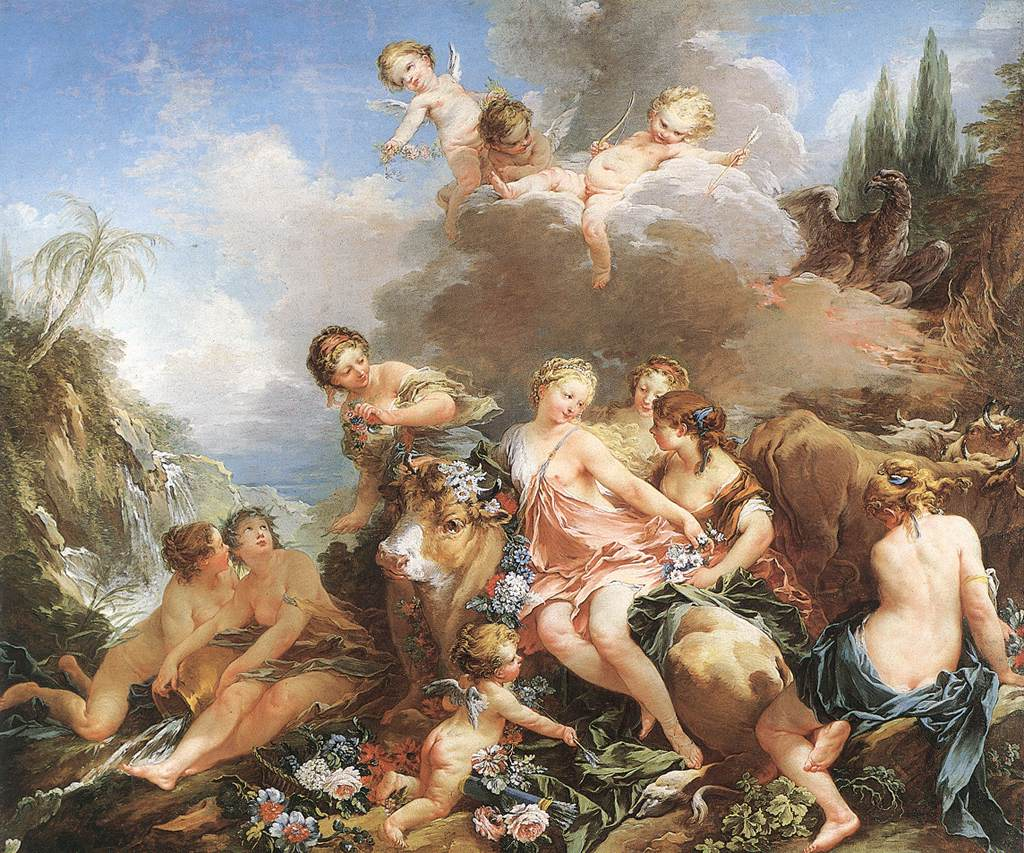
Francois Boucher's 1734 painting, "The Rape of Europa," shows Europa being abducted by Taurus the bull.

Francois Boucher’s 1734 painting, “The Rape of Europa,” shows Europa being abducted by Taurus the bull.

Taurus, the astrological sign governing those born April 21 to May 22, is a constellation depicting the bull featured in the Grrek myth of Europa’s rape. According to the tale, Zeus was enamored of Europa and decided to seduce or ravish her. He transformed himself into a tame white bull and mixed in with her father’s herds. While Europa and her helpers were gathering flowers, she saw the bull, caressed his flanks, and eventually got onto his back. Zeus took that opportunity and ran to the sea and swam, with her on his back, to the island of Crete. He then revealed his true identity, and Europa became the first queen of Crete. Zeus later re-created the shape of the white bull in the stars, which is now known as the constellation Taurus.

According to Herodotus’ rationalizing approach, Europa was a princess kidnapped by Minoans. His variant story may have been an attempt to rationalize the earlier myth; or the present myth may be a garbled version of facts—the abduction of a Phoenician aristocrat—later enunciated without gloss by Herodotus.

The etymology of her Greek name (εὐρυ—”wide” or “broad” + ωψ—”eye(s)” or “face”) suggests that Europa was a goddess represented by the cow (with a wide face), similar to the Egyptian Hathor, at least on some symbolic level.

A person born under the sign of Taurus is said to be highly sensual, steadfast, warm and affectionate.