St. Martin’s Day, 2019

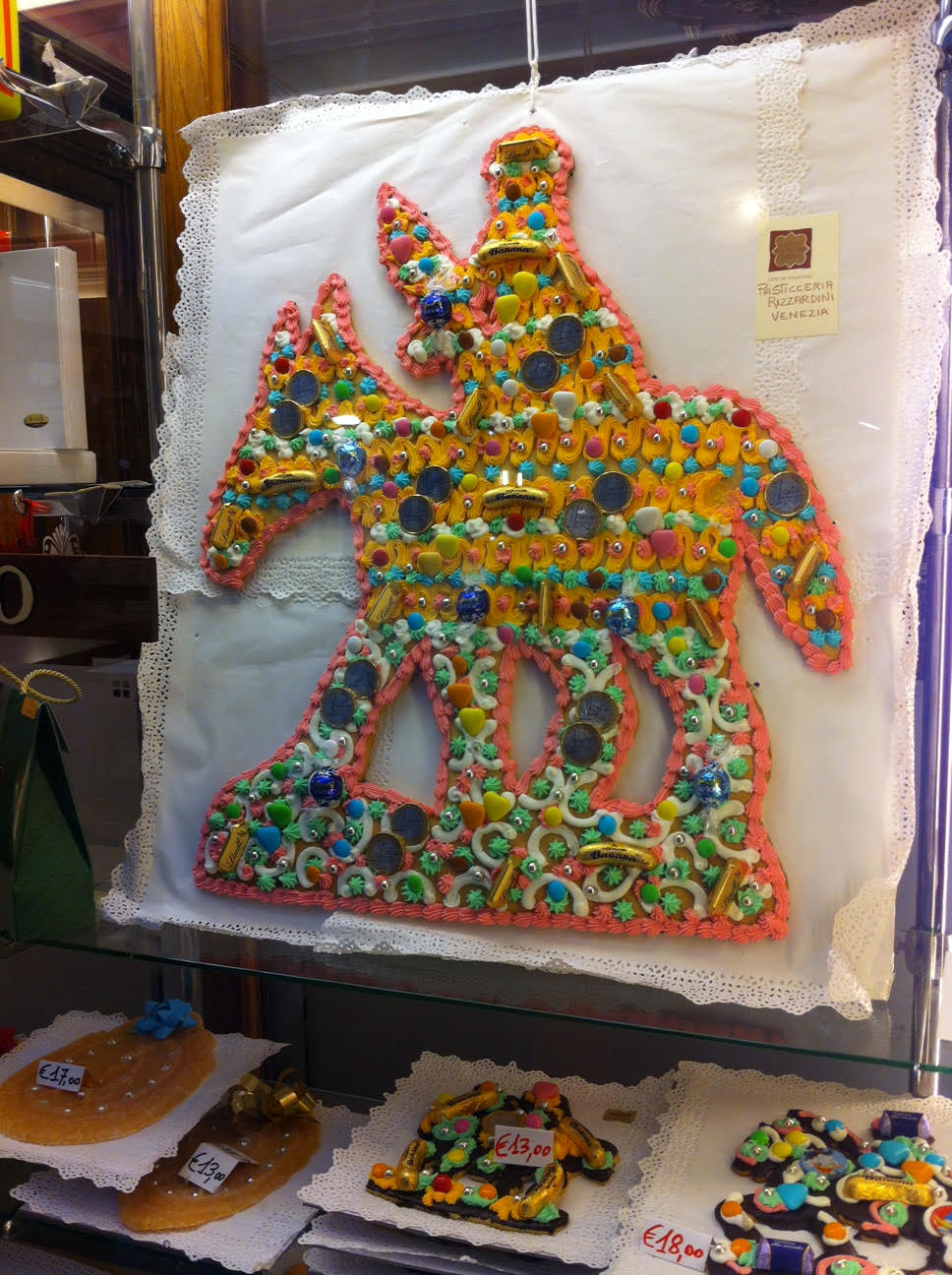
A cookie for St. Martin’s Day on display in a bakery window in Venice, Italy shows St. Martin on his horse ready to cut his cloak in half.

St. Martin of Tours was a Roman soldier in 4th century Gaul. He met a beggar one cold, snowy day who begged him for a rag or two to keep himself warm. St. Martin toook his sword and cut his cloak in half, giving a portion to the beggar. That night, he had a dream in which he saw Christ enthroned in glory, wearing the half of the cloak Martin had given to the beggar. “Where did you get such a cloak?” he heard the angels ask Christ. “My friend Martin gave it to me,” Christ replied.

When he awoke, Martin abondoned his duties as a soldier and became a monk. He attracted many disciples and became a famous monk. He insisted that his disciples always care for any poor person who came to the monastery gate because the monks would be serving Christ when they served the poor. He was made the bishop of Tours. Many hospices and hostels for the poor were dedicated in his honor. The ruins of one such hospice in Oxford–at the bottom of Carfax Tower–still has his image above what’s left of the front gate.

St. Martin’s feast day is November 11 and in many European countries that is the beginning of the “holiday season.” There was a 40-day fast before Christmas and St. Martin;s Day was the last important feast day before Christmas; families would often have a fancy goose dinner on St. Martin’s Day to mark the last occasion to have a big meat dinner before Christmas. (According to legend, Martin was reluctant to become bishop, which is why he hid in a stable filled with geese. The noise made by the geese betrayed his location to the people who were looking for him.) The goose dinner on St. Martin’s Day was a “rehearsal” for the goose dinner on Christmas Day, much as the turkey dinner on Thanksgiving in the United States is now often a “rehearsal” for the family dinner on Christmas Day.

In many European towns or villages a man dressed as St. Martin rides on a horse in front of a procession to celebrate St. Martin’s Day. The children sing songs about St. Martin and greet him as Americans greet Santa Claus at the end of the Thanksgiving Day parade in New York.

You can read my blog posts about St. Martin from years past here(2016), here(2013), and another from 2013 here.

Bake an All Souls’ Cake!

Cakes for All Souls’ Day

A soul cake, also known as a “soul-mass cake,” is a small round cake which was traditionally made for All Souls’ Day to commemorate the dead in the Christian tradition. The cakes, which can also be known as “souls” for short, were given out to “soulers” who were mainly children and the poor, going from door to door singing and saying prayers for the souls of the dead. The practice in England dates to the Middle Ages and was continued there until the 1930s.

The practice of giving and eating soul cakes continues in some countries today, such as Portugal (where it is known as Pão-por-Deus and occurs on both All Saints’ Day and All Souls’ Day). Many see souling for cakes as the origin of the practice of trick-or-treating.

In many areas of the eastern Mediterranean or Central and Eastern Europe, the family of the deceased is expected to feed those who pray for the departed. Throughout Eastern Europe, food is left near the candles to be lit by those who pray for the departed; the poor can come into church, lit a candle for the dead and say a prayer, and take whatever food they need. (In one church of Minsk, I saw a dining room table covered with bags of food in the side chapel for these prayers!) The “memorial meal” or reception after a funeral in honor of the deceased is a modern version of this exchange of food for prayers for the deceased.

Any leftover soul cakes are shared among the distributing family or given to the poor the next day.

INGREDIENTS
1 cup (two sticks) butter
3 3⁄4 cups sifted flour
1 cup sugar
1⁄4 teaspoon nutmeg
1 teaspoon cinnamon
1 teaspoon ginger
1 teaspoon allspice
2 eggs
2 teaspoons cider vinegar
4 -6 tablespoons milk
powdered sugar, to sprinkle on top

DIRECTIONS
Preheat oven to 350°F.
Cut the butter into the flour with a pastry blender or a large fork.
Blend in the sugar, nutmeg, ginger, cinnamon and allspice; beat eggs, vinegar, and milk together.
Mix with the flour mixture until a stiff dough is formed.
Knead thoroughly and roll out 1/4-inch thick.
Cut into 3-inch rounds and place on greased baking sheets. Prick several times with a fork and bake for 20-25 minutes.
Before Serving:
Sprinkle lightly with powdered sugar while still warm.

Want to print out the recipe? See the original post, with options for printing,here.

Agincourt, Oxford, and All Souls’ Day

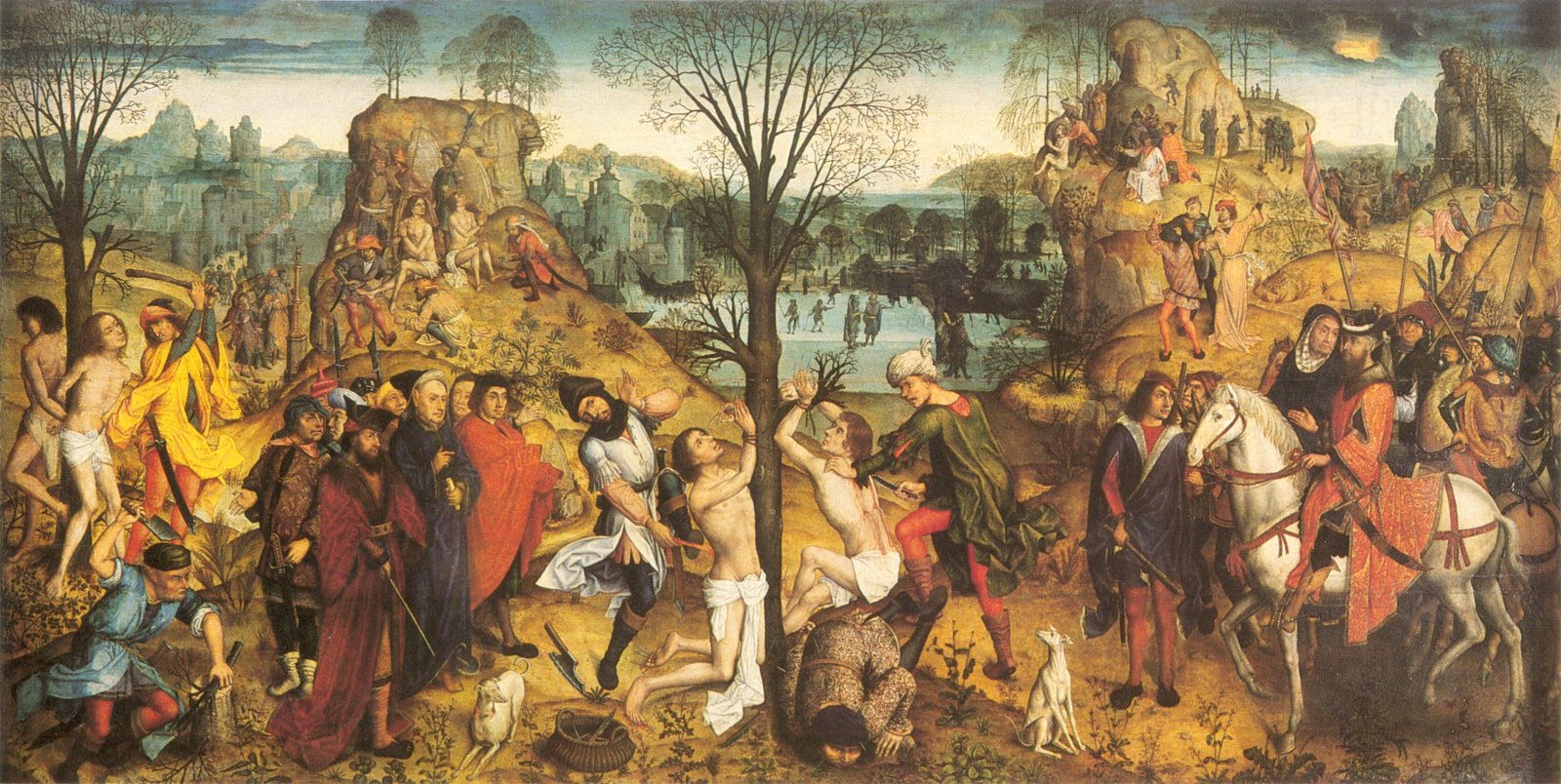
Martyrdom of SS. Crispin and Crispinian

The battle of Agincort, made famous in Shakespeare’s play Henry V, took place on October 25, 1415 the commemoration of St. Crispin. See clips of the famous “Band of brothers” speech with reference to St. Crispin’s Day here.

Born to a noble Roman family in the 3rd century AD, Crispin and his brother Crispinian fled persecution for their faith, ending up at Soissons, where they preached Christianity to the Gauls while working as shoemakers and cobblers at night. They earned enough by their trade to support themselves and also to aid the poor. Their success attracted the ire of the governor of Gaul, who had them tortured and thrown into the river with millstones around their necks. They survived but were beheaded by the Emperor c. 285–286.

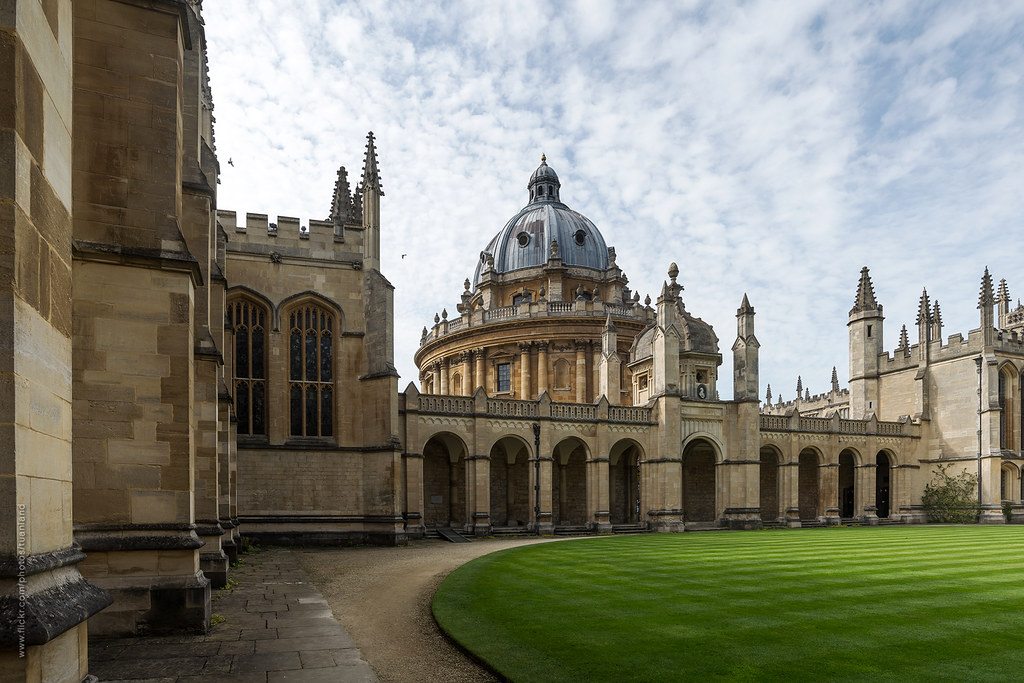
The college dedicated to All Souls in Oxford received its foundation charter in 1438 from King Henry VI. It is the only Oxford college to have only graduate students, no undergraduates. It was founded by Henry VI with the religious duty–in addition to academic research–to pray for those who had died at Agincort or in other battles during the Hundred Years War that England fought to control the crown of France. The number of the dead to be prayed for was overwhelming and the religious dedication was broadened to include all the departed, not just those slain in battle with the French. The college marks November 2, All Souls’ Day, as its name’s day; the commemoration of All Souls is 9 days after the commemoration of St. Crispin and his brother, thus including an allusion to the battle fought at Agincort which was the source the college’s original dedication..

All Souls has had many famous students, including Christopher Wren, William Blackstone, William Gladstone, and Lawrence of Arabia. British forces which fought at the Battle of Mons in August 1944 were said to have been protected by the ghosts of archers slain at Agincort.

All Souls College, Oxford with the dome of the Radcliffe Camera behind.