Lent: Paradise Lost/Regained

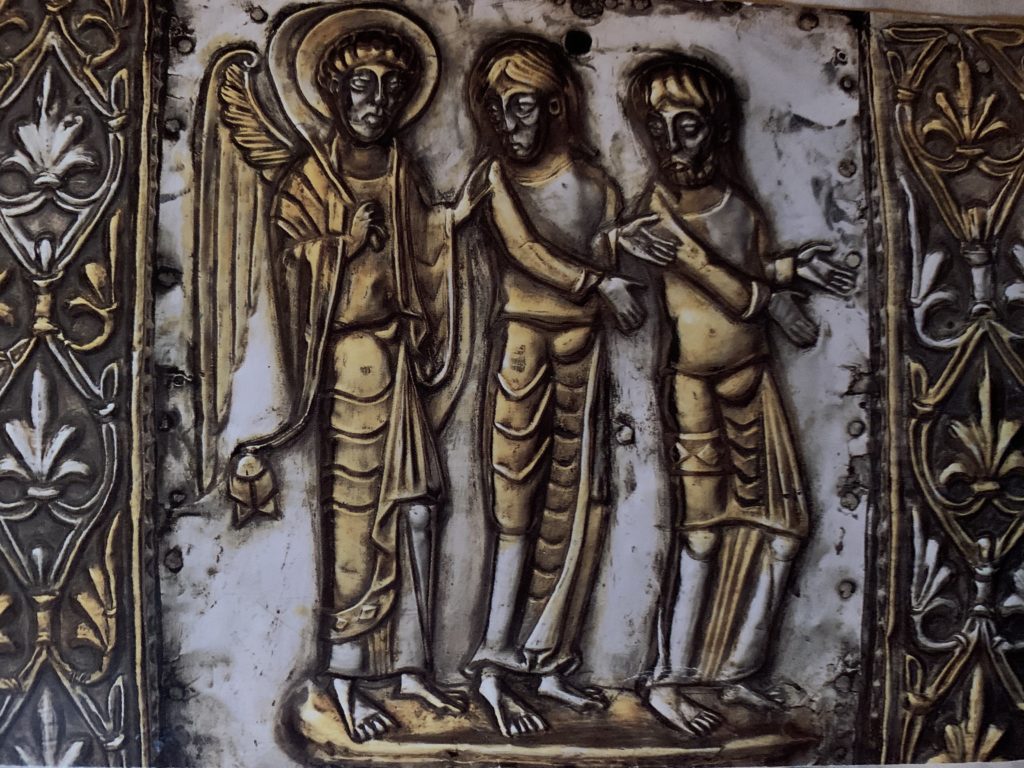
The Expulsion of Adam and Eve, a detail from the reliquary of St. Isidore in Leon from AD 1063 or earlier.

Lent. Both Eastern and Western Christians read the opening chapters of Genesis and commemorate the expulsion of our first parents from the Garden in the opening days of Lent. The eating of the forbidden fruit and the expulsion from the Garden is the great disruption, the disintegration of harmony between God and humanity, humans and the world, as well as between humans and other humans. We turn on each other, bickering and arguing and blaming each other and external circumstances as we try to escape the consequences of our actions and turn our backs on taking responsibility for our choices.

Lent is all about the restoration of that harmony between people, between people and the world, between people and God. We stop killing to maintain our own existence by eating the fruits and vegetables that Adam and Eve were allowed to eat in Eden; we stop eating meat or other animal products to restore the harmony we enjoyed with them in Eden. In several liturgical hymns, Adam is said to have sat weeping outside the gates of Paradise to the trees inside the Garden, “Pray for me by the music of the rustling of your leaves!” This cry underscores the interdependence of humans and the rest of creation and that creation is a living, dynamic entity itself that suffers because of the sin of humanity.

Lent is also about the restoration of harmony between people. We forgive each other. We exchange the Kiss of Peace. We put all our differences and disagreements in perspective by remembering our common mortality. We embrace one another and call even those who hate us our brothers and sisters, forgiving everything in our anticipation of the resurrection (as another liturgical hymn proclaims).

By re-establishing harmony between people, this mutual forgiveness re-establishes harmony between God and humanity as well. We cannot hope to be forgiven if we do not forgive. By owning up to what we have done and who we are and by refusing to be angry and jealous with others–which leads to the death of relationships as well as the physical death of others, including the animals and physical world around us–we begin to experience now the joy we are promised will be ours in the Resurrection.
Lent is Coming!

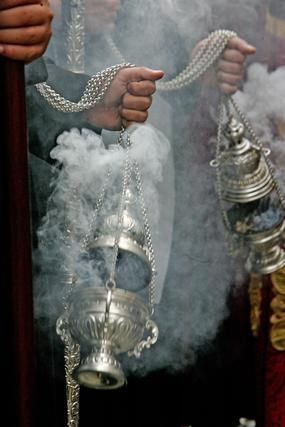
Incense smoke is said to be both a purification-exorcism and an act of veneration: it is a “silent absolution” that washes away sin and drives devils away–they cannot remain where incense burns because it reminds them of the fragrant air in Paradise, which they have lost access to–while honoring the image of God within each person.

Whether someone keeps Lent on the Western Christian or Eastern Christian calendar, Lent is like death: it is better for us to prepare for it but it is coming, whether we are ready for it or not. And like death, it is best to prepare for it by forgiving old grudges and re-establishing relationships neglected or forgotten. Lent is meant to be a re-establishment of the harmony of Paradise, in which people lived in harmony with each other as well as with all creation.

The traditional fasting practices of Lent are best summed up with the axiom: “Don’t kill.” We give up eating anything that has to be killed so that we do not preserve our lives through violence. We pray and give alms to repair our relationships with God and each other and with the poor and needy around us. We spend these weeks, a tithe of the year, living in harmony–or at least trying to live in harmony–with everything and everyone. Of course, we should try to live this way all year long. But we don’t. So we dedicate this tithe of the year to attempting to at least live this way for a brief few weeks. (The traditional fasting days each week during the rest of the year are weekly booster-shots for us to restore this harmony every week.)

Fasting is important but the point is not to embrace misery or difficulty. The prophets criticize and reproach those who fast with the wrong intentions or for the wrong reasons but they never say that we should not fast; they tell us to fast but with the right attitude.

I would like to borrow a few words about fasting from Nicholas Denysenko:

“… Ultimately, Lent is a chance to set aside distractions – whatever they are – and awaken to God, humankind, and the cosmos – and to love them….

“Three helpful guidelines for food during Lent.
1. Less is more. Stop eating when you’re full.
2. Keep it simple and inexpensive. An extravagant vegan dinner is not more “Lenten” than baked chicken.
3. Don’t boast, discuss, or inquire about others’ eating habits.

“Three final words about Lent – and they’re not “bright sadness” – they come from and are directed to God Almighty –
1. Gratitude
2. Joy
3. Liberty”

Top Blog Posts of 2019

Who doesn’t enjoy looking back over the highlights of the past year? These were my most popular blog posts during 2019. Click and revisit any of them or leave a comment to share which one–or any other post that didn’t make the “Most Popular” list–was your personal favorite.

Corpus Christi: Wafer vs. Bread … read it here

St. Panteleimon and His Liquid Blood … read it here

Bake an All Soul’s Cake … read it here

St. Agnes in Prague … read it here

Passiontide … read it here

Melchizedek, King of Salem … read it here

Conception of the Mother of God … read it here

Holy Week: The Death of Death … read it here

Resurrecting Easter … read it here

Dog Days, Part 2—with St. Roch … read it here

Which post was your favorite? What subject would you enjoy reading about in the upcoming year? Leave a comment below!