“Remember me, O Lord, in your kingdom!”

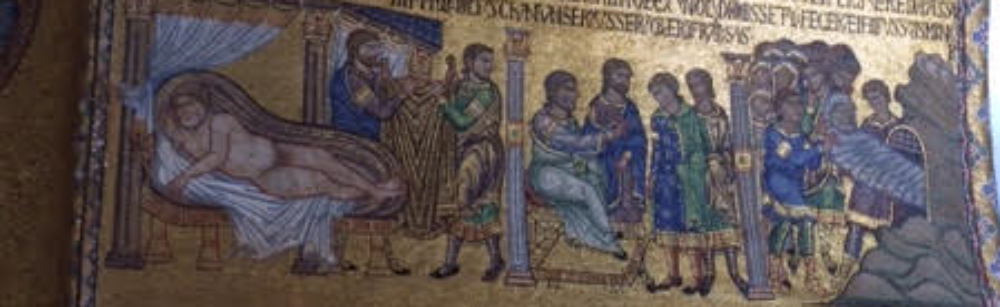
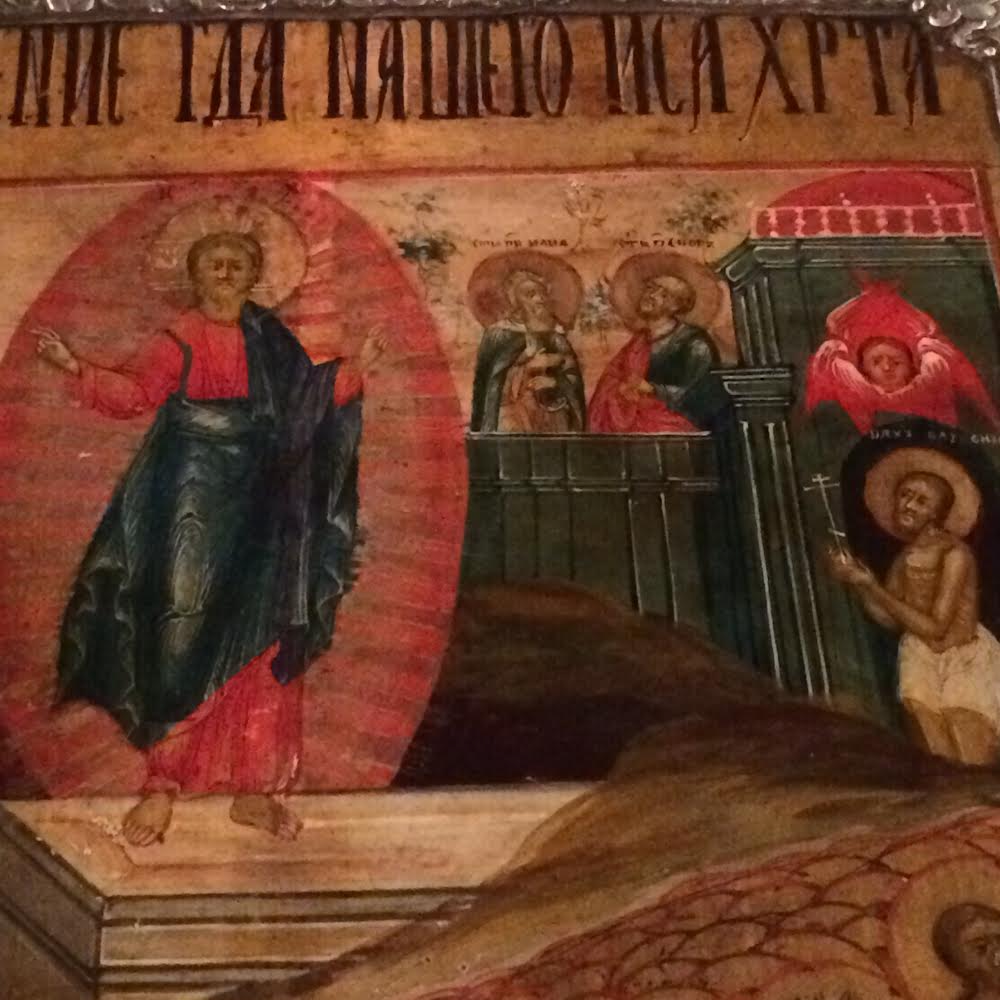
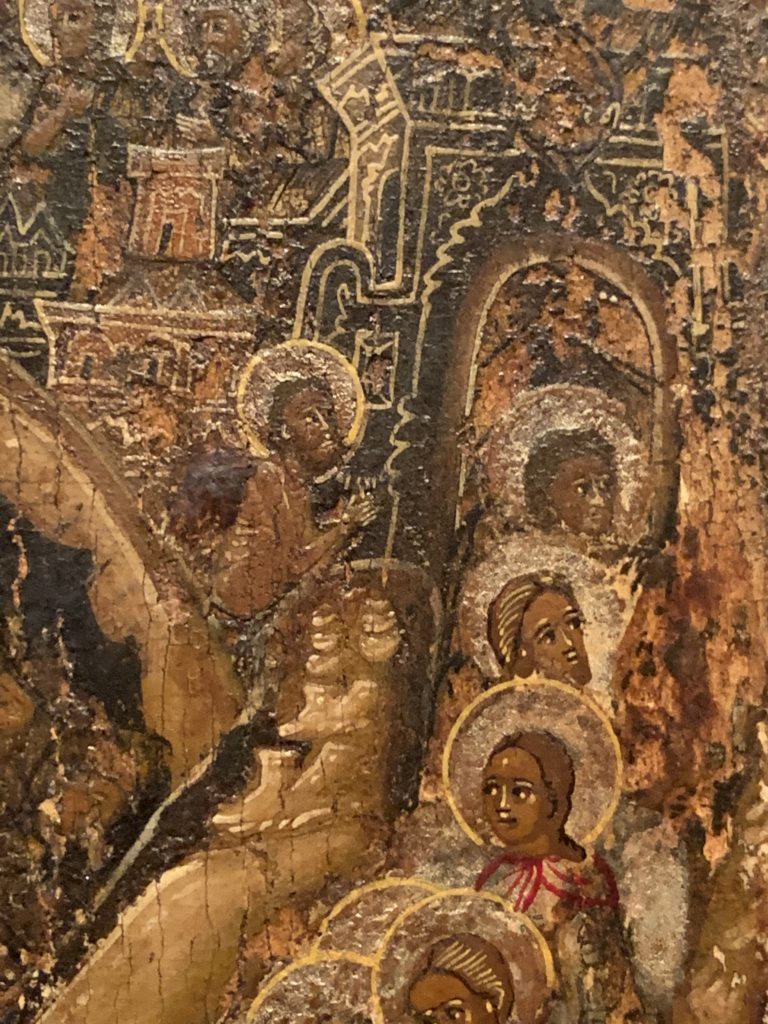
These two Russian icons from the 18th-19th centuries depict Dismas, the “Good” Thief, as he stands about to be the first to enter the newly-opened gates of Paradise. In the top image, he is carrying the cross on which Jesus was crucified which is his “passport” that proves to the angels guarding the gates that they should allow him to enter. (We also see the prophets Enoch and Elijah inside the walls of Paradise, as they are the two Old Testament figures who never died.)

In the gospel of St. Luke, one of the thieves crucified with Christ rebukes the other thief for mocking Christ: “We deserve the punishment we have received. He has done nothing to deserve this!” This penitent thief then begs Jesus, “Lord, remember me when you come in your kingdom!” Jesus responds by promising this “good” thief that they will be together in Paradise that very day. (This episode was understood by many early Christian preachers to reverse Adam’s expulsion from Paradise, which was also understood to have happened on a Friday afternoon after Adam had become a thief by stealing the fruit from the Tree of Knowledge. The good thief was also praised because he admitted his fault, unlike Adam, and took responsibility for his actions.)

The penitent thief was later assigned the name Dismas in the 4th century Gospel of Nicodemus; his name “Dismas” was adapted from a Greek word meaning “sunset” or “death.” The other thief’s name is Gestas. Dismas dies shortly after Christ himself. Christ is about to descend into Hell to liberate the captives there but first sends Dismas ahead of him to Paradise. (Dismas is called a pioneer in some sermons because he was the first to enter Paradise.)

Early Christian preachers and teachers saw Dismas as one of them, a Christian, who demonstrated Christian practices, beliefs, and virtues. Dismas was a repentant sinner. Indeed, the early preachers understood Christ’s promise –“Today you will be with me in Paradise!”–as a promise made to all repentant sinners, not just Dismas. Because this promise is made to all Christians, the plea of Dismas–“Remember me, O Lord, in your kingdom!”–became a common prayer among Christians. This cry became especially popular as a prayer before receiving Holy Communion, the celebration of the Kingdom of God already present among us.

Dismas is also seen as convert and martyr–an important role model in the time when most Christians were adult converts or faced the possibility or martyrdom for their faith. Dismas on his cross, like St. Paul on the road to Damascus, had a sudden flash of insight and understood who Christ was. Dismas, unlike St. Peter, confessed his faith in Christ when it would have been much easier to stay silent. Although he was executed for his crimes rather than his faith, Dismas was understood to be a martyr because he was a witness (martyr in Greek) for the truth of Christ’s identity who showed other Christians how to suffer under torture and die for the Truth.

Eastern Christians still use the cry of Dismas–“Remember me, O Lord, when you come in your kingdom!”–not only before Holy Communion but as a refrain when singing the Beatitudes at weekday services. Every encounter with God, whether in personal or liturgical prayer or when serving the poor/hungry/sick/needy, is a chance to experience the Kingdom of God here and now. Dismas shows us all how to recognize God in unlikely or unexpected places and to jump at the opportunity to repent, to turn our lives around, in order to be with Him.

Interested in reading more about Dismas? I heartily recommend As the Bandit Will I Confess You: Luke 23:39-43 in Eary Christian Interpretation by Mark Glen Bilby.
Our Lady of Good Health

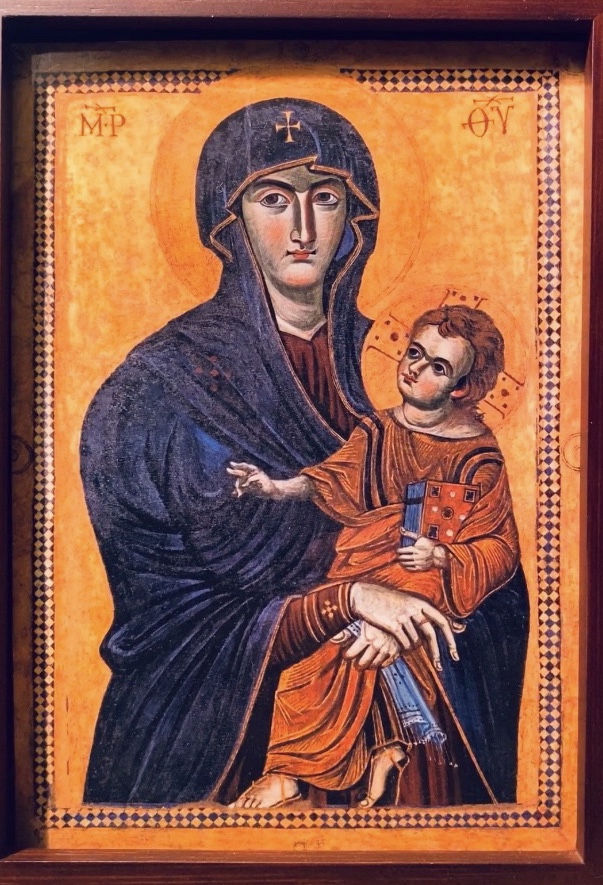
The icon of Salus Populi Romani is found in the Lady Chapel of the basilica known as St. Mary Major in Rome and has long been considered a wonderworking image, especially in times of plague or epidemics.

Pope Gregory the Great welcomed the image now known as Salus Populi Romani (“Salvation/Health of the Roman People”) in AD 593 and placed it in the basilica known as St. Mary Major. He had the icon carried throughout Rome and prayed for an end to the Black Plague. Pope Gregory XVI also venerated the image in 1837 to pray for the end of a cholera epidemic.

The Mother of God is shown with a ceremonial embroidered handkercheif in her right hand, an indication that she is the Queen of Heaven (another popular title for the image). For several centuries, both she and Christ also wore metal crowns which were attached to the icon but which have been removed and are now kept in the sacristy of St. Peter’s Basilica in the Vatican. The stars on the cloak of the Mother of God also indicate that she was a vrigin before-during-after the birth of her Son (the stars said to be the last glimmers of heavenly light that filled the cave in Bethlehem when Christ was born, seen in the folds of her cloak by the midwives when they finally arrived–too late).

The image of Salus Populi Romani is related to the church in Venice, Our Lady of Good Health, which was built in thanksgiving for the end of a plague there. You can read more about the church in Venice here.

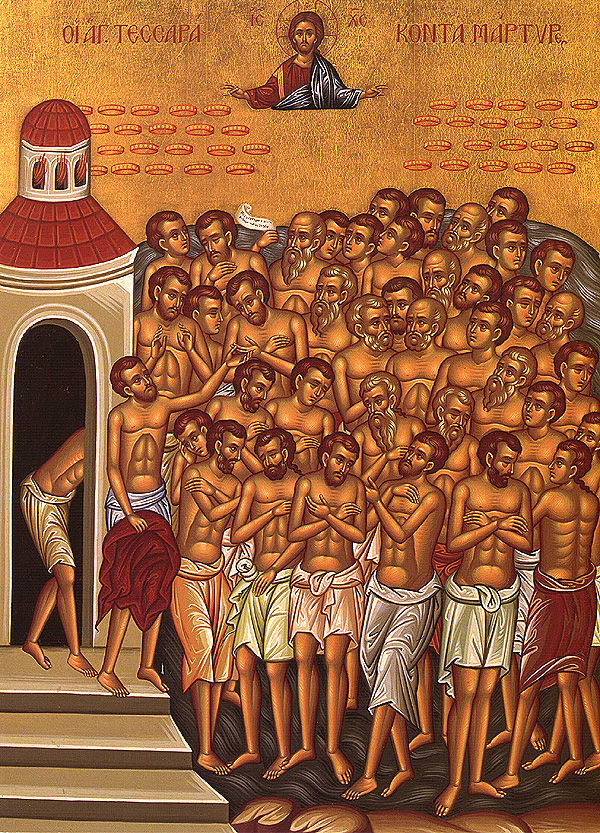
40 Martyrs of Sebaste

The feast of the Forty Martyrs falls on March 9. There is an intentional play on the number forty being both the number of martyrs and the days in the fast. Because the celebration of the 40 Martyrs falls during Great Lent, the endurance of the martyrs serves as an example to the faithful to persevere to the end (i.e. throughout the forty days of the fast) in order to attain heavenly reward (participation in the Resurrection).

The Forty Martyrs of Sebaste were a group of Roman soldiers in the Legio XII Fulminata (“Armed with Lightning”) whose martyrdom in AD 320 for the Christian faith is recounted in traditional collections of records of the martyrs.

They were killed near the city of Sebaste, in a region known as Lesser Armenia (the present-day Sivas region of Turkey), victims of the persecutions of Licinius, who after AD 316, persecuted the Christians of the Eastern half of the Roman Empire. The earliest account of their martyrdom is given by St. Basil the Great (AD 370–379) in a homily he delivered on their feast day (March 9). The celebration of the Forty Martyrs is thus older than Basil himself, who preached about them only fifty or sixty years after their deaths.

According to St. Basil, forty soldiers who had openly admitted that they were all Christians were condemned by the prefect and sentenced to be exposed naked upon a frozen lake near Sebaste on a bitterly cold night so that they would freeze to death unless they renounced their Christian faith; if they renounced their faith, they would be welcome to warm themselves in the hot baths on the lakeshore. One of the soldiers yielded and, leaving his companions, sought the warm baths near the lake which but one of the guards who was set to keep watch over the martyrs saw a brilliant light surrounding the naked soldiers on the lake and he stripped off his clothes and announced that he was now a Christian. He joined the remaining thirty-nine and so the number of forty remained complete. (The soldier who denied his faith was killed, however, by the shock of the warm water after being so cold out on the ice. The icon above shows the apostate soldier entering the bathhouse while the newly-converted guard strips off his clothes to join the other 39 soldiers out on the ice.)

At daybreak, the stiffened bodies of the confessors, which still showed signs of life, were burned and the ashes cast into a river. Christians, however, collected the precious remains, and the relics were distributed throughout many cities; in this way, veneration of the Forty Martyrs became widespread, and numerous churches were erected in their honor.

There is a pious custom of baking “skylarks” (pastries shaped like skylarks) on this day, because people believed that birds sing at this time to announce the arrival of spring