
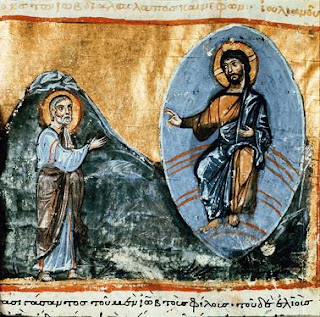
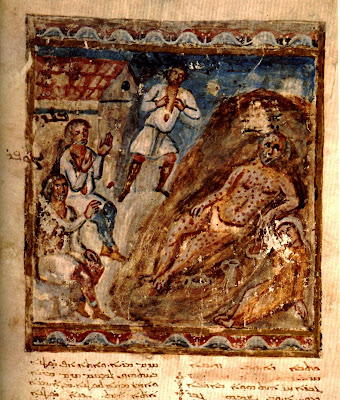
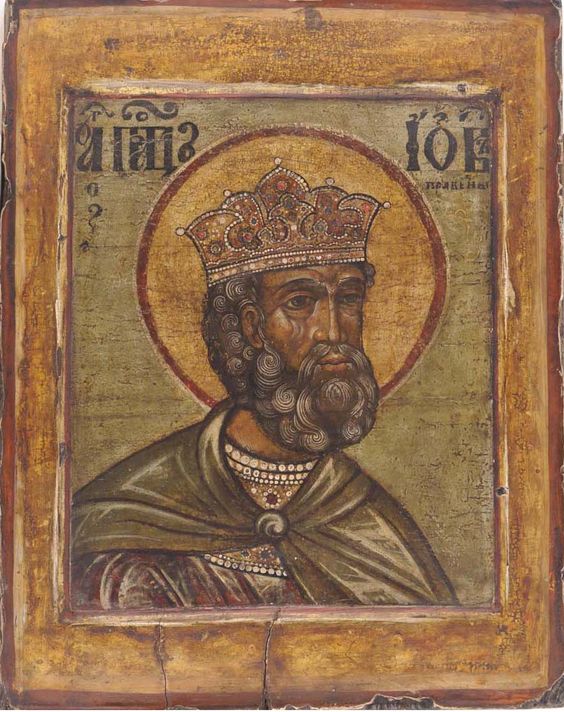
Apostle James & Prophet Job

Brothers and sisters, as an example of patience in the face of suffering, take the prophets who spoke in the name of the Lord. You know, we count as blessed those who have persevered. You have heard of Job’s perseverance and have seen what the Lord finally brought about. The Lord is full of compassion and mercy. (James 5:10-11)

The figure of Job in the Old Testament has commonly been considered a prophet for most of Christian history because of his stalwart preaching to his friends during the afflictions he suffered and because he was thought to be a type–a prefiguration–of Christ because of his patient, innocent endurance. In the version of the Old Testament that James and his audience knew, the conclusion of the book of Job reads:

“And it is written that he will rise again with those whom the Lord raises up.

  “This man is described in the Syriac book as dwelling in the land of Ausis, on the borders of Idumea and Arabia; and his name before was Jobab; and having taken an Arabian wife, he begat a son whose name was Ennon. He himself was the son of his father Zara, a son of the sons of Esau, and of his mother Bosorrha, so that he was the fifth from Abraham. And these were the kings who reigned in Edom, which country he also ruled over. First Balak the son of Beor, and the name of his city was Dennaba. After Balak, Jobab, who is called Job….”

(Job 42, LXX)

Job not only endured his unjust suffering patiently, he was expected to be among the just who would be raised on the Last Day. His suffering and promised resurrection were both seen by early Christians as pointing to the innocent suffering and promised resurrection of Christ as well as the innocent suffering of the early Christian community and the resurrection they expected to share as well at the Last Day. (It is this version of the conclusion of the Book of Job that is read on Good Friday afternoon by Eastern Christians each year.)

Patiently enduring undeserved suffering and affliction is one of the major themes of the epistle of James. Various sins–pride, hypocrisy, favoritism, slander–only bring more suffering to the community. James urges his readers to live with humility and godly–not secular–wisdom. Prayer is an essential part of this, James tells his readers.

Patience and humility are the direct result of the prayerful expectation of the coming Resurrection. Knowing they will be raised, James’ readers are able to see their experiences from a different perspective and in another light than those who think their deaths will mean the end of their existence. Expecting the resurrection, James’ readers no longer need to fear death and because they do not fear death, they can endure suffering with patient prayerful endurance. They can be like the prophet Job, sharing in Christ’s patient suffering and victorious resurrection.
Unpaid Wages Cry to Heaven

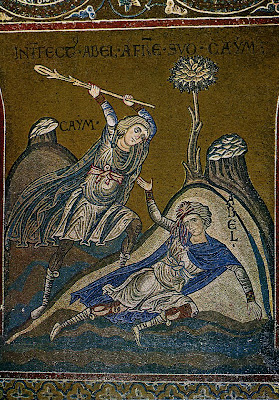
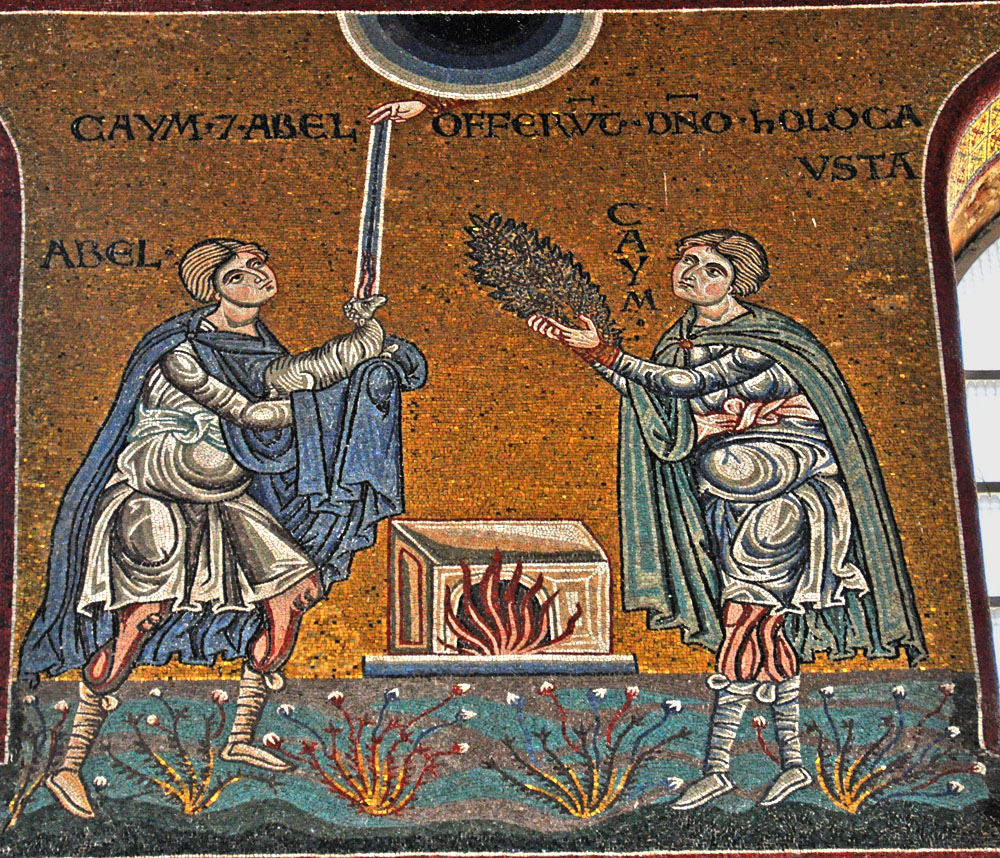
Cain kills Abel in the 12th-13th century Byzantine style mosaics of the cathedral in Monreale (Sicily).

Come now, you rich, weep and wail over your impending miseries. Your wealth has rotted away, your clothes have become moth-eaten, your gold and silver have corroded, and that corrosion will be a testimony against you; it will devour your flesh like fire. Behold, the wages you withheld from the workers who harvested your fields are crying aloud and the cries of the harvesters have reached the ears of the Lord of hosts. (James 5:1-4)

Do these words sound familiar? So much early Christian preaching, so many of the Church Fathers, say the same thing in a variety of ways: the money and possessions of the rich have been stolen from the poor and should be returned to their rightful owners. The unpaid wages owed the workers cries to heaven as the blood of Abel cried out to God, demanding justice against his brother-killer Cain. By not paying their workers, the rich do as great an injustice to them as Cain perpetrated against his brother. Economic injustice is as great a crime as murder.

The stolen wealth of the rich will rot away and testify against them on Judgement Day, the epistle tells us. The fine clothes the rich wrap around themselves are already rotten shrouds falling away from the walking corpses of the rich.

Christian care for the poor was fundamental to the life of a Christian community. Julian the Apostate, the emperor who tried to revive pagan worship after the legalization of Christianity, famously complained, “… the impious Galileans [Christians] support not only their own poor but ours as well; all men see that our people [pagans] lack aid from us.” Christians cared for everyone, whatever their beliefs. Anyone in need was one of the least of Christ’s brethren and deserved the care of Christ’s Body, the Church.

Too many modern people do not realize how rich they are compared to the rest of the world. Too many modern people do not appreciate what they have stolen from the poor who are both next door and on the other side of the earth. I’m afraid that many people would repeat Julian’s complaint that the Christians put everyone else to shame in terms of caring for the poor. On Judgement Day, that will probably be the greatest indictment against contemporary Christians.

Read more about the blood of Abel crying out to heaven here. Read Takanori Inoue’s work on The Early Church’s Approach to the Poor in Society and Its Significance to the Church’s Social Engagement Today online here.

Fighting the War Within Myself

The Sacrifices of Cain and Abel depicted in 12th-13th century mosaic
(Cathedral of the Assumption, Monreale, Sicily). The text portrayed is Genesis 4:3-5. The flame before the altar represents the idea of sacrifice, but God’s acceptance of Abel’s specific sacrifice is signified by the tongue of fire that has descended onto the lamb from God’s hand. For Cain, there is no hand, no divine fire. Jealous of his brother, Cain lures him into the wilderness and murders him.


Where do the wars and where do the conflicts among you come from? Is it not from your passions that make war within your members? You covet but you do not possess. You kill and envy but you cannot obtain; you fight and wage war. (James 4:1-2)

War. Conflict. The collapse of the natural order began with the Fall, when our first parents deliberately chose to do something they knew was wrong and their expulsion from the Garden into “this world,” this fallen state where everything is falling apart—brother kills brother from the beginning. Cain murders Abel (see a 12th century mosaic here) and many early theologians identified that as the definitive human sin rather than Eve eating the fruit of the Tree of Knowledge. Conflict and death have defined human existence since the Fall, however we choose to understand what that “fall” was. (Listen here to what St. Cyprian of Carthage thought about Cain killing Abel.)

The human race was created with a will which was naturally inclined toward God. We naturally want to be with God and want to live in harmony with God’s desires, God’s choices. This natural will is inherent in each of us. Some people call this natural will our conscience. But since the fall, our wills have unraveled and disintegrated. Now, in addition to our conscience, we each also have a personal will—the fancy jargon is “gnomic will”—that is in conflict with our conscience, in conflict with that natural will which is naturally inclined toward God. Our personal will is always in conflict with God, debating, struggling, taking time to think and argue with ourselves before choosing whether to follow our natural inclination, our conscience, or not.

To be truly and authentically human, we must bring our personal will into harmony with our natural will. To act based on our conscience. Our personality—each and every one of us—has to be knit back together again. That restoration of harmony between our conscience and our personal will, that knitting back together, can be aided and abetted—fostered—in a way most people never think of.

We can heed the warnings, the guidance and suggestions of our guardian angels. All too often we want to think angels are make-believe or fat babies with wings, roly-poly kids with curls and diapers and harps—new age-y figures in books about “angel healing,” more likely to appear as porcelain figurines on a shelf or on a Christmas card than in real life. But we each have a guardian angel, yoked to us as Michael is yoked to Israel in the book of Daniel in the Old Testament. We each have an angel who is assigned to look after us, to prod us to make the right choices—to whisper in our ears what we ought to choose.

We can heed our angels at all times, whether we are facing particular tribulations or not. We can add a line to our daily routine: “Guardian angel, help me to hear your voice, help me to pay attention to your guidance. Help me to make choices that align with my conscience, with the choices and desires of God.”