St. John The Baptist @ Slavic Midsummer

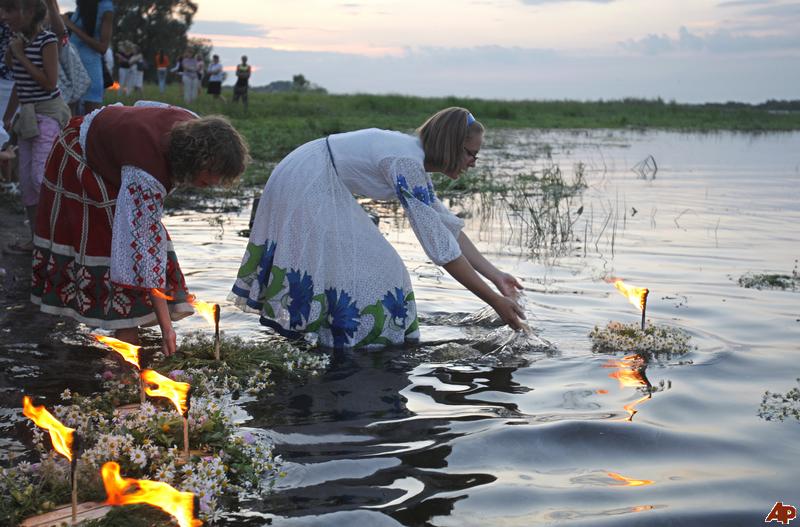
Girls in Belarus set wreaths and candles afloat as part of Kupala Night celebrations.

Girls in Belarus set wreaths and candles afloat as part of Kupala Night celebrations.

Ivan Kupala was the old Russian name for John the Baptist, whose Christian feast coincides with the ancient celebration of Midsummer. Up to the present day, the Russian Midsummer Night (or Ivan’s Day) is known as one of the most expressive Russian folk and pagan holidays.

Many rites of this holiday are connected with water, fertility and purification. The girls, for example, would float their flower garlands and candles on the water of rivers and tell their fortunes from their movement. Boys and girls alike would jump over the flames of bonfires. Nude bathing is likewise practiced.  A prominent Ivan Kupala night scene involving nude swimming is featured in Andrei Tarkovsky’s film Andrei Rublev.

There is an ancient Kupala belief, that the eve of Ivan Kupala is the only time of the year when ferns bloom. Prosperity, luck, discernment and power would befall on whoever finds a fern flower. Therefore, on that night village folks would roam through the forests in search of magical herbs and especially the elusive fern flower. In Gogol’s story The Eve of Ivan Kupala, a young man finds the fabulous fern-flower but is cursed by it. Gogol’s tale may have been the stimulus for Modest Mussorgsky to compose his tone poem Night on Bald Mountain.

Traditionally, unmarried women, signified by their garlands on their hair, would be the first to enter the forests. They are followed by young men. Therefore, consequent to the quest in finding herbs and the fern flower may be the blooming of relationships between pairs of men and women within the forest.

In Serbia, Saint John (Sveti Jovan or also called Superman) is known by the name Igritelj (dancer) because it is thought the sun is dancing on this day. Girls will watch the sunrise through a wreath, to become as  red (i.e. beautiful, as “red” and “beautiful” share the same root in Slavic languages) as the sun. At dusk, Ivanjske vatre (St. John Fires) are lit, and dancing and singing and drinking take place.

St. John’s Wort

St. John's Wort  can be used to detect another person's use of magic; in times past, it was held to the lips of accused witches to force them into confessing.

St. John’s Wort can be used to detect another person’s use of magic; in times past, it was held to the lips of accused witches to force them into confessing.

St. John’s Wort (“wort” is Middle English for “plant,” from the Old English wyrt) is one of the most powerful and commonly used of the magical herbs. Considered a “masculine” herb and associated with the sun and fire, it is used to conjure health and protection as well as strength, love, and happiness. It is also used for divination.

With the advent of Christianity, it was associated with St. John the Baptist, and was said to start blooming on his birthday, June 24 (i.e. Midsummer). On the day of his beheading (August 29), the plant was believed to bleed red oil from its leaf glands. It is to this day believed to be at it’s most potent when harvested at Midsummer, likely due to the timing of the birthday celebration of St. John the Baptist. The genus name Hypericaceae means “above an icon” in Greek, and sprigs of the plant were used on images and statuary by the ancients to drive off evil spirits.

In modern magic, St. John’s Wort is believed to be of benefit when carried on the person for courage, protection, detecting other magicians, and strengthening the will when confronted with bad situations. The leaves made into a necklace are believed to ward off sickness and tension, and to enhance endurance and will when doing battle.

For protection from lightning, fires, strong storms, and evil spirits place sprigs of St. John’s Wort in a jar and place the jar on a windowsill. Similarly, hanging bunches of the plant over every window of the house is said to protect from evil spirits and evil or demonic witchcraft. Burning St. John’s Wort as incense or in the fireplace thought to protect the home and repel unfriendly spirits, and burning is common in exorcism rituals.

Placing St. John’s Wort under the pillow of a single woman at night is said to induce dreams of her future husband.

One old Welsh custom for Midsummer was to hang a sprig of St. John’s Wort on a rafter for each family member for the night. The degree of wilting of each sprig the next morning was said to foretell how soon each individual would die, thus giving clues on the state of the health of the individual.

IF YOU LIKED THIS POST ABOUT THE FOLKLORE & OCCULT QUALITIES ASSOCIATED WITH ST-JOHN’S-WORT, CLICK HERE TO SEE MY FANTASY NOVELS IN WHICH ALL THE MAGIC AND SUPERNATURAL EVENTS ARE BASED ON AUTHENTIC MEDIEVAL-RENAISSANCE OCCULT BELIEFS AND PRACTICES.

Pearl, the birthstone of June

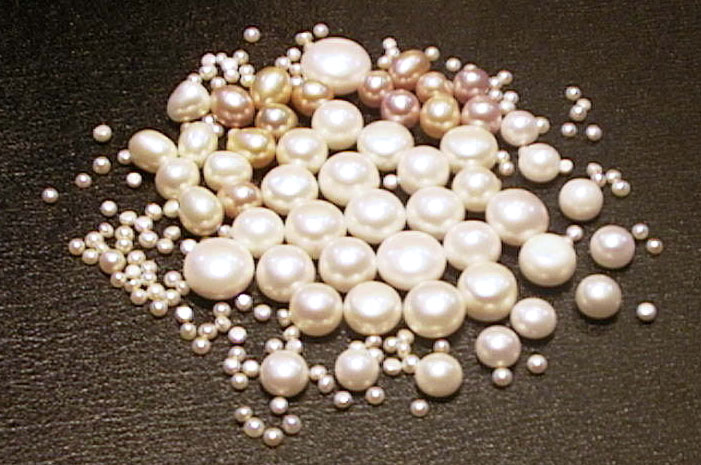
Pearls 02

In Greek mythology, pearls were tears of joy that Aphrodite, the Goddess of Love, shed when she was born from sea froth. Persian mythology gives us the same belief that pearls are hardened tears. Ancient Chinese mythology gives a grimmer origin to pearls: they believed they came from inside the brains of dragons.

To Muslims the pearl is one of the rewards to be found in the afterlife. It symbolizes absolute perfection in Islamic tradition. In some early Arabian legends pearls are hardened moon drops, and the oysters that give birth to the pearls were lured to the sea by the moon itself.

It is said that to give a pearl to a child born in June will ensure they have a long life.

Wearing pearls is sometimes said to cure madness, and also help to treat jaundice, and snake and insect bites. Pearls are also thought to cure depression in women – maybe because receiving pearls is sure to make most women happy. But be careful — not only are pearls said to have aphrodisiac properties, but placing a pearl under one’s pillow and sleeping on it may cause couples to conceive.
Pearls should only be purchased for someone else because wearing pearls you purchased yourself is considered unwise and unlucky. But even if they are a gift, a bride should never wear pearls as a woman will shed a tear for every pearl that she wears on her wedding day. 

Furthermore, be warned, gentlemen: a pearl given to a woman by her lover or husband will loose its luster if the man is unfaithful!