Candlemas, 2015

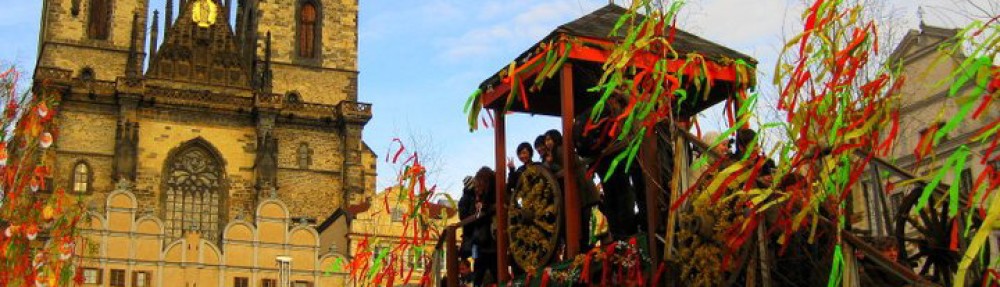
Marking the 40th day after Christmas, Candlemas celebrates the triumph of light/spring over darkness/winter. Candles blessed on this day were among the most powerful talismans available to ordinary folk in the Middle Ages.

Marking the 40th day after Christmas, Candlemas celebrates the triumph of light/spring over darkness/winter. Candles blessed on this day were among the most powerful talismans available to ordinary folk in the Middle Ages.

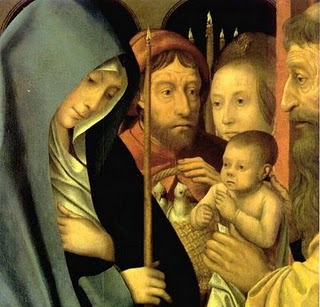
Candlemas, the name taken from the custom of blessing the year’s supply of candles on this day, is the 40th day after Christmas and marks the day Jesus was brought into the Temple by the Mother of God and acclaimed by the elder Simeon as “the light of revelation to the Gentiles and the glory of … Israel.” He also told the Mother of God that a sword would pierce her own heart during the ministry of her Son.

Candlemas, attached to the older feast of Imbolc and the quarter-day between Winter Solstice and Vernal Equinox and thus marking the first day of spring, was even more popular than Christmas in many areas (such as those under the influence of Byzantium and Byzantine Christian culture). People would flock to the churches to obtain the candles blessed on this day as the power of these candles to dispel darkness, death, illness, demons, and nearly anything else that might be considered dangerous to humans was widely reputed to make them the most powerful weapons in the medieval arsenal against evil.

It was also common in western Europe for new archbishops or other leading churchmen to receive their pallium (the “stole,” a vestment similar to a scarf that drapes around the shoulders) on this day, woven from wool sheared from lambs on St. Agnes’ day (January 21). But Pope Francis announced last week that this year the new archbishops will instead be invited to Rome for the feast of SS. Peter and Paul in June (better weather than January?) and then be given their pallium back home by the local papal nuncio.
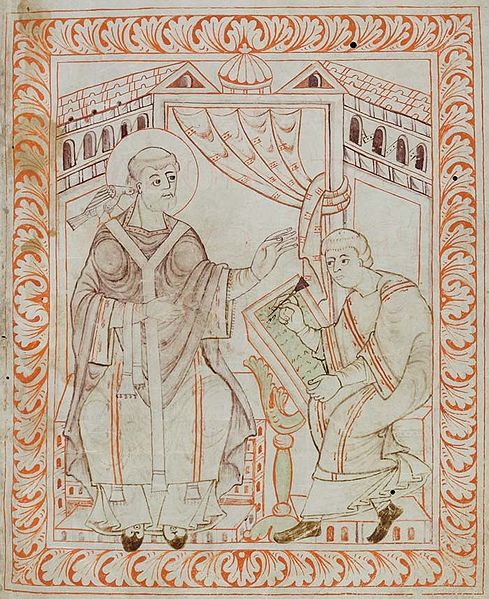
10th century illumination of St. Gregory the Great wearing his pallium.
10th century illumination of St. Gregory the Great wearing his pallium.
[

Imbolc, the First Day of Spring? And Groundhogs!

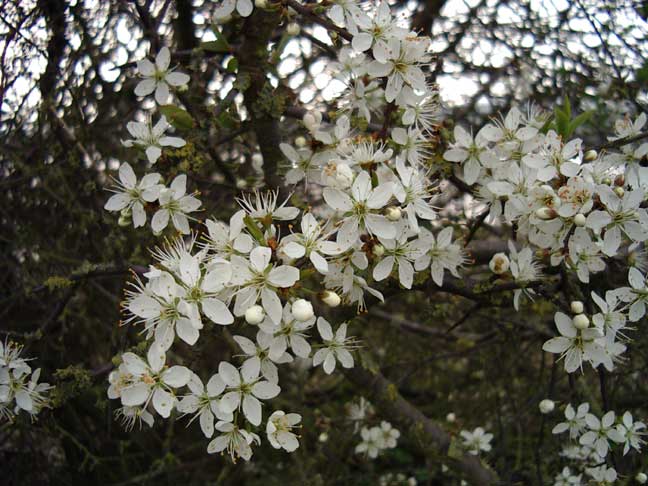
Blackthorn blooming at Imbolc.

Blackthorn blooming at Imbolc.

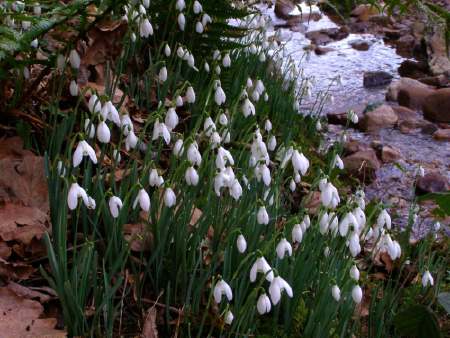
Snowdrops at a creek -- photo by Tony Eaglehart

Snowdrops at a creek announce Imbolc. The first blooms of snowdrops or blackthorns or the first birth of the new lambs were often considered the announcement of Imbolc’s arrival. (photo by Tony Eaglehart)

Although #Blizzard2015 might make it hard to believe, the Celtic — and magical! — festival of Imbolc, celebrated February 1-2, was considered the first day of spring in Celtic cultures and across Europe in general during the medieval period. Although we nowadays generally consider the solstice or equinox the first day of a season (December 21 as the first day of winter, March 21 as the first day of spring, June 21 as the first day of summer, and September 21 as the beginning of autumn), those days were previously considered the mid-seasons. (That is why we can sing Christmas carols about “midwinter” in December and have Midsummer night dreams in June!) The traditional changes of the seasons were the “quarter days” which marked the midpoints between the mid-seasons. So we get the Celtic/magical festivals of Samhain (October 31, the first day of winter), Imbolc (February 1-2, the beginning of spring), Beltane (May 1, the first day of summer), and Lammas (August 1, the beginning of autumn).

Because Imbolc is the beginning of spring, it is often associated with various means of predicting the coming weather which is so crucial during the planting season of agricultural societies. Hence, we consult the groundhog to determine if he sees his shadow or not in order to know if cold and snow will last another six weeks or not. In Serbia, a bear who wakes from his hibernation to stumble out of his cave and see his shadow will know whether to go back to sleep for another six weeks or not, based on whether he sees his shadow.

Imbolc was believed to be when the Cailleach—the divine hag of Gaelic tradition—gathers her firewood for the rest of the winter. Legend has it that if she wishes to make the winter last a good while longer, she will make sure the weather on Imbolc is bright and sunny, so she can gather plenty of firewood. Therefore, people would be relieved if Imbolc is a day of foul weather, as it means the Cailleach is asleep and winter is almost over. At Imbolc on the Isle of Man, where she is known as Caillagh ny Groamagh, the Cailleach is said to take the form of a gigantic bird carrying sticks in her beak.

The Sword

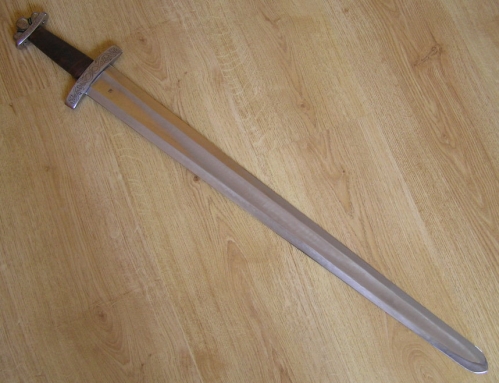
This viking sword was forged in the 9th-10th century and used in Northern, Western, and Central Europe.

This viking sword was forged in the 9th-10th century and used in Northern, Western, and Central Europe.

Swords go hand-in-hand with “knights in shining armor” or Vikings as well as gladiators and Greco-Roman soldiers. Swords are also one of the four suits (with Wands, Cups, and Pentacles) of the Tarot’s Minor Arcana. In tarot readings, swords correspond to the element of Air, and therefore signify freedom but also quick change. The Swords suit also traditionally represented the military, which implies strength, power and authority, but also responsibility, violence and suffering. Most readers today, however, interpret Swords in terms of thought and mind, ways of thinking or organizing the world even though certain of the cards retain interpretations of sorrow and anguish.

One of the four traditional tools of the occult practitioner, the sword or athame often — for practical reasons — becomes a small dagger or knife. It is used to cut and loose in a variety of circumstances or demarcate boundaries, as in tracing the outline of a magic circle or other geometric shapes (ex. pentagrams). It was also used to kill in ritual settings, such as offering a sacrifice (an animal) or in cases of alleged ritual murder.

The constellation Orion, easily identified by the 3 stars that form his “belt,” is said to depict the great warrior wielding a sword in the heavens as he prepares to strike a scorpion (which had been sent by a goddess to torment Orion); this battle between the Hunter and the hunted scorpion is said to be the reason that Orion and Scorpius (a sign of the zodiac) never appear in the night sky together. (Hungarian folklore identifies Orion with Nimrod, the great hunter in Genesis 10. In Scandinavian tradition, “Orion’s belt” was known as Frigg’s Distaff (friggerock) or Freyja’s distaff but the Finns call the Orion’s belt and the stars below it as Väinämöisen viikate (Väinämöinen’s scythe), keeping the association with the magical sword.)

In modern playing cards, the tarot suits have developed from Swords into Spades, Wands into Clubs, Cups into Hearts, and Pentacles into Diamonds.