
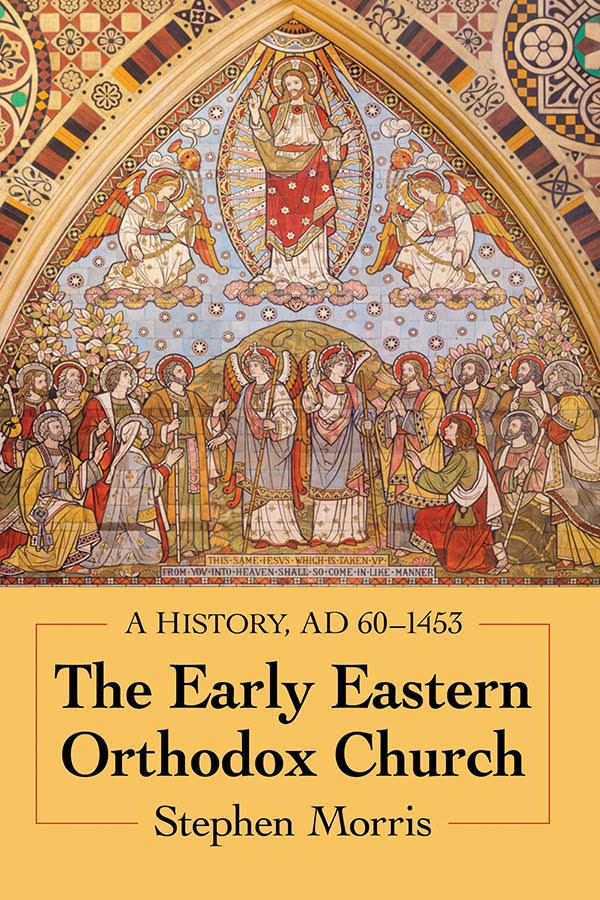
Suggested Advent Reading

A great introduction to the basic theology of the Incarnation and our experience of salvation.

Looking for a book to read this Advent? Look no further! A great introduction to the basic theology of the Incarnation and our experience of salvation, The Early Eastern Orthodox Church: A History (AD 60-1453), provides what you are looking for. Easy-to-read, user-friendly chapters give the background of the great controversies about how divinity and humanity are present in Christ. Excerpts from the leading theologians of the 4th to 7th centuries are given. Their ideas are discussed and explained in language modern readers can easily grasp.

What better way to prepare for Christmas than to spend time with St. Athanasius of Alexandria, St. Cyril of Alexandria, and St. Maximus the Confessor in order to better understand the mystery of God becoming human in Christ? The early Christian struggle to understand how Jesus is both 100% divine and 100% human is described. The vital role of Mary–and the importance of her title “Mother of God” as the way to adequately describe who her Son truly is–is the subject of one chapter as is the harmonization of our struggling, combative wills with Christ’s will for us.

Although Jesus is the unique God-made-human whose birth we celebrate at Christmas, we are able to share in His life.

“The Word of God, born once in the flesh (such is His kindness and His goodness), is always willing to be born spiritually in those who desire Him. In them, He is born as an infant as He fashions Himself in them by means of their virtues. He reveals Himself to the extent that He knows someone is capable of receiving Him. He diminishes the revelation of His glory not out of selfishness but because He recognizes the capacity and resources of those who desire to see Him. Yet, in the transcendence of mystery, He always remains invisible to all.” (St. Maximus the Confessor)

Get your copy of The Early Eastern Orthodox Church: A History (AD 60-1453) now and celebrate Christmas with a new or deeper understanding and appreciation for the coming together of humanity and divinity in the manger at Bethlehem.
St. Martin’s Day, 2019

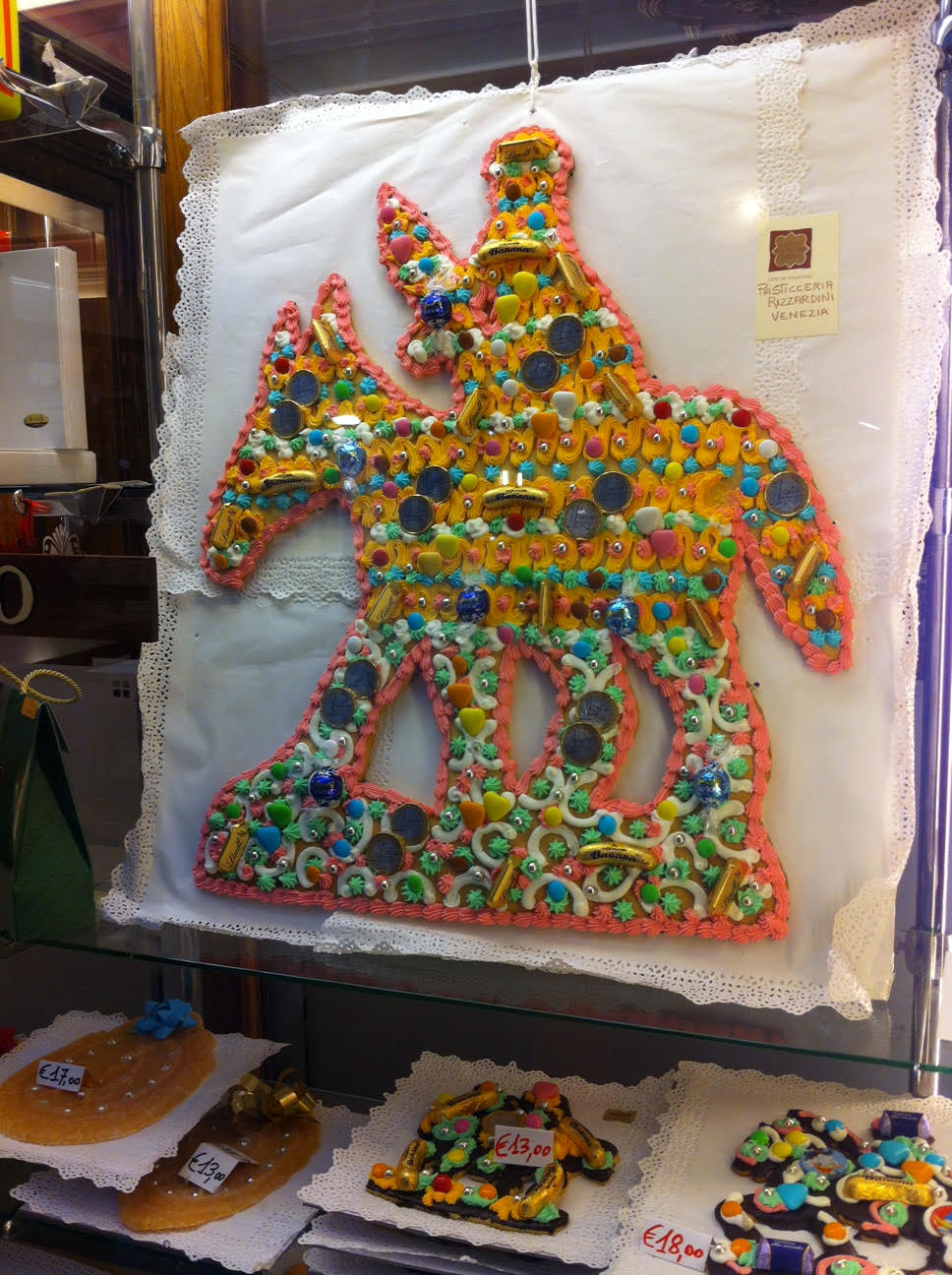
A cookie for St. Martin’s Day on display in a bakery window in Venice, Italy shows St. Martin on his horse ready to cut his cloak in half.

St. Martin of Tours was a Roman soldier in 4th century Gaul. He met a beggar one cold, snowy day who begged him for a rag or two to keep himself warm. St. Martin toook his sword and cut his cloak in half, giving a portion to the beggar. That night, he had a dream in which he saw Christ enthroned in glory, wearing the half of the cloak Martin had given to the beggar. “Where did you get such a cloak?” he heard the angels ask Christ. “My friend Martin gave it to me,” Christ replied.

When he awoke, Martin abondoned his duties as a soldier and became a monk. He attracted many disciples and became a famous monk. He insisted that his disciples always care for any poor person who came to the monastery gate because the monks would be serving Christ when they served the poor. He was made the bishop of Tours. Many hospices and hostels for the poor were dedicated in his honor. The ruins of one such hospice in Oxford–at the bottom of Carfax Tower–still has his image above what’s left of the front gate.

St. Martin’s feast day is November 11 and in many European countries that is the beginning of the “holiday season.” There was a 40-day fast before Christmas and St. Martin;s Day was the last important feast day before Christmas; families would often have a fancy goose dinner on St. Martin’s Day to mark the last occasion to have a big meat dinner before Christmas. (According to legend, Martin was reluctant to become bishop, which is why he hid in a stable filled with geese. The noise made by the geese betrayed his location to the people who were looking for him.) The goose dinner on St. Martin’s Day was a “rehearsal” for the goose dinner on Christmas Day, much as the turkey dinner on Thanksgiving in the United States is now often a “rehearsal” for the family dinner on Christmas Day.

In many European towns or villages a man dressed as St. Martin rides on a horse in front of a procession to celebrate St. Martin’s Day. The children sing songs about St. Martin and greet him as Americans greet Santa Claus at the end of the Thanksgiving Day parade in New York.

You can read my blog posts about St. Martin from years past here(2016), here(2013), and another from 2013 here.

Tracts for the Times: “Remember your calling!”

The series Tracts for the Times urged the English clergy to remember that they were priests of God rather than minor functionaries of the British government.

I have always been a firm believer in the power of tracts to educate people and that such education can produce results in changed lives. In my parish, I wrote several tracts that were available in the back of the church; many of these proved to be extremely popular and were reprinted several times. Another series of church tracts, the Tracts for the Times, were even more popular and led to significant changes in the Church of England.

The first of the Tracts for the Times, a series of 90 pamphlets to educate English Christians about Church history as well as classic Christian belief and practice, appeared on September 9, 1833. The tracts were widely available and very inexpensive; the popularity of the tracts, produced by the leaders of the Oxford Movement who wanted the Church of England to reclaim her status as a Church and not simply the “Religious Department” of the British government, resulted in many people using the name “Tractarian” to refer to this movement to restore pre-Reformation thought and practice.

The first 20 tracts appeared in 1833, with 30 more in 1834; the series concluded with Tract 90 in 1841. After that the pace slowed, but the later contributions were more substantive on doctrinal matters. Initially these publications were anonymous, pseudonymous, or reprints from theologians of previous centuries. The authorship details of the tracts were recovered by later scholars of the Oxford Movement. The tracts also provoked a secondary literature from opponents. Significant replies came from evangelicals, including that of William Goode in “Tract 90 Historically Refuted” (in 1845) and others.

Tract 1, by John Henry Newman, was primarily addressed to English clergy and urged them to remember that they were priests of God and not simply functionaries of the British government. The tract mourned that too many clergy were more concerned about social status and privilege than with preaching the Gospel, teaching their people, and celebrating the services of the Church. The tract urged the clergy to remember that they were ordained in the Apostolic Succession and that this gift was not to be taken lightly.

“Therefore, my dear Brethren, act up to your professions. Let it not be said that you have neglected a gift; for if you have the Spirit of the Apostles on you, surely this is a great gift: “Stir up the gift of God which is in you.” Make much of it. Show your value of it. Keep it before your minds as an honorable badge, far higher than that secular respectability, or cultivation, or polish, or learning, or rank, which gives you a hearing with the many. Tell them of your gift…. Speak out now, before you are forced, both as glorying in your privilege, and to ensure your rightful honor from your people. A notion has gone abroad, that they [British politicians] can take away your power. They think they have given and can take it away. They think it lies in the Church property, and they know that they have politically the power to confiscate that property. They have been deluded into a notion that present palpable usefulness, [measurable] results, acceptableness to your flocks, that these and such like are the tests of your Divine commission. Enlighten them in this matter. Exalt our Holy Fathers the Bishops, as the Representatives of the Apostles, and the Angels of the Churches; and magnify your office, as being ordained by them to take part in their Ministry.”

The tract warned that there was a coming conflict. The conflict would be between those who considered the Church of England to be the Body or Bride of Christ and those who thought the church was simply a convenient institution to be amended however they saw fit. These two radically opposed viewpoints would force clergy to take a stand and the tract warned clergy that they would face the consequences of their choice align with one side or the other on Judgement Day.