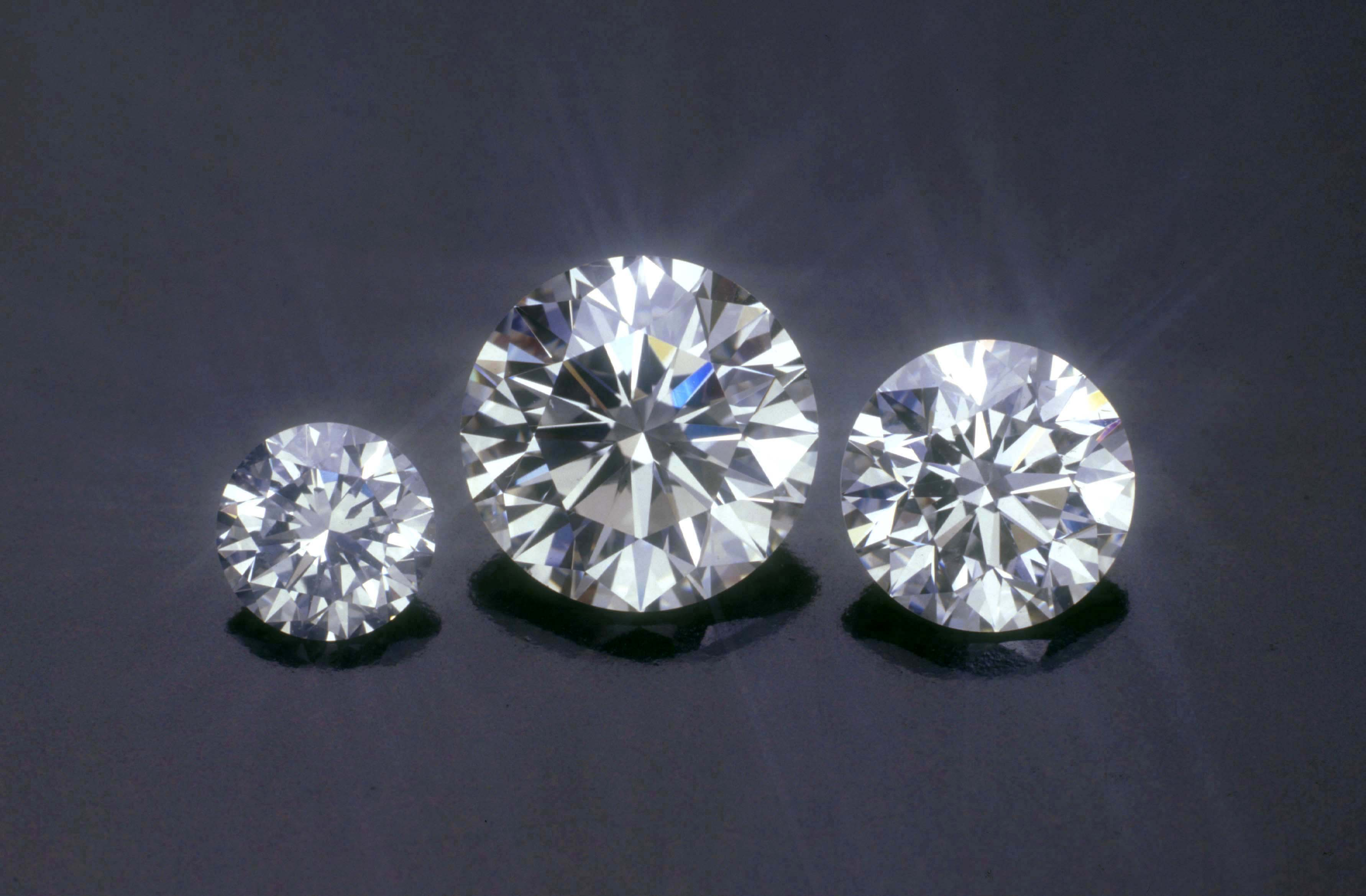
Diamonds are the birthstone of April.
The word diamond comes from the Greek word “adamas” meaning unconquerable or invincible. (Its Aryan root dam, to tame or subdue, is also the basis of the word ”madam”. The adjective “adamas” was employed to describe the hardest substance known and became synonymous with the gem, in reference to the hardness of this stone.
In medieval Europe, the peasants believed diamonds could attract lightening and Judaic lore claimed that the brilliance of the stone was directly tied to the guilt or innocence of whomever was wearing it. Tell a lie and your diamond would dim. If you wanted a sparkling stone you had to be truthful. Even far into the 14th century, Jean de Mandeville wrote, “It happens often that the good diamond loses its virtue by sin and incontinence.”
In the Middle Ages many thought diamonds could cure disease. Because of the clarity of a fine diamond it seemed likely that the stone could filter out the impurities in a sick person and save them. For the same reason it was long believed that anyone wearing a diamond could never be poisoned. People often slept with diamonds in the hopes of waking up well, which led to a vast illegal trade of false gems.
Other attributes of diamonds are that they bring courage and hope to the wearer. The Roman’s believed that when one wore a diamond they were unable to be conquered by their enemies- a story that surely brought much hope and courage to soldiers or politicians able to afford the costly stone.
Diamonds, of course, are well known today as a traditional part of wedding and engagement rings. In the Middle Ages and the Renaissance, every ring set with a precious stone was more an amulet that bestowed magical powers upon its wearer, rather than a piece of jewelry. When set in gold and worn on the left side, it was believed that the diamond held the power to drive away nightmares, to ward off devils, phantoms and soothe savage beasts.(While diamonds association with wedding rings is largely a modern concept, a diamond wedding ring was given to Mary of Burgundy by Archduke Maximilian of Austria in 1477.)
IF YOU LIKED THIS POST ABOUT THE FOLKLORE & OCCULT QUALITIES ASSOCIATED WITH DIAMONDS, CLICK HERE TO SEE MY FANTASY NOVELS IN WHICH ALL THE MAGIC AND SUPERNATURAL EVENTS ARE BASED ON AUTHENTIC MEDIEVAL-RENAISSANCE OCCULT BELIEFS AND PRACTICES.