
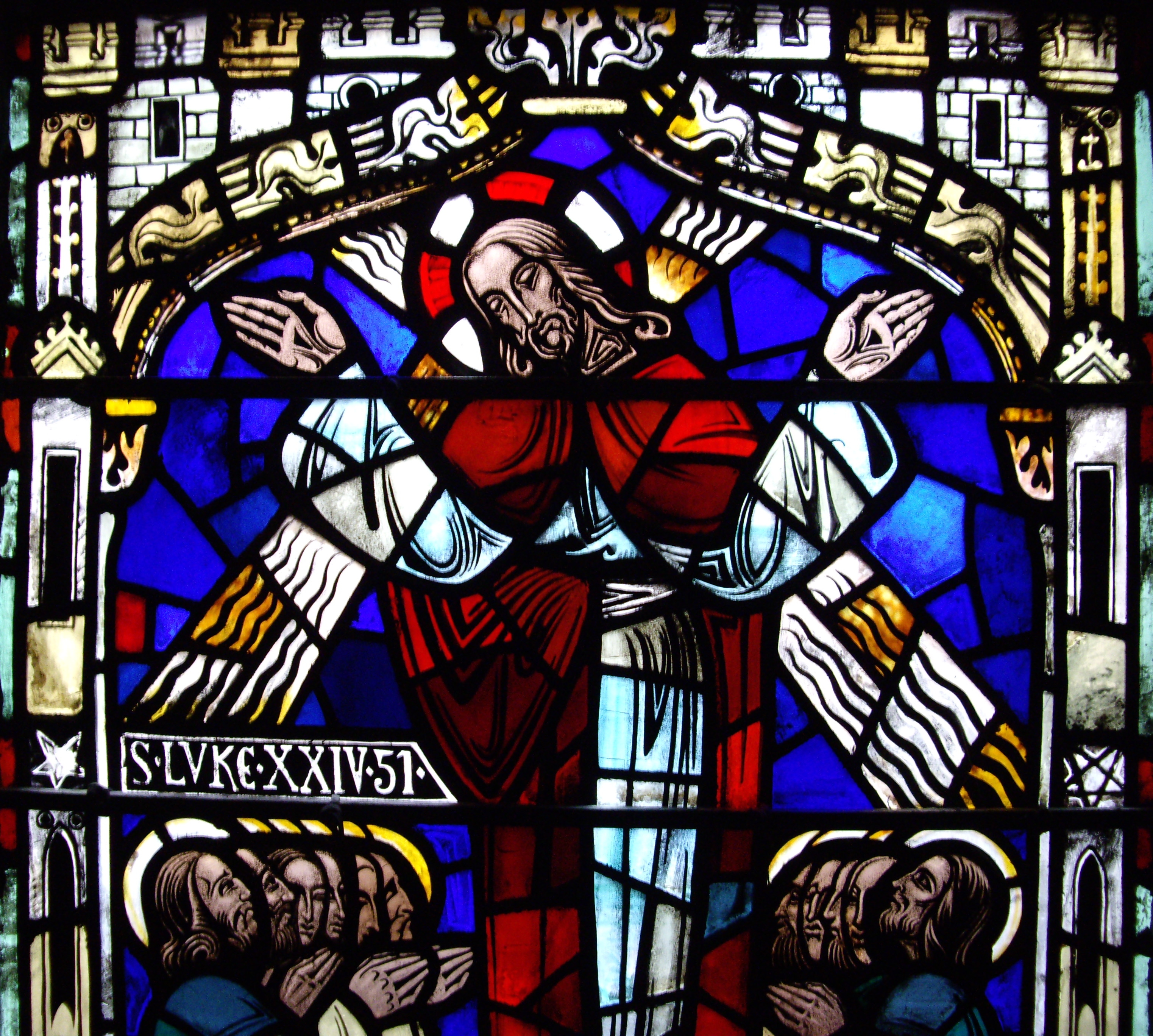
Ascension Day: “Beating the Bounds”

Ascension Day, celebrated on the 40th day after Easter, is always a Thursday and marks the last post-Resurrection appearance of Christ to the apostles.

Ascension Day, celebrated on the 40th day after Easter, is always a Thursday and marks the last post-Resurrection appearance of Christ to the apostles.

Ascension Day was a vital day in the pre-modern and agricultural cultures of Christian Europe. In many places it marked the beginning of the ploughing and planting seasons and in England there were processions to ask for God’s blessing on the crops to be planted. These processions often included “beating the bounds,” a practice in which young men would be led around the boundaries of each local farm and their backs lightly beaten so as to impress upon them where the limits of each farmer’s lands were; beating the boys’ backs helped stamp the landmarks and boundaries of each field into the boys’ memories so that any future disputes between farmers could be resolved by asking the boys what they remembered of the processions.

Some parishes continue the custom (e.g. the church of St Michael at the North Gate in Oxford). Today members of the parish walk round the parish boundaries, marking boundary stones (e.g. by writing on them in chalk) and hitting them — rather than the boys of the parish — with sticks. In addition to settling disputes between farmers, knowledge of the parish boundaries was once important since churches had certain duties such as the care of children born out of wedlock in the parish. One of the purposes served by beating the bounds was that of warning the young men of the parish that any sexual misbehavior ought to take place with women who lived outside the parish.

In Venice the ceremony of the Wedding with the Sea was traditionally celebrated on the Feast of the Ascension, while in Florence the holy day was observed by having a dove slide down a string from the high altar of the cathedral to ignite a large decorative container filled with fireworks in front of the main entrance of the cathedral.

There is a veritable treasure trove of folklore and folk practices associated with Ascension Day in the Encyclopedia of Superstitions, Folklore, and Occult Sciences, which you can read here. You can also read more in the very interesting study Eastertide in Pennsylvania which describes Pennsylvania Dutch customs.
Palms and Willows

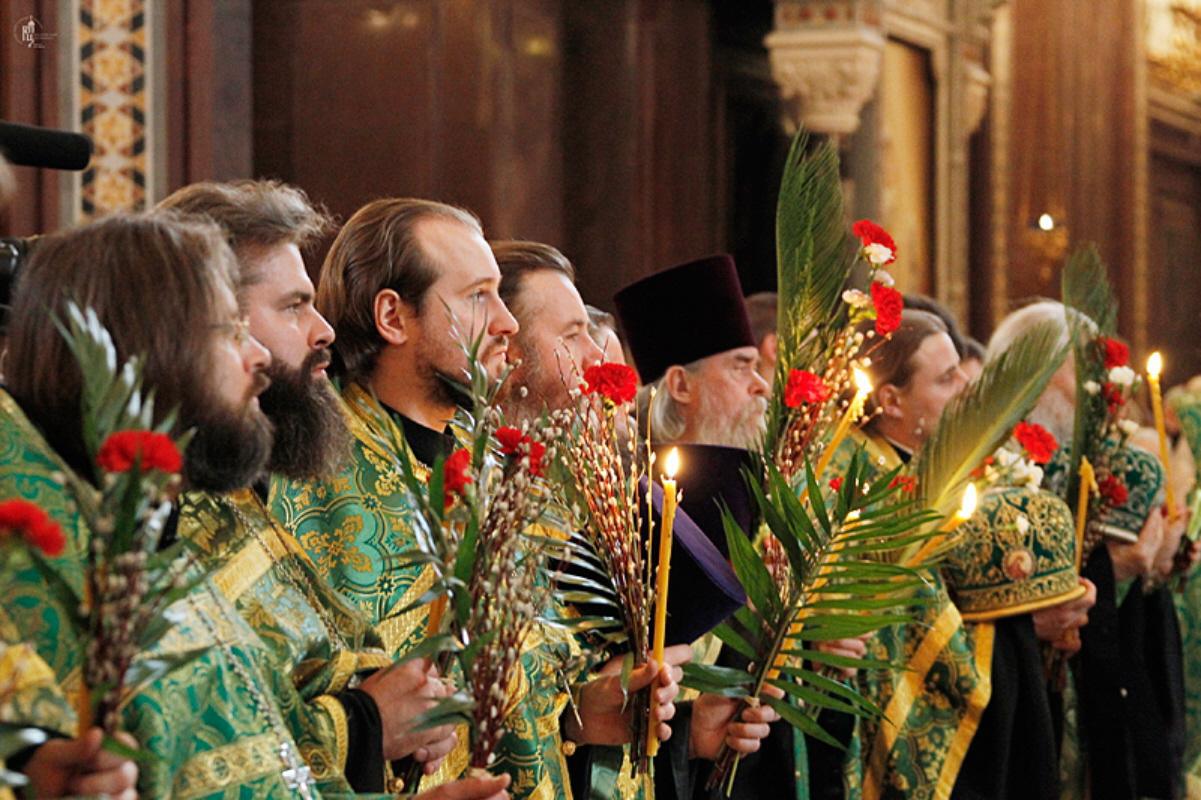
Palm Sunday in Moscow (2011); the clergy are holding festive bundles of palm fronds and pussy willows.

Palm Sunday in Moscow (2011); the clergy are holding festive bundles of palm fronds and pussy willows.

The Christian world celebrates Jesus’ emntrance into Jerusalem on the last Sunday before Easter(in the English speaking world) or PASCHA (most other traditional Christian cultures/languages) and this celebration of Jesus’ entrance into the Holy City is commonly called “Palm Sunday.” When Christianity came to northern and eastern Europe, no palms were available so the local plants which sprouted earliest were used in the celebrations. Even now, willows, osiers and weeping willows are consecrated on Palm Sunday in most of Central Europe and Eastern Europe.

In Lithuanian folklore, the osier — a kind of willow with male spores — was regarded as an unusual tree. Folklore tells that the osier grew out of a secretly murdered man. A fife made of osier wood, speaks in a man’s voice. Evil spirits avoid it because of its red color.

Many palm bunches have a branch of juniper in them. Juniper is green year round, with late ripening berries (which are used to flavor gin) and with a peculiar odor. Cranberry, mistletoe, filbert and oak branches together with dried baby’s breath and ferns are sometimes also used with the palms or willows. Pussy willows are especially common in the Eastern Orthodox churches. Among the Czechs and in the Baltic States, there is an old custom of whipping each other with the willows from church. Having returned home with consecrated fronds, one whips the head, back shoulders of those who stayed home, repeating all the time, ” illness out, health return”. The following words were spoken or sung, when striking with the palm:

“I am not the one striking
The Palm is striking
You are not in pain
The Palm is in pain
Soon it will be Easter!”
OR
“It is not I who is thrashing, but the rod
It will thrash until it breaks
The great day is in a week
It will entertain everyone
Remain the same as you have been
Be healthy as a fish.”

Lithuanian writings of 1573 say that to protect from devils and thunder, crosses were made from the consecrated palms and were thrust behind doors, windows and gated. Most often the palms were placed behind pictures of saints until the junipers dried and began shedding. The juniper branches are burned and these ashes, together with juniper sheddings, are placed in attics to protect roofs from storms. As thunder knocks, a palm is placed on the windowsill, on the side of the storm.

The smoke of a burning palm, scents all corners of the house and protects from thunder. Palms were nailed to beehives so that bees would swarm in great numbers. Palms were tied with colored, wooly yarns. This yarn was used to bind women’s wrists, to keep away pain. That was the most popular healing method during harvest work. Before animals were let out of barns in the spring, they were incensed with a burning palm. It was also said that if a palm was planted near water and it began to sprout, there would be no water shortage.

There are several other folk practices associated with the palms and willows:

1 – he who goes to church on Palm Sunday without a palm in his hands, the devil will shove his tail into the hands.
2 – collecting branches to make palms, select those with many buds. The more buds, the longer will be your life.
3 – if you plant consecrated palms on both river banks, when it is the end of the world and all waters vanish, there will be drinking water where the palms are growing.
4 – one should not comb hair on Palm Sunday, because fleas will grow to the size of the palm, or buds on the branches.
5 – if the palm lasts three years, then when black clouds cover the skies, take the palm and cross the clouds with it.
6 – old palms should be burned and their ashes sprinkled over cabbages, to protect them from worms.

Want to see my other blog posts and photos about Palm Sunday, willows, etc,? Click here and here.

“Happy New Year?!” Lady Day 2015

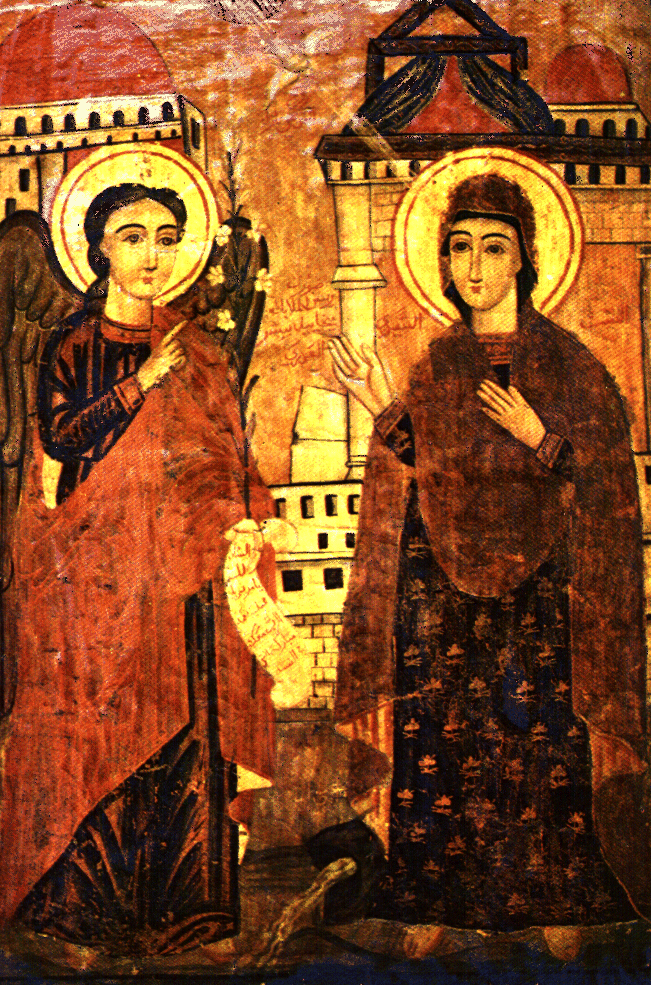
A Coptic icon of the Annunciation, showing the angel Gabriel presenting a lily as he announces the Incarnation to the Mother of God.

A Coptic icon of the Annunciation, showing the angel Gabriel presenting a lily as he announces the Incarnation to the Mother of God.

Lilies are often associated with the celebration of Annunciation. When Eve was driven from Paradise, lilies bloomed wherever her tears fell onto the earth and Gabriel presented lilies to the Virgin Mary when he announced that her Son would re-open Paradise to mankind. Other legends say that lilies blossomed from drops of milk from Hera’s breasts that fell upon the earth and that the lily was therefore the only flower with a soul. Lilies are traditionally considered to drive away ghosts and evil (esp. the Evil Eye) and can break love spells. The first lily of the season strengthens whoever finds it.

Roses are also associated with Annunciation and are used to cast love spells or in healing magic. If you plant roses in your garden, they are said to grow best if you have stolen the seeds from someone else and will then attract the faerie folk.

The Annunciation is celebrated on March 25 (the traditional date of the springtime equinox). Not only was Annunciation — and the equinox — vital to keeping track of time for secular purposes, many ancient and medieval authors claimed that the Annunciation/equinox date were vital at many points of salvation history: the birthday of Adam and the Crucifixion were said to have occurred on March 25 as well. Some also said that March 25 marked the fall of Lucifer, the parting of the Red Sea, as well as the day on which God said, “Let there be light!”

Sometimes called “Lady Day,” the Annunciation was kept as New Year’s Day in many places; the last to give up Annunciation as the New Year’s Day was England and its American colonies in 1752. The correct synchronization of the equinox with the Annunciation is a critical element in the calculation of the date of Easter and the medieval and Renaissance disconnect between the Annunciation and the equinox prompted Pope Gregory XIII to reform the calendar in 1582.