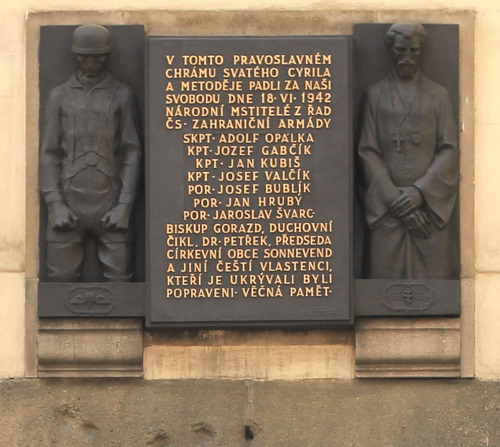
Memorial plaque for Lidice at the Orthodox cathedral of SS. Cyril and Methodius in Prague. A Gestapo report suggested Lidice was the hiding place of the assassins, since several Czech army officers exiled in England were known to have come from there.
June 10, 1942 – In one of the most infamous single acts of World War II in Europe, all 172 men and boys over age 16 in the Czech village of Lidice were shot by Nazis in reprisal for the assassination of SS leader Reinhard Heydrich. The women were deported to Ravensbrück concentration camp where most died. Ninety young children were sent to the concentration camp at Gneisenau, with some later taken to Nazi orphanages if they were German looking. The village was then completely leveled until not a trace remained.
The Nazis destroyed the town by first setting the houses on fire and then razing them to the ground with plastic explosives. They did not stop at that. Instead, they proceeded to destroy the church and even the last resting place – the cemetery. In 1943 all that remained was an empty space. Until the end of the war, the site was marked by notices forbidding entry. The news of the destruction of Lidice spread rapidly around the world.
But the Nazi intention to wipe the little Czech village off the face of the Earth did not succeed. Several towns throughout the world took the name of Lidice in memory of the Czech village that met such a horrific fate. Also, many women born at that time were named Lidice. The once tranquil village Lidice continued to live in the minds of people all over the world and after the war the Czechoslovak government decided to build Lidice again.
You can read the story of the assassination and the reprisals here. A recent movie is an excellent depiction of the historic events.