
“In the Forest, Deep and Dark….”

It’s increasingly rare to find a forest that hasn’t been shaped by human use. Ohikulkija/CC BY-SA 3.0

When I was small, there was a tremendous forest across the field from my great-grandmother’s house on San Juan Island. I called it the Black Forest, after the famous fairy-tale forest in Germany. It was everything I ever imagined a fairy tale forest would be and never went more than a few feet into the trees. I was terrified of becoming lost and wandering in the woods. I was certain that either Baba Yaga or the gingerbread-house witch would find us if we ever wandered too far under the great trees.

Forests are big, dark, and mysterious. They appear in many–if not most–fairy tales. Forests hide Big Bad Wolves. Witches hide their gingerbread houses in forests. Castles that belong to mysterious strangers are surrounded by forests. Sometimes the forest is itself enchanted. Forests are always dangerous and places of adventure that mark the edges of this world and the worlds of spirit and imagination.

Facts, folklore, superstitions, myths, and anecdotes about trees and forests have always fascinated us. A wonderful book came out recently, Forests in Folklore and Mythology, that makes these tales available all in one place and examines the threads or traits they have in common. Customs, temples and sacred groves; mythical forest creatures such as witches, fairies, demons, wood spirits, and wood nymphs are all in its pages.

Certain kinds of trees are associated with wisdom, life, or death. Celtic mythology tells us that birch trees are important in both the winter and summer to purify the world. Birches were celebrated during the festival of Samhain (what is now Hallowe’en)–bundles of birch twigs were used to drive out the spirits of the old year. Later this would evolve into the ‘beating the bounds’ ceremonies in local parishes, a festival in the springtime. Gardeners still use the birch brooms to ‘purify’ their gardens.

According to Atlas Obscura, the last of the great fairy tale forests can be found in Finland, or on the Carpathian or Balkan mountain ranges that slice across Romania and Bulgaria.
Now Available for preorder

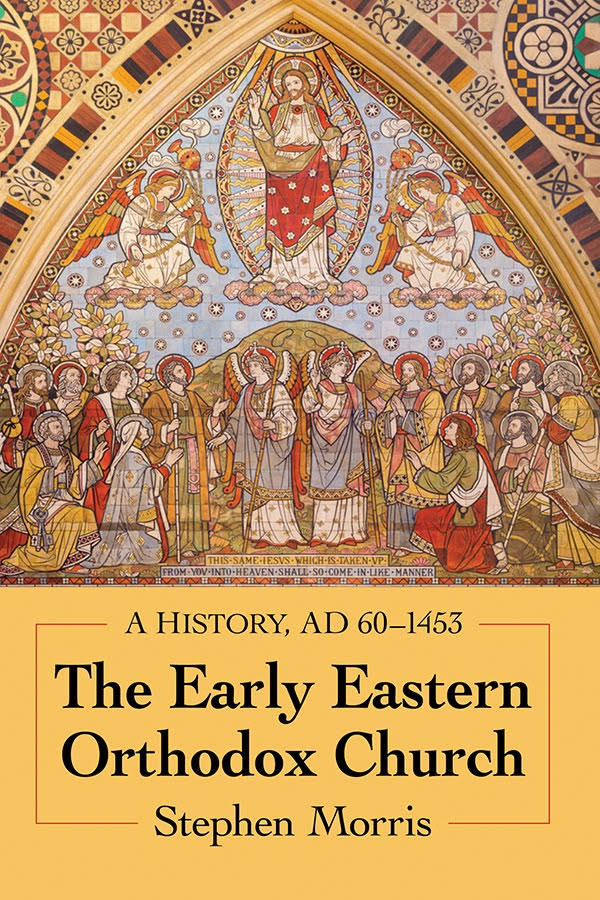
“It seemed good to the Holy Spirit and to us,” the apostles declared at the conclusion of their council described in Acts 15. This apostolic council was the first of many councils to come as Christians sought to discern the will of God in the midst of historic challenges.

The faithful continued to struggle to express their new apostolic faith in new words, new languages, new places and new times. Many issues—the interaction of science and faith, divinity and humanity, Church and State—continue to be pertinent today.

This book (published by McFarland, 2018) tells the story of these struggles from the days of the New Testament to the fall of the city of Constantinople in AD 1453. It focuses on the Christian community in the eastern Mediterranean which eventually became known as the Byzantine Empire. Each chapter examines the personalities and theologies entwined at the heart of conflicts that shaped the medieval world as well as the modern cultures of Greece, the Middle East and Eastern Europe.

A user-friendly text that presumes no prior knowledge, each chapter includes suggestions for further reading if a reader wants to know more about particular periods or personalities.

Order your copy here or on Amazon!

Please be sure to “FOLLOW” me here in order to receive notifications as new books become available.

Firebird

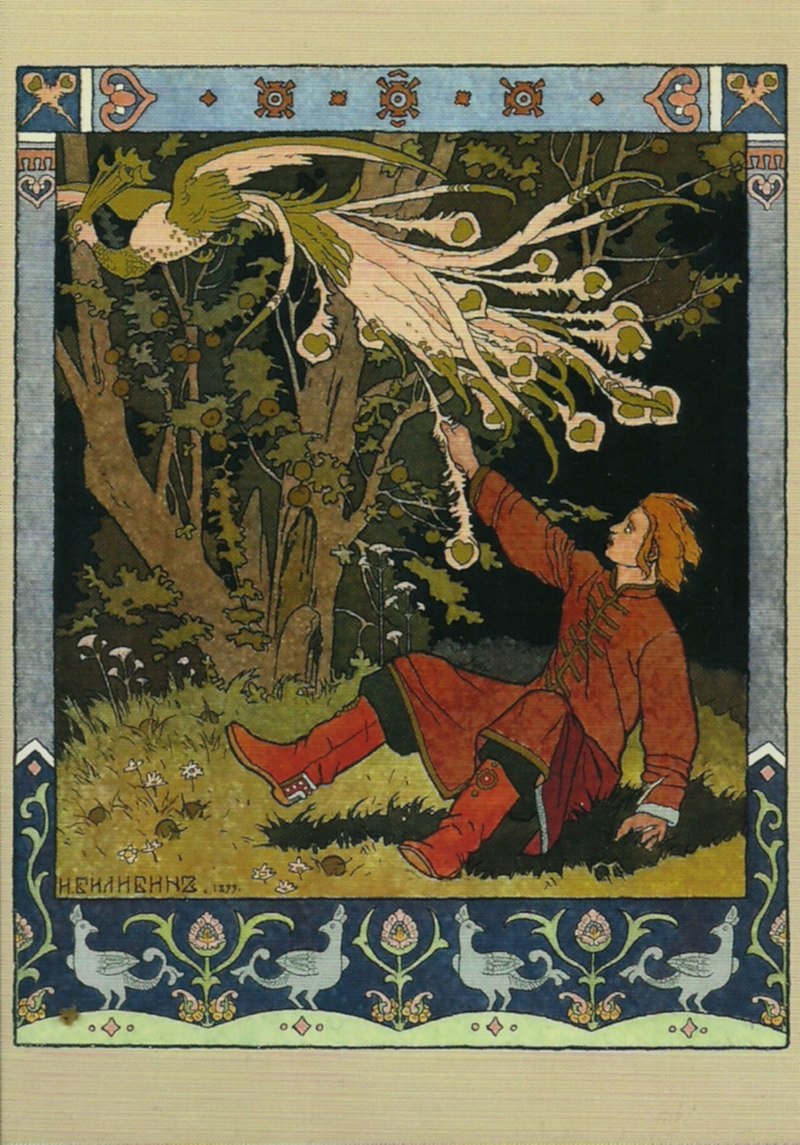
Ivan Bilibin’s illustration to a Russian fairy tale about the Firebird, 1899.

Russian composer Igor Stravinsky (1882-1971) was born on June 17 near St. Petersburg. Among his best known works, the ballets The Firebird (1910), Petrushka (1911) and The Rite of Spring (1913), and the choral work Symphony of Psalms (1930).

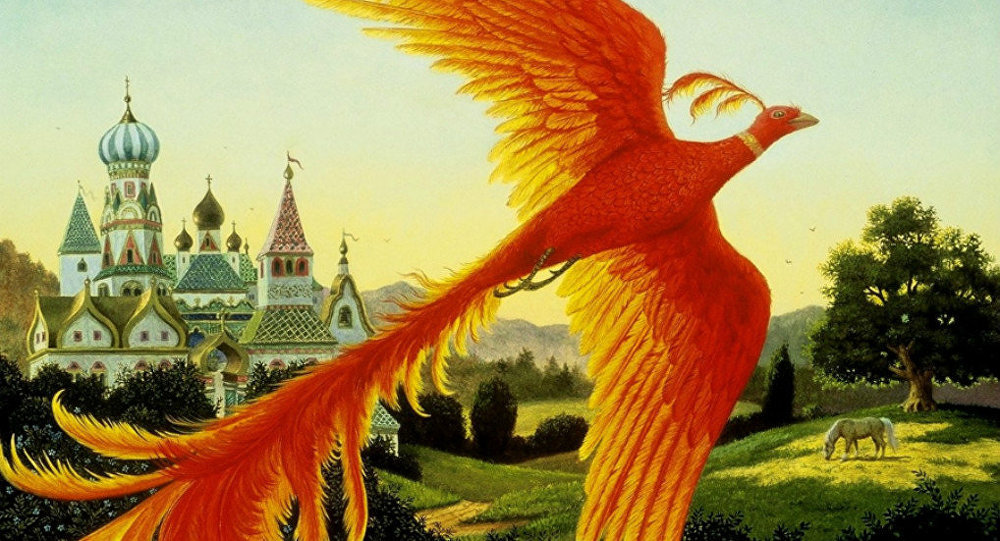
The Firebird character is one of the most poplar in Russian fairy tales. The Firebird is essentially a phoenix, a golden immortal bird that is reborn from its own incinerated ashes. Its flames and beauty save a variety of heroes and heroines–often princes and princesses–from evil wizards and devils, as in the famous Stravinsky ballet. Some tales say that the Firebird never eats but only sips dew. It saw Adam and Eve expelled from Paradise and is often a messenger between humans and the Otherworld.

One story about the Firebird tells us that a modest and gentle orphan girl named Maryushka lives in a small village. People would come from all over to buy her embroidery, and many merchants asked her to come away and work for them. She told them all that she would sell to any who found her work beautiful, but she would never leave the village of her birth. One day the evil sorcerer Kaschei the Immortal heard of Maryushka’s beautiful needlework and transformed himself into a beautiful young man and visited her. Upon seeing her ability he became enraged that a mere mortal could produce finer work than he himself possessed. He tried to tempt her by offering to make her Queen if she would embroider for him alone, but she refused saying she never wanted to leave her village. Because of this last insult to his ego he turned Maryushka into a Firebird, and himself into a great black Falcon, picked her up in his talons, and stole her away from her village. To leave a memory of herself with her village forever she shed her feathers onto the land below. As the last feather fell Maryushka died in the falcon’s talons. The glowing rainbow feathers were magic and remain undimmed, but show their colors only to those who love beauty and seek to make beauty for others

The Firebird concept has parallels in Iranian legends of magical birds, in the Brothers Grimm fairy tale about The Golden Bird. In an Armenian tale, the Firebird does not burn but rather makes the land bloom through its song. In Czech folklore, it is called Pták Ohnivák (Fire-like Bird) and appears, for example, in a Karel Jaromír Erben fairy tale, also as an object of a difficult quest. Moreover, in the beginning of this fairy tale, the bird steals magical golden apples belonging to a king and is therefore pursued by the king’s servants in order to protect the precious apples.