Carnation, the birth flower of January

Carnations were given to the gods by the Romans and later used to provoke love in the hearts of those who received them.

Carnations were given to the gods by the Romans and later used to provoke love in the hearts of those who received them.

Composed of tightly packed, fringed petals of white, yellow, pink, or red, carnations have many different meanings. To the Indians of Mexico, they are the “flowers of the dead,” and their fragrant blooms are piled around corpses being prepared for burial. (Perhaps because carnations are poisonous and should never be eaten!) For the Koreans, three carnations placed on top of the head are a form of divination. The flower that withers first indicates which phase of the person’s life will contain suffering and hardship. To the Flemish people of Europe, red carnations symbolized love, and a kind of carnation called a pink was traditionally associated with weddings. Red carnations were also used to provoke love and admiration in the recipient for the giver and to overcome heartache.

Also known as Jove’s flower, white carnations were used by the ancient Romans to pay tribute to the gods they love.  Wreaths of white carnations mixed in with other colors of carnations are laid in front of the statues of Roman gods.

Associated with the element of fire and the sun, carnations were also used in England during the reign of Queen Elizabeth I to prevent death (execution) on a scaffold and can still be used in protective magic.

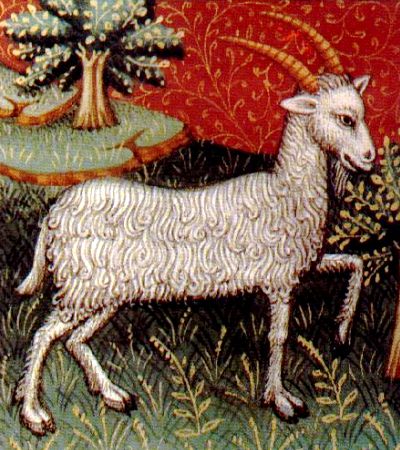
Capricorn (21 December-20 January)

This illustration of Capricorn is from a 15th century astrological handbook.

This illustration of Capricorn is from a 15th century astrological handbook.

Despite its faintness, Capricornus has one of the oldest mythological associations, having been consistently represented as a hybrid of a goat and a fish since the Middle Bronze Age. First attested in depictions on a cylinder-seal from around the 21st century BC, it was explicitly recorded in the Babylonian star catalogues as “The Goat-Fish” before 1000 BC. The constellation was a symbol of the god Ea and in the Early Bronze Age marked the winter solstice.

In Greek mythology, the constellation is sometimes identified as Amalthea, the goat that suckled the infant Zeus after his mother Rhea saved him from being devoured by his father Cronos (in Greek mythology). The goat’s broken horn was transformed into the cornucopia or horn of plenty.Capricornus is also sometimes identified as Pan, the god with a goat’s head, who saved himself from the monster Typhon by giving himself a fish’s tail and diving into a river.

 People born under this Sign are sensitive, sensible and secure in their own space. They not take mindless decisions but at the same time they will take well-calculated risks to get what they want. However, there are some minuses as well. Let’s have a look at some of the usual positive and negative traits of the Capricorn-born.

Known for their pragmatic approach, the Capricorn apply their minds and take into account all the facts before going forward. These confident individuals aim high and do their best to reach their goals. Their ambitious nature can be attributed to their need to build a secure future for themselves and their families. They are wise, sensible and rarely over-the-top. People trust their sound judgment and often come to them seeking their valuable advice. Once they set their eyes on something, they will start their journey to get it. They have all the patience and discipline in the world to get where they want to but they will not take pointless risks.

However, the Capricorn-born can also be pessimistic as they lack the confidence to go against the odds. No matter where they reach in life, on the back of their minds they will see themselves as under-achievers, although they are stubborn will stick to their opinions. Good at communicating but basically shy, they will take their own sweet time to open up. The Capricorn are very concerned about how turn of events will affect them, and therefore, they tend to be quite self-centered. The Capricorn also often come across at detached individuals who will not get close to people beyond a certain point. Emotional involvement doesn’t come easily to them. Mood swings sometimes make them behave irresponsibly and ruin things.

12th Night, Part 2

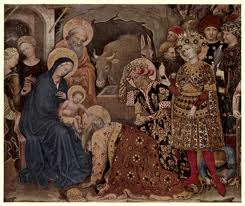
The arrival of the 3 kings to worship the newborn Christ-child is celebrated on Twelfth Night.

The arrival of the 3 kings to worship the newborn Christ-child is celebrated on Twelfth Night.

Twelfth Night is a festival  marking the coming of the Epiphany and concluding the Twelve Days of Christmas.

In medieval and Tudor England, the Twelfth Night marked the end of a winter festival that started on All Hallows Eve — now more commonly known as Hallowe’en. The Lord of Misrule symbolizes the world turning upside down. On this day the King and all those who were high would become the peasants and vice versa. At the beginning of the Twelfth Night festival, a cake that contained a bean was eaten. The person who found the bean would rule the feast. Midnight signaled the end of his rule and the world would return to normal. The common theme was that the normal order of things was reversed. This Lord of Misrule tradition dates back to pre-Christian European festivals such the Ancient Roman festival of Saturnalia.

(Shakespeare’s play Twelfth Night, or What You Will was written to be performed as a Twelfth Night entertainment. The play has many elements of the Lord of Misrule theme, in the tradition of Twelfth Night, such as a woman Viola dressing as a man, and a servant Malvolio imagining that he can become a nobleman.)

Food and drink are the center of the celebrations in modern times, and all of the most traditional ones go back many centuries. The punch called wassail is consumed especially on Twelfth Night, but throughout Christmas time, especially in the UK. Around the world, special pastries, such as the tortell and king cake are baked on Twelfth Night, and eaten the following day for the Feast of the Epiphany celebrations. In English and French custom, the Twelfth-cake was baked to contain a bean and a pea, so that those who received the slices containing them should be designated king and queen of the night’s festivities.

In colonial America, a Christmas wreath was always left up on the front door of each home, and when taken down at the end of the Twelve Days of Christmas, any edible portions would be consumed with the other foods of the feast. The same held true in the 19th-20th centuries with fruits adorning Christmas trees. Fresh fruits were hard to come by, and were therefore considered fine and proper gifts and decorations for the tree, wreaths, and home. Again, the tree would be taken down on Twelfth Night, and such fruits, along with nuts and other local produce used, would then be consumed.

In the eastern Alps, a tradition called Perchtenlaufen exists. Two to three hundred masked young men rush about the streets with whips and bells driving out evil spirits. In Nuremberg until 1616, children frightened spirits away by running through the streets and knocking loudly at doors. In some countries the Twelfth Night and Epiphany marks the start of the Carnival season, which lasts through Mardi Gras Day. Modern American Carnival traditions shine most brightly in New Orleans, where friends gather for weekly King Cake parties. Whoever gets the slice with the “king”, usually in the form of a miniature baby doll (symbolic of the Christ Child, “Christ the King”), hosts next week’s party.

(The Shorter Oxford English Dictionary reads “the evening of the fifth of January, preceding Twelfth Day, the eve of the Epiphany, formerly the last day of the Christmas festivities and observed as a time of merrymaking”. There is some confusion these days, however, as to which night is Twelfth Night: modern practice is often to regard the night of Epiphany itself (sixth of January) to be Twelfth Night. The older tradition of Twelfth Night being the 5 January stems from the medieval practice of the day beginning at sunset, rather than at midnight as it does now. Thus Twelfth Night falls on 5 January, ahead of Twelfth Day on the 6th.)