Midnight Mayor

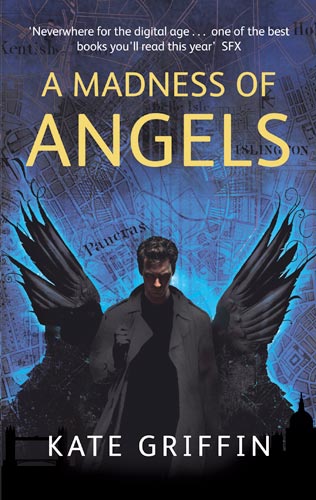
Madness of Angels

This is one of my all-time favorite series by a fantastic author! A lyric prose-poem that is a love song to London and magic! The word-paintings of London in this first book of the Midnight Mayor series are breathtaking and the way in which Matthew Swift uses the contemporary magic of cities in general –London, in particular–makes us realize how magic is all around us if only we open our eyes to see it, even in the subways! (In an interview, Kate Griffin said that scene in the subway was probably her favorite in the book! It was a good thing I had just passed that scene when I found her interview!) I urge you to add Madness of Angels and the other Midnight Mayor books to your bedside table! 

As the story opens, Matthew Swift finds himself breathing once again, lying in bed in his London home. Except that it’s no longer his bed, or his home. And the last time this sorcerer was seen alive, an unknown assailant had gouged a hole so deep in his chest that his death was irrefutable…despite his body never being found. Matthew realizes that he is not entirely himself when he glimpses his reflection in a mirror and his eyes (which had been brown) are now the “pale, brilliant albino blue of the cloudless winter sky, and I was no longer the only creature that watched from behind their lens.”

Matthew (and the creatures that are also looking through those albino blue eyes of his) goes on to search for his killer and stop the killer and his dark minions, especially the shadow-entity Matthew comes to refer to as Hunger as the being is the killer’s hunger for power and dominion externalized. As Matthew finds each of his killer’s assistants and strikes them down in a variety of impressive ways, we meet the Bag Lady and the Beggar King and the other archetypes that populate the shadows of London. A Madness of Angels and the Midnight Mayor series are exquisite!
Dec. 5, 1484: Pope Authorizes Inquisition Against Witches


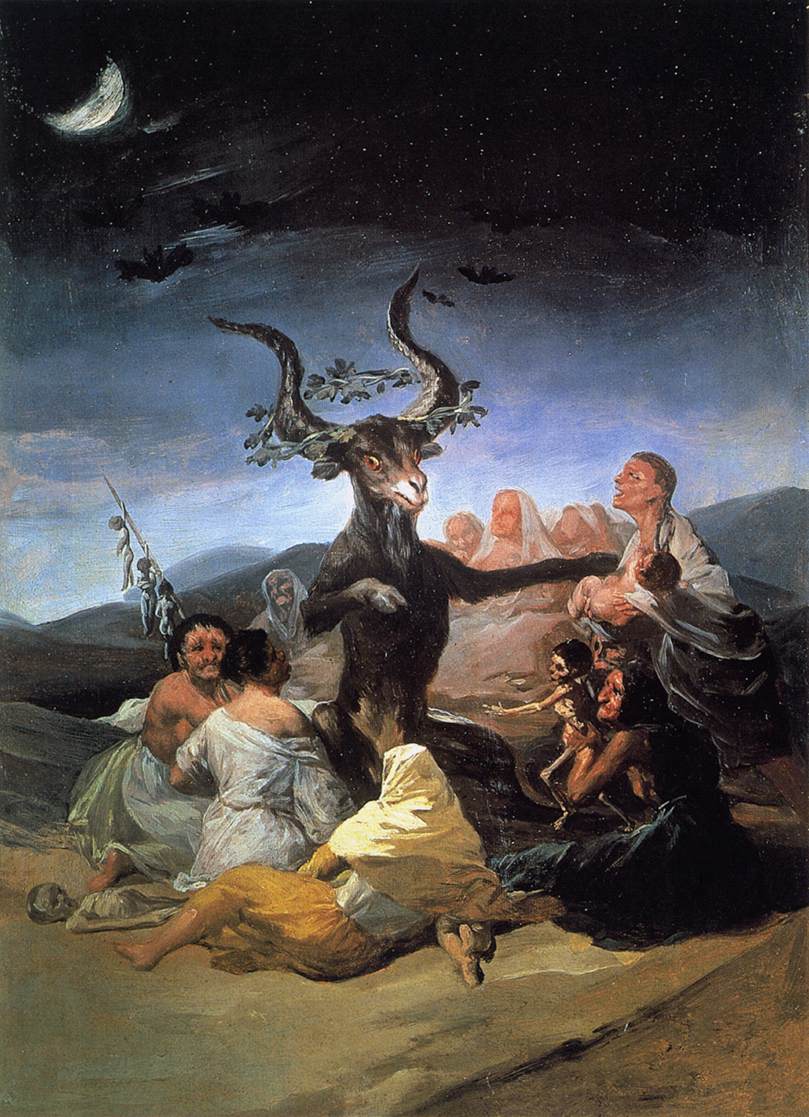
Francisco Goya's 1789 painting, "Witches' Sabbath"

Francisco Goya’s 1789 painting, “Witches’ Sabbath”

During what is known as the Little Ice Age, the grip of freezing weather, failing of crops, rising crime, and mass starvation resulted in an increasing fear of witches. On the request of German inquisitor Heinrich Kramer, Innocent VIII issued the papal bull known as  Summis desiderantes(5 December 1484), which supported Kramer’s investigations against magicians and witches:

“It has recently come to our ears, not without great pain to us, that in some parts of upper Germany, […] Mainz, Koin, Trier, Salzburg, and Bremen, many persons of both sexes, heedless of their own salvation and forsaking the catholic faith, give themselves over to devils male and female, and by their incantations, charms, and conjurings, and by other abominable superstitions and sortileges, offences, crimes, and misdeeds, ruin and cause to perish the offspring of women, the foal of animals, the products of the earth, the grapes of vines, and the fruits of trees, as well as men and women, cattle and flocks and herds and animals of every kind, vineyards also and orchards, meadows, pastures, harvests, grains and other fruits of the earth; that they afflict and torture with dire pains and anguish, both internal and external, these men, women, cattle, flocks, herds, and animals, and hinder men from begetting […]”

Pope Innocent’s statement also includes a warning against sexual encounters with demons. It was thought that a succubus collects semen from the men she seduces. The incubi or male demons then use the semen to impregnate human females, thus explaining how demons could apparently sire children despite the traditional belief that they were incapable of reproduction. Children so begotten – cambions – were supposed to be those that were born deformed, or more susceptible to supernatural influences. The book does not address why a human female impregnated with the semen of a human male would not produce a regular human offspring. But in some Viking lore the child is born deformed because the conception was unnatural.