
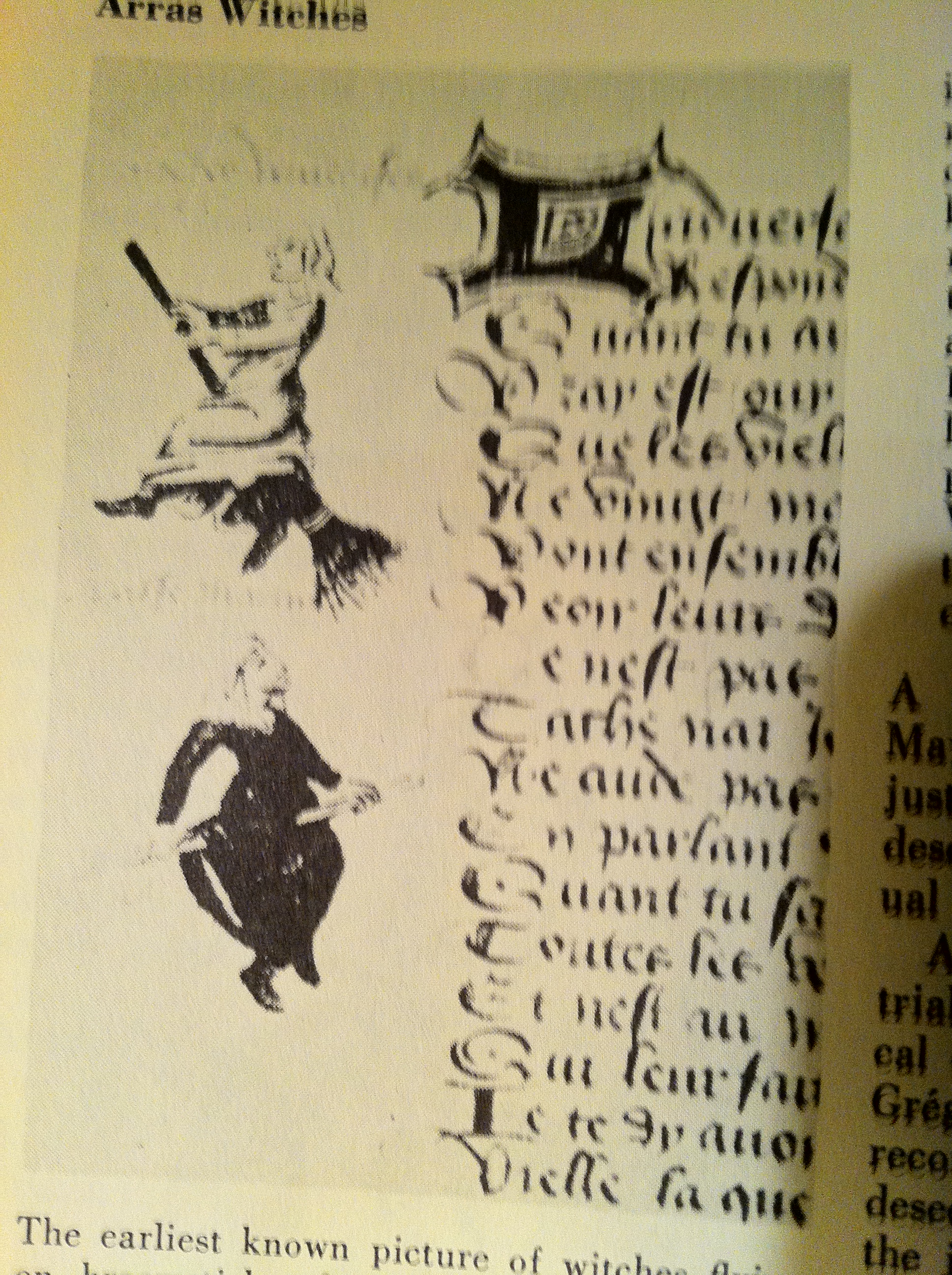
The earliest known depiction of witches on broomsticks (c. 1440).
One of the most common ideas about witches is that they fly through the sky on broomsticks – although very few are known to spell out messages like “Surrender Dorothy!” as they do so. Even the students at Hogwarts learn to fly on broomsticks. The assumption is that anyone magical MUST fly around on a broomstick!
But the original reports of witches flying through the air focused more on the ointments they used than on the implements involved. Most often, the ointment was to be rubbed by the witch onto his or her own skin. Sometimes the ointment was to be rubbed on the implement the witch would straddle. These instruments were always the tools used in maintaining a fireplace, so witches would ride pokers and tongs as well as brooms. The flights were also always at night, so the Wicked Witch of the West’s smoke-written message would not have been visible in the night sky.
What was in these magical ointments that made it possible to fly? The ingredients vary from recipe to recipe but always include at least one drug that is now called “hallucinogenic” in addition to several other gruesome ingredients like human fat, so the modern theory is that the ointment caused the witch to experience flying. (If the ointment was applied directly to the skin or was first applied to the fireplace tool and then absorbed through the witch’s skin as he or she straddled the poker or tongs or broom, it would still have the same effect as the witch would typically be nude while straddling the anointed implement.)
The reports of flight would also describe the witches leaving their material bodies in bed or sitting asleep in front of the fireplace as their spiritual bodies rode the brooms and tongs through the sky. This distinction between “earthly” and “astral” bodies was vital to the accusations brought against witches at their trials. During the great witch hunts, none of the accused were thought to practice anything so tawdry as simply jumping onto a broomstick to fly away into the night. It was always the astral body which went flying and the earthly body which remained at home. (It is only in the more recent movies and television shows that witches bring their earthly bodies “along for the ride.”) So the traditional broom-lore and the modern theory of drug-induced hallucinations that would mimic flight mesh rather well.