Wise Men Finally Arrive–Only 2 Years After the Shepherds!

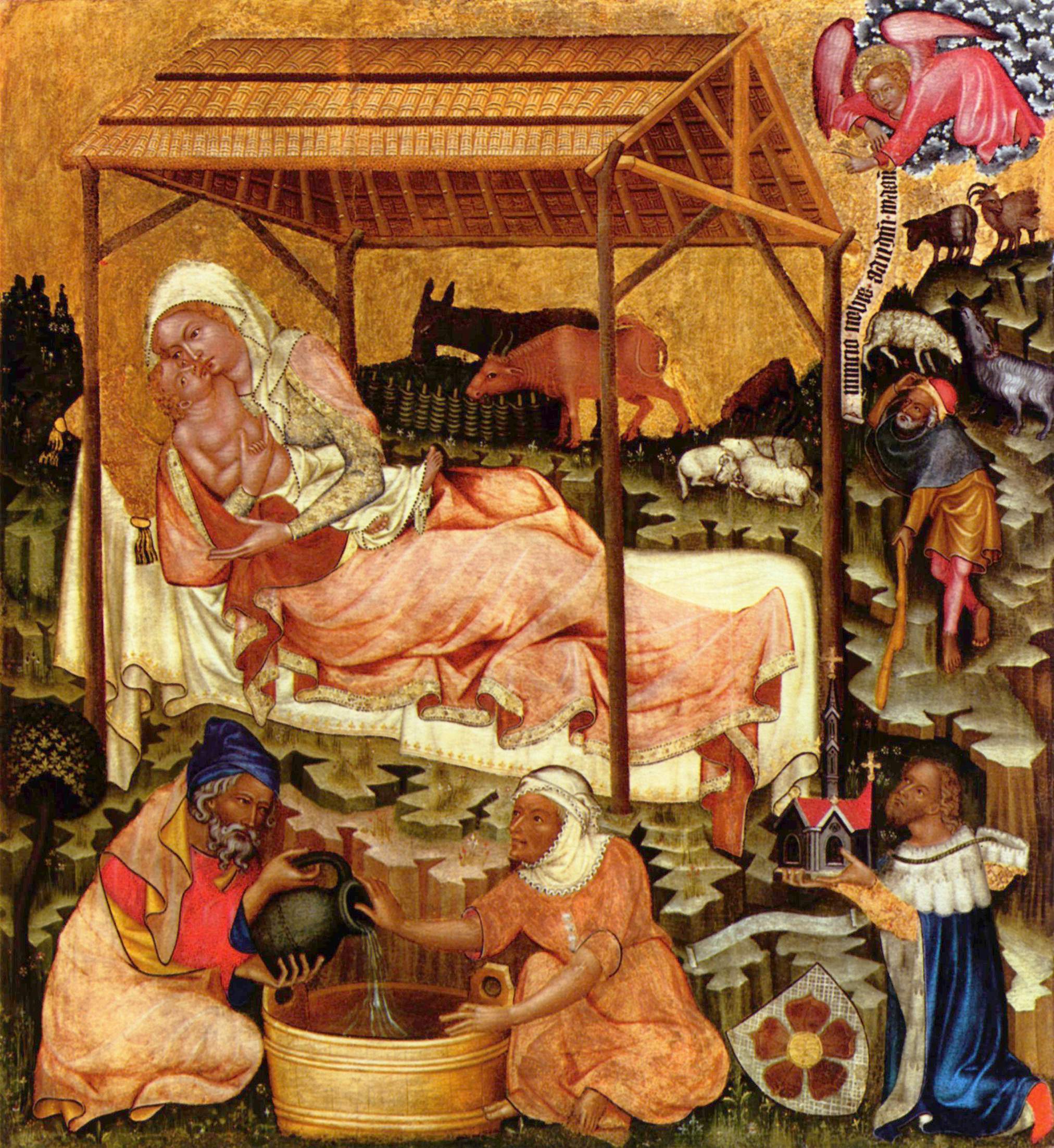
Master of Vyšší Brod, a Bohemian master, c. 1350. The influence of Italian Byzantine painting was strong in the court of Charles IV.

According to the New Testament, the wise men arrived in Bethlehem when Jesus was already two years old! By then, the manger had been put away and the shepherds had all gone home. But the wise men (“magi”) had seen the conjunction (“star”) in the sky and had travelled from Babylon to Palestine to bring their gifts to the newborn King.

“We have seen his star in the East,” the magi told King Herod. “We have come to worship him.”

This news was a surprise to King Herod. He had no idea that a new King of the Jews had been born and had clearly NOT seen the star the magi had. What was the “star” which the magi claimed they had seen and which had told them to come find the newborn King in Judea? Since no one in Jerusalem seems to have seen it, the star could not have been a bright light in the sky or they would have noticed it. Since the Gospel text says that Herod later had all the boys aged two years or younger killed in his attempt to kill the Christ Child, the “star” must have been an astronomical event of some sort rather than a bright light or all the other parents whose children were butchered by Herod’s soldiers would have pointed out the house and said, “No! Not our children — the boy you want is in that house! There!” Also, the magi evidently had seen the star at least 2 years before and it had taken them that long to travel to Jerusalem.

When the wise men did finally arrive in Bethlehem, they are shown presenting their gifts to the Christ Child in the lap of his Virgin Mother. The oldest of the wise men is always in such a hurry to bow down before Christ that he trips and steps on his crown, as in the altarpiece below. (Click here to see a stunning collection of Nativity scenes, some with the shepherds and some with the wise men.)

I remember reading reports in December 1975 (my senior year of high school!) that the “star” was in fact a conjunction of Saturn and Jupiter in the constellation Pisces — and that this conjunction occurs once every 800 years! The magi, being astrologers, would have understood this to mean that a great king (Jupiter) who would usher in the End of Days (Saturn) was being born in Judea (Pisces). This conjunction occurred in December 1975, according to these reports, but I was unable to see it as I was not sure exactly where to look in the sky or on which date(s) to look.
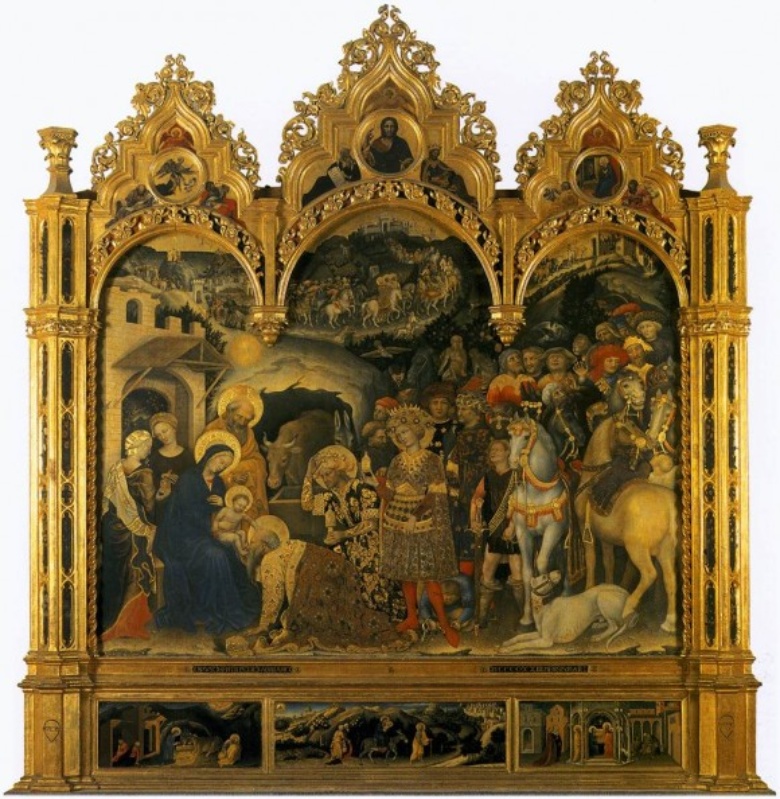
Gentile da Fabriano, Adoration of the Magi, 1423 (Florence, Galleria degli Uffizi)
A Christmas Goldfinch

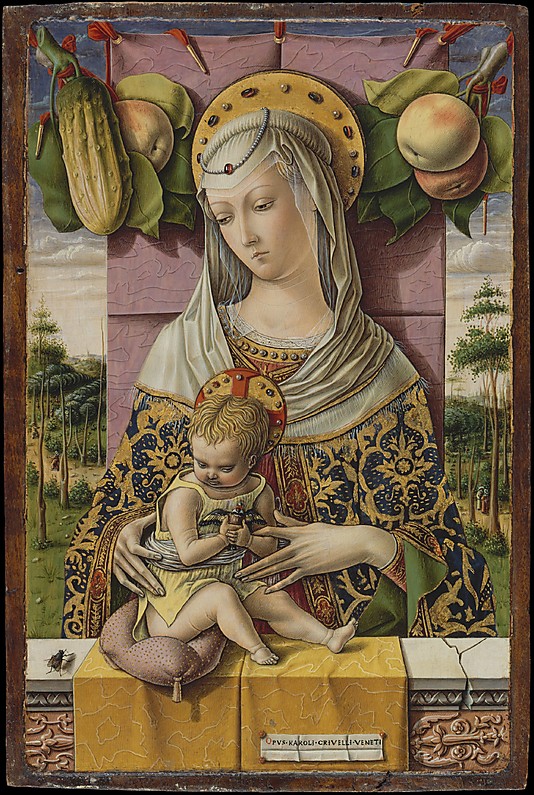
Madonna and Child, by Carlo Crivelli (1480); note the goldfinch in the Christ Child's grasp

Madonna and Child, by Carlo Crivelli (1480); note the goldfinch in the Christ Child’s grasp

Very often in traditional depictions of the Virgin and Christ Child, there is a goldfinch in the baby’s grasp. Why?

The most simple reason might be that in the 14th century it was common for young children to keep tame birds as pets. Christ’s holding a bird allows a parent or a child to recognize his human nature, to identify with him. Despite the angels and the celestial gold background, the viewer is reminded that God lived and died as a man upon the earth.

But when is traditional Christian art ever simple? Or easy?

The goldfinch appears in depictions of Christ’s birth or during his childhood because it was said that when Christ was carrying the cross to Calvary a small bird – sometimes a goldfinch, sometimes a robin – flew down and plucked one of the thorns from the crown around his head. Some of Christ’s blood splashed onto the bird as it drew the thorn out, and to this day goldfinches and robins have spots of red on their plumage. Since goldfinches are also known to eat and nest among thorns, the goldfinch is often read as a prefiguration of Christ’s Passion.

The bird could also be seen as a symbol of the Resurrection of Christ. A non-Biblical legend popular in the Middle Ages related how the child Jesus, when playing with some clay birds that his friends had given to him, bought them to life. Medieval theologians saw this as an allegory of his own coming back from the dead.

Medieval Europeans also saw the goldfinch as a protector against the plague. Since classical times superstition had credited a mythical bird – the charadrius – with the ability to take on the disease of any man who looked it in the eye. The charadrius was sometimes represented as a goldfinch. Perhaps Christ’s finch offers the worshiper protection against the seemingly unstoppable contagion.

Also, since Ancient Egypt, the human soul had been represented in religious art by a small bird. We see the “Ba” (the soul-bird) on a detail of an Egyptian coffins. A very general reading of the goldfinch might, therefore, remind the viewer that his soul is ‘in the hands’ of God.

Curious about that big cucumber hanging from the apple tree? Hmmm… Read a VERY interesting interpretation of it AND other details of this painting here.

Remember the classic “I Want a Hippopotamus for Christmas“? I want a goldfinch!

The Cave of Bethlehem

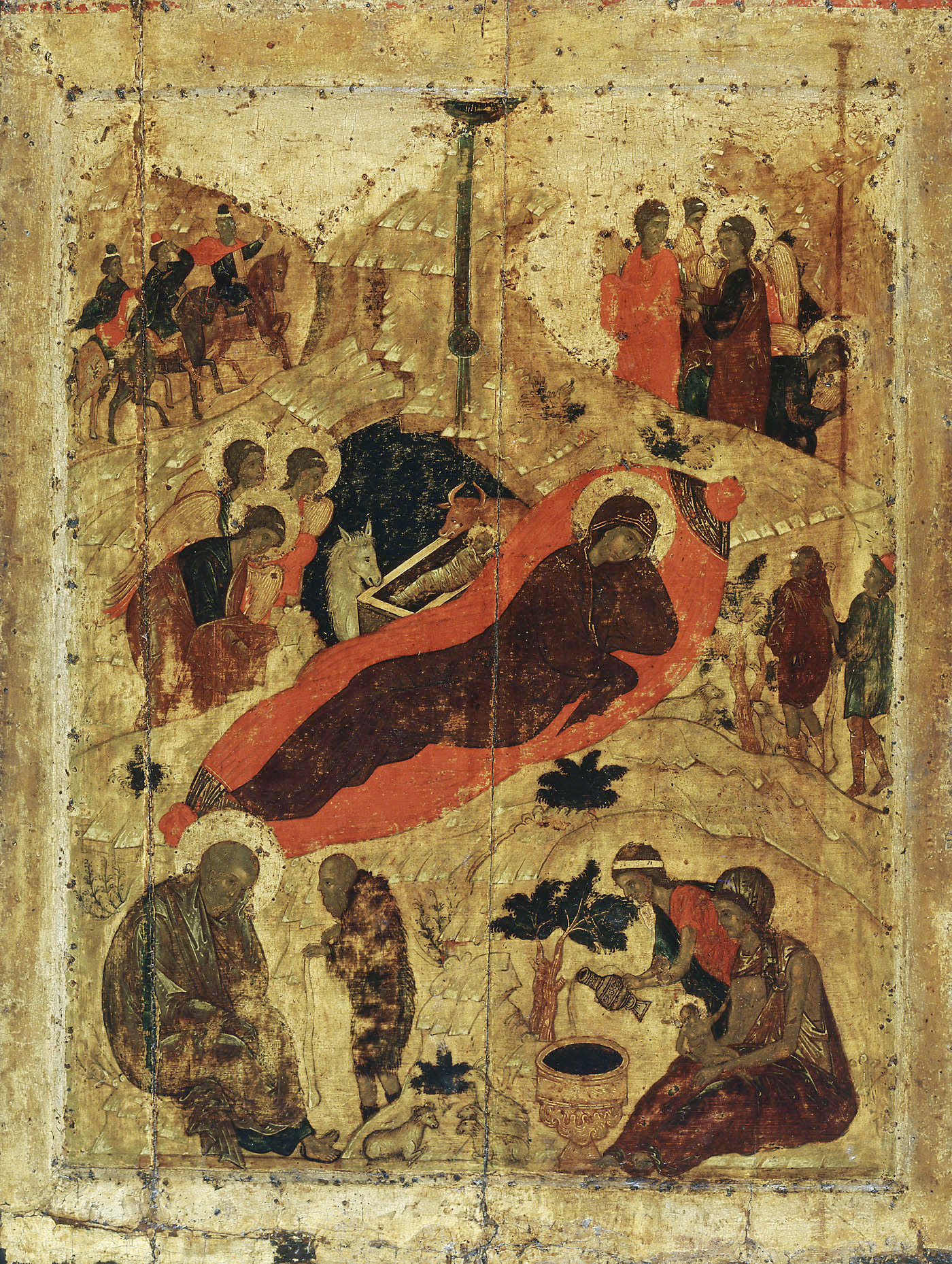
Eastern Orthodox icon of the birth of Christ by St. Andrei Rublev, 15th century. Note that the shepherd speaking with St. Joseph in the lower left is shown in profile, a pose reserved only for this shepherd, the Devil,  and for Judas Iscariot and which indicates their interior wickedness and efforts to hide themselves from God. Also, the cave in which Christ is born is painted with the same absolute black pigment -- unmixed with any other dark colors, which is more usual -- as is the tomb of Christ or the abyss of Hell, into which the Divine Presence has entered.

Eastern Orthodox icon of the birth of Christ by St. Andrei Rublev, 15th century. Note that the shepherd speaking with St. Joseph in the lower left is shown in profile, a pose reserved only for this shepherd, the Devil, and for Judas Iscariot and which indicates their interior wickedness and efforts to hide themselves from God. Also, the cave in which Christ is born is painted with the same absolute black pigment — unmixed with any other dark colors, which is more usual — as is the tomb of Christ or the abyss of Hell, into which the Divine Presence has entered.

We talk about Christ being born in a manger, in a stable and most crèche scenes have the manger inside a straw-roofed hut. But traditional depictions based on ancient models, like the icon above, show the manger inside a cave instead of a straw-roofed hut. The Church of the Nativity in Bethlehem also marks the traditional place of the manger inside a cave beneath the church. Why?

In the Middle East, animals were often stabled in the small caves that dotted the countryside. The inn at Bethlehem that offered a place to Joseph and Mary doubtless had a stable-cave attached. But in western Europe during the 1200s, when it began to be common to erect crèche scenes, the stables there that people were used to seeing were huts. Not caves. So Europeans and Americans expect to see a manger in a hut, not a cave. But the cave was the more likely, original, and actual location of the manger.

A lot of traditional poetry for both Christmas and Good Friday point out that Christ was born and buried in a cave that belonged to someone else, each time protected by a man named Joseph. His swaddling bands, the strips of cloth a baby was wrapped in to keep him/her warm and cozy, look like a the strips of cloth a corpse might be wrapped in. The manger itself looks like a coffin. The celebration of the incarnation and birth of Christ already points to the celebration of his death and resurrection.

In Orthodox icons (such as the one above), the Star of Bethlehem is often depicted not as a bright light but as a dark aureola, a semicircle at the top of the icon, indicating the “divine darkness” or Uncreated Light of Divine grace, with a ray pointing to “the place where the young child lay” (Matt 2:9). Sometimes the faint image of an angel is drawn inside the dark semi-circle, pointing the way for the Magi.