“Beware the Ides of March, 2018!”

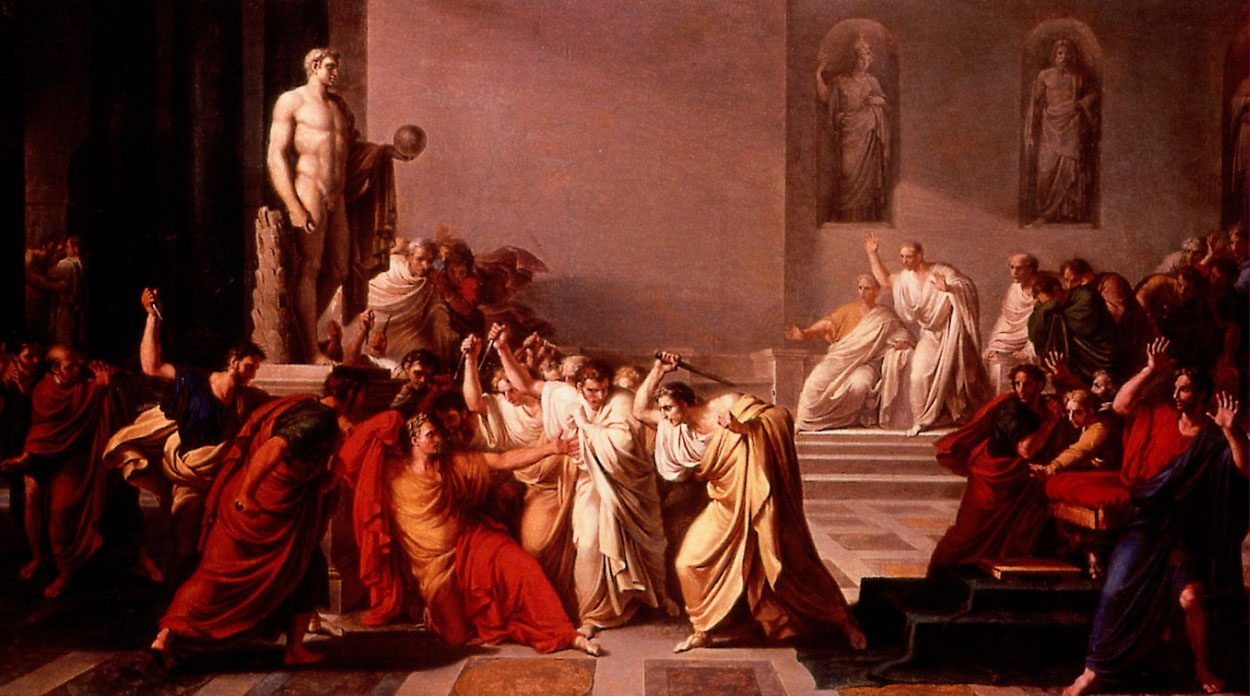
Vincenzo Camuccini, "Morte di Cesare", 1798,

Vincenzo Camuccini, “Morte di Cesare”, 1798,

“Beware the ides of March!” the prophet warned Julius Caesar in 44 B.C. and Caesar was assassinated shortly thereafter, on the ides. Ever since, the Ides of March has been a day associated with doom, disaster, or failure in some form. But what is the “ides”?

Unlike currently used dates, which are numbered sequentially from the beginning of the month, the Romans and medieval Europeans counted backwards from three fixed points: they designated the “kalends,” the “nones,” and the “ides” and all other dates were based on these. (ex. the kalends = the 1st, the nones = the 5-7th, and the ides = the 13-15th days of the month). For instance, rather than saying, “Today is March 3” they would say, “Today is three days before the nones of March.” The kalends marked the new moon, the nones was the half-moon and the ides was the full moon.

The ides of the month marked the full moon and thus the following days of each month were governed by the waning moon, a good time for curses as dark magic grew more powerful as the nights grew darker. Not only would dark magic grow stronger but the darker nights also made crime in general more likely. That the last half of each month was steeped in evil and disaster was underscored by its association with the assassination of Caesar.
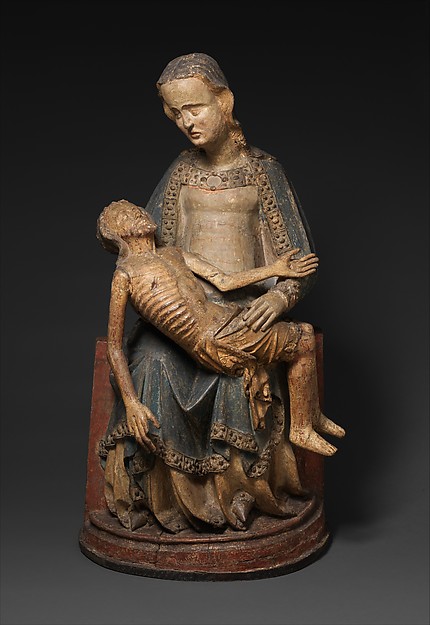

Pietà

A German depiction of the Pietà, c. 1375–1400

Renaissance genius Michelangelo (1475-1564) was born on March 6 in Caprese, Italy. He was a painter, sculptor, architect, poet and visionary best known for his fresco on the ceiling of the Sistine Chapel and his sculptures David and The Pieta.

The Pietà (“pity”) was an image designed to provoke pity and charity among the viewers. The Virgin Mary holds the dead body of her son, Jesus, on her lap. She is often identified as an altar in these images, especially the ones in which her knees are spread wide to support the body of Christ stretched out across them, because her lap–draped with her gown and veil–looks similar to the rectangular altars in medieval and Renaissance churches which were also draped with brocade during the celebration of the Eucharist. The offerings viewers make in response to the image–food for the hungry, clothes for the naked, medicine for the sick–are identified with the offering of the Virgin’s son on the Cross and on the altars.

In some places, gifts of wheat were made to churches in honor of the Pietà image. The wheat would be used to make bread for the poor as well as bread for the Eucharist. Jesus, a dead body but identified as the Bread of Life on the lap of his Mother, is awaiting the Resurrection. The viewers who make these gifts of wheat are likewise awaiting their own opportunity to share the Resurrection and hope that their gifts will move Christ to judge them mercifully, with pity.

Festivals in honor of the Pietà image grew in popularity in the 12th century in German-speaking areas. One was especially popular in Cologne in 1423 and was held on the Friday after the third Sunday after Easter. During the sixteenth century these festivals spread through areas in North Germany, Scandinavia, and Scotland. By the early 1700s, the Pietà festival was common throughout Western Europe.

Rabbit! Rabbit!

A European rabbit. A new report debunked the long-held scientific tale that rabbits were domesticated in 600 A.D. because a pope declared their fetal meat to be like fish and therefore O.K. to eat during Lent.
Credit
APCOR/DKV

According to longstanding folklore, Pope Gregory the Great gave monks in France permission to consider rabbits-in-utero to be “fish” rather than meat and so elgible to be eaten during Lent. What apparently really happened was that a different Gregory, St. Gregory of Tours, simply described how someone he knew ate rabbit during Lent. But the story got slightly jumbled and the jumbled version lasted for hundreds of years. You can read about what happened here.

Rabbits are featured in folklore around the world. Although the English-speaking world is familiar with the man-in-the-moon, in Asia and among the Aztecs it is a rabbit-in-the-moon who looks down at the earth from the night sky. The rabbit-in-the-moon is there as a reward for an act of charity to a hungry old man. According to the story, a monkey, an otter, a jackal, and a rabbit resolved to practice charity on the day of the full moon, believing a demonstration of great virtue would earn a great reward. When an old man begged for food, the monkey gathered fruits from the trees and the otter collected fish, while the jackal wrongfully pilfered a lizard and a pot of milk-curd. The rabbit, who knew only how to gather grass, instead offered its own body, throwing itself into a fire the man had built. The rabbit, however, was not burnt but rose to the sky with the smoke from the fire. The likeness of the rabbit is still there on the moon for all to see.

In many places, rabbits were symbols of women, femininity, female deities, and female magic which was associated with the lunar cycle, fertility, longevity, and rebirth. Rabbits are also contradictory, paradoxical creatures: symbols of both cleverness and foolishness, of femininity and androgyny, of cowardice and courage, of rampant sexuality and virginal purity. In some lands, Hare is the messenger of the Great Goddess, moving by moonlight between the human world and the realm of the gods; in other lands he is a god himself, wily deceiver and sacred world creator rolled into one.