Flying Carpets

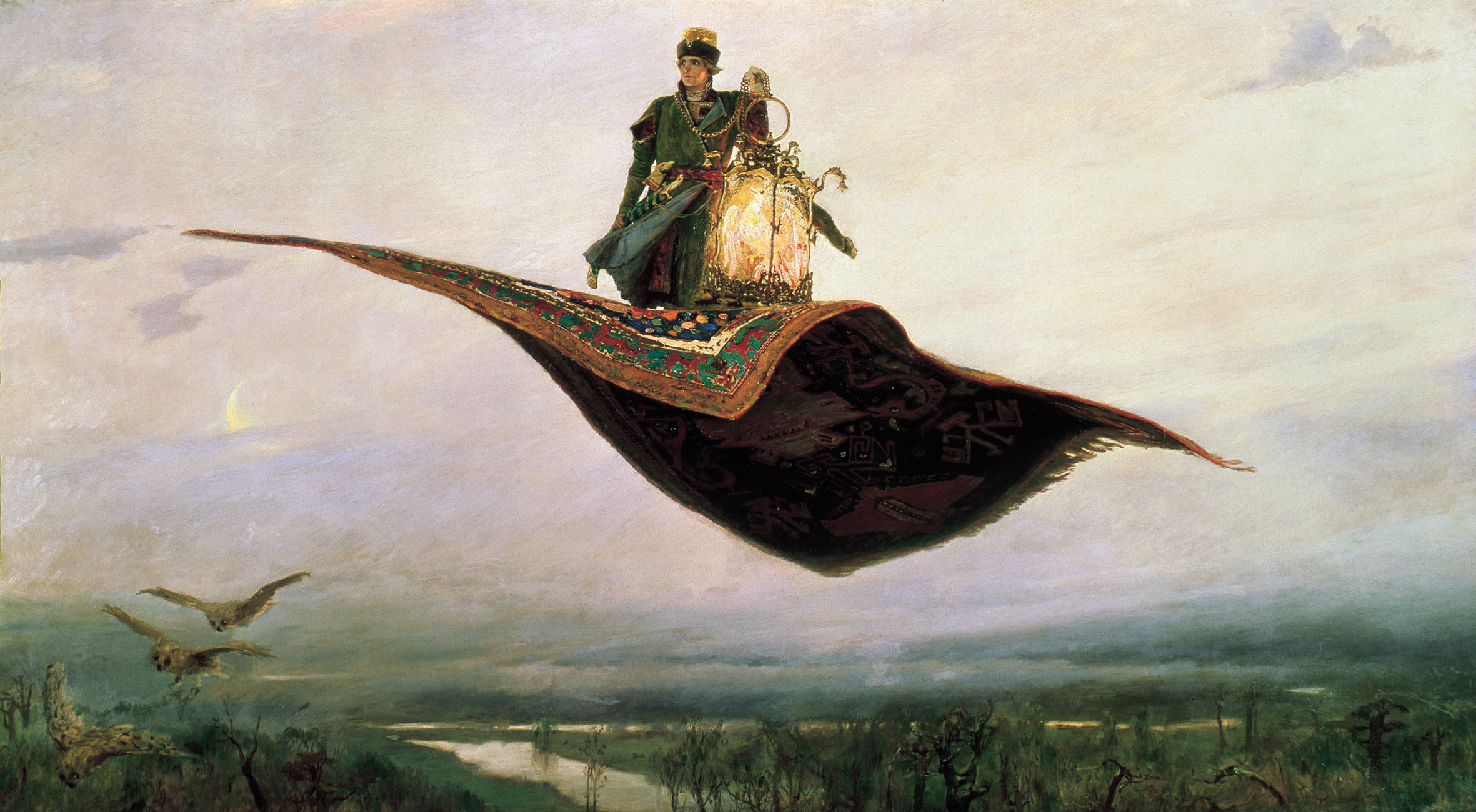
Riding a Flying Carpet, an 1880 painting by Viktor Vasnetsov

Flying carpets seem to be the single most famous object in the Abrian Nights stories. well, flying carpets and magic lamps. But everyone knows flying carpets fill the stories of the Arabian Nights.

Or do they? I just read a fascinating essay by Ruth B. Bottigheimer in the most recent issue of Gramarye, the journal of the Sussex Centre for Folklore, Fairy Tales, and Fantasy. Bottigheimer points out that only a few of the Arabian Nights tales include flying carpets and those tales are all late additions to the collection. A flying carpet first appears in the tale Prince Ahmed and Pari Banou which was written by Hanna Dyab, a Syrian Christian who travelled to Paris and wrote his story after reading French fairy tales. His story follows a basic European fairy tale plotline which is different from the usual plots of the Arabian Nights tales.

The tale of Prince Ahmed and Pari Banou is based on a French story by Madame d’Aulnoy called White Cat. The French story has a beautiful carpet that does not fly and so a beautiful carpet appears in Pari Banou as well. But there is a wooden horse that can fly in the White Cat story and so the beautiful carpet in Pari Banou DOES fly. Before Hanna Dyab retold White Cat, the only Arabic mention of “magical carpets” were actually wooden platforms in the Koran which says that King Solomon was able to control the wind and travel great distances in a single day, with a large wooden platform travelling with him to carry all his servants, possessions, and soldiers.

Jewish stories from the Middle Ages also say that King Solomon was given the power to control the winds by God. In the Jewish stories, Solomon rides a green carpet with all his servants. But these Jewish stories were apparently unknown to Arabic storytellers. It seems that one of the most apparently Arabic magic objects–flying carpets–actually came from a Syrian Christian who retold a French fairy tale to the man collecting the Arabian Nights stories.
Executions

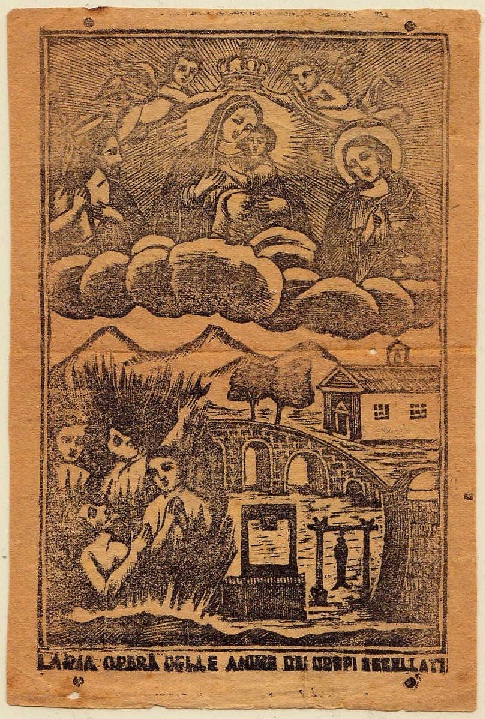
Ancient lithography representing the elements of devotional practices towards the holy souls of the executed in Sicily.

June 29, 1972 – The U.S. Supreme Court ruled (5-4) that capital punishment was a violation of the Eighth Amendment prohibiting “cruel and unusual punishment.” The decision spared the lives of 600 individuals then sitting on death row. Four years later, in another ruling, the Court reversed itself and determined the death penalty was not cruel and unusual punishment. On October 4, 1976, the ban was lifted on the death penalty in cases involving murder.

Executions and the corpses of the executed have always fascinated people. Stories about the corpses fill books of folklore, legends and mythology. A hanged man’s hand was used to cure warts and skin tumors in England. All sorts of body parts were used in magic and medicine and these were taken from the corpses of the executed either by the executioner or by people who came to unearth and exhume the bodies of the executed in graveyards.

Prayers, folklore and customs from Southern Italy testify that even the souls of criminals had their part in the devotional practices of the population. Invoking the holy souls of the executed who dwelled for a long time in Purgatory, people established a compassionate connection between the actual and the heavenly world. The Catholic and political context of places like 19th-century Sicily, where the bandit might be seen as a popular hero who opposed the Bourbon oppressor, strongly connotes the concept of “holy soul”.

“In the Forest, Deep and Dark….”

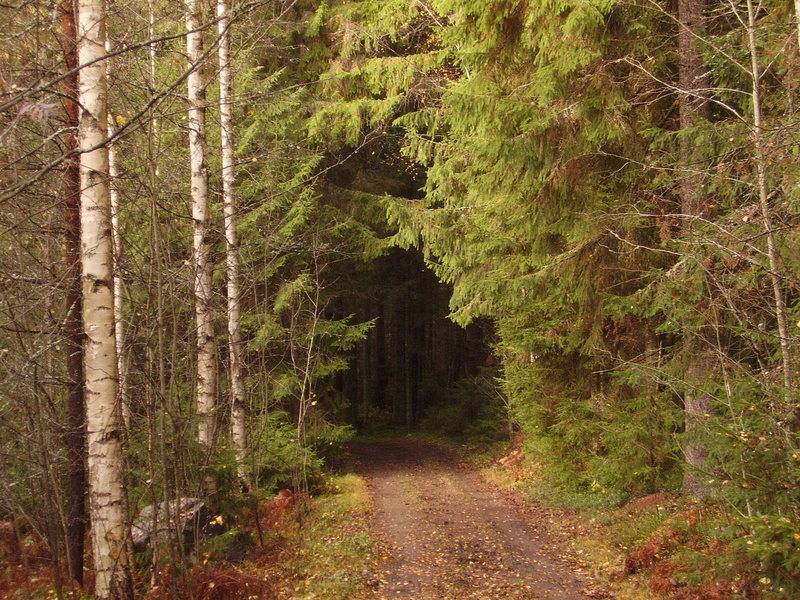
It’s increasingly rare to find a forest that hasn’t been shaped by human use. Ohikulkija/CC BY-SA 3.0

When I was small, there was a tremendous forest across the field from my great-grandmother’s house on San Juan Island. I called it the Black Forest, after the famous fairy-tale forest in Germany. It was everything I ever imagined a fairy tale forest would be and never went more than a few feet into the trees. I was terrified of becoming lost and wandering in the woods. I was certain that either Baba Yaga or the gingerbread-house witch would find us if we ever wandered too far under the great trees.

Forests are big, dark, and mysterious. They appear in many–if not most–fairy tales. Forests hide Big Bad Wolves. Witches hide their gingerbread houses in forests. Castles that belong to mysterious strangers are surrounded by forests. Sometimes the forest is itself enchanted. Forests are always dangerous and places of adventure that mark the edges of this world and the worlds of spirit and imagination.

Facts, folklore, superstitions, myths, and anecdotes about trees and forests have always fascinated us. A wonderful book came out recently, Forests in Folklore and Mythology, that makes these tales available all in one place and examines the threads or traits they have in common. Customs, temples and sacred groves; mythical forest creatures such as witches, fairies, demons, wood spirits, and wood nymphs are all in its pages.

Certain kinds of trees are associated with wisdom, life, or death. Celtic mythology tells us that birch trees are important in both the winter and summer to purify the world. Birches were celebrated during the festival of Samhain (what is now Hallowe’en)–bundles of birch twigs were used to drive out the spirits of the old year. Later this would evolve into the ‘beating the bounds’ ceremonies in local parishes, a festival in the springtime. Gardeners still use the birch brooms to ‘purify’ their gardens.

According to Atlas Obscura, the last of the great fairy tale forests can be found in Finland, or on the Carpathian or Balkan mountain ranges that slice across Romania and Bulgaria.