Harvest and Winepress

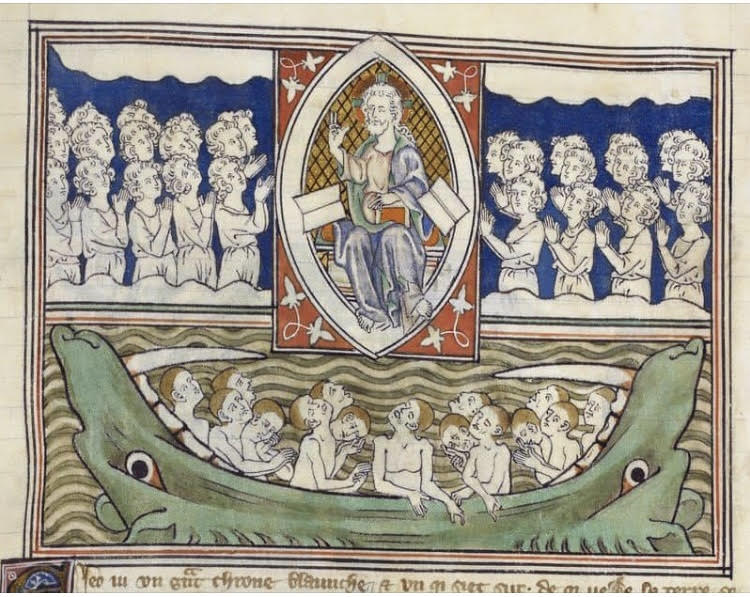
Detail of a miniature showing the Last Judgement from the “Queen Mary Apocalypse”, early 1300s (Royal MS 19 B XV, f. 40r).

Then I looked, and … another angel came out of the Temple and called in a loud voice… “Put in your sickle and harvest for the hour of the harvest has come, for the harvest of the earth is fully ripe. (Apocalypse 14:14-15)

In much of the New Testament (Matthew 13) or the Old Testament prophets (Isaiah 17, Jeremiah 51, Joel 3), the images or parables about the harvest use the image of “harvest” as a way to talk about the Last Judgment, the End of Days. Often, the idea of harvest includes the idea of condemnation: the wicked will be harvested and condemned to their eternal punishment. But in the Apocalypse, the idea of harvest is about salvation rather than condemnation. The righteous are ripe–they have withstood the test of persecution–and they are harvested in the Apocalypse, not the wicked; the righteous are harvested and gathered before the Throne of God as crops are gathered into a barn for safekeeping.

But after the righteous are harvested, the wicked are gathered into the divine winepress. The “great winepress of God’s wrath” (Apoc. 14:19) is outside the heavenly city, just as the Cross was erected outside the walls of Jerusalem. The winepress grinds up those flung into it and their blood pours out as the grape juice flows from a winepress on earth, ready to be made into wine. Christ is flung into the divine winepress on the Cross and his blood pours out into the chalice of the Eucharist; in the Apocalypse, the wicked are thrown into the divine winepress which is outside the city–outside the Church–and they are trodden as grapes are trodden. But they do not emerge from the winepress victorious, as the martyrs do. The wicked are destroyed in the winepress because they choose to align themselves with the dragon–all the powers that oppose God and the Lamb.

Harvest and winepress. Bread and wine. How we choose to prepare for (1 Cor. 11) or respond to these experiences results in our salvation or condemnation. Often in ways that we do not expect.
Hymns in the Apocalypse

I was about to write my next entry on the Apocalypse when the new issue of Worship arrived in the mail. Worship is one of the leading academic journals about liturgy and liturgical studies; it always has essays and book reviews that fascinate and illuminate. There was an essay in this issue about liturgical hymnography and look what I discovered: a mention of liturgical hymns in the Apocalypse!

The portrayal of the heavenly liturgy in the Book of Revelation features many hymns that must surely reflect the worship experience of the author and intended audience. Again, they are clearly in a psalm style and their diction mines the Psalter extensively, but they would also have been immediately recognized as a “send-up” of the hymns commissioned for the imperial cult. Take, for example, Revelation 11:17-18.

We give you thanks, O Lord God, the sovereign over all (pantokrator) who are and who were, that you have taken your great power and begun to reign. (Rev. 11:17)

The Christians of the seven churches in the Roman province of Asia would have immediately recognized this as a parody of the acclamations of the divinized Roman Emperor sung at the imperial festivals that were a regular feature of life in their cities.

(Margaret Daly-Denton, “Instilling the Word” in Worship (July 2021), pp. 200-201.

In the Apocalypse, not only do we encounter the history of the Church and the wonderful works of God’s power (told over and over, from a variety of perspectives), we also encounter the Christians thumbing their noses at the imperial power hell-bent on destroying them.

We should remember that as St. Paul and other New Testament authors were urging the Christians to “obey the civil authorities” and “Give unto Caesar the things that are Caesar’s,” it was those same civil authorities and the same imperial policies that were actively putting the Christians to death; the same authorities that were to be obeyed were making martyrs.

Modern Christians who urge cooperation with civil authorities when they think the authorities will legislate in their favor and resistance when they don’t care for the civil policies, quoting those New Testament authors, should remember that: submission to civil authorities was first and foremost given to civil authorities that oppose everything the Church stands for.

Early Christian political theory can be summed up in one sentence: Don’t give your enemies any more reason to arrest you than they already have.

The Lamb and the 144,000

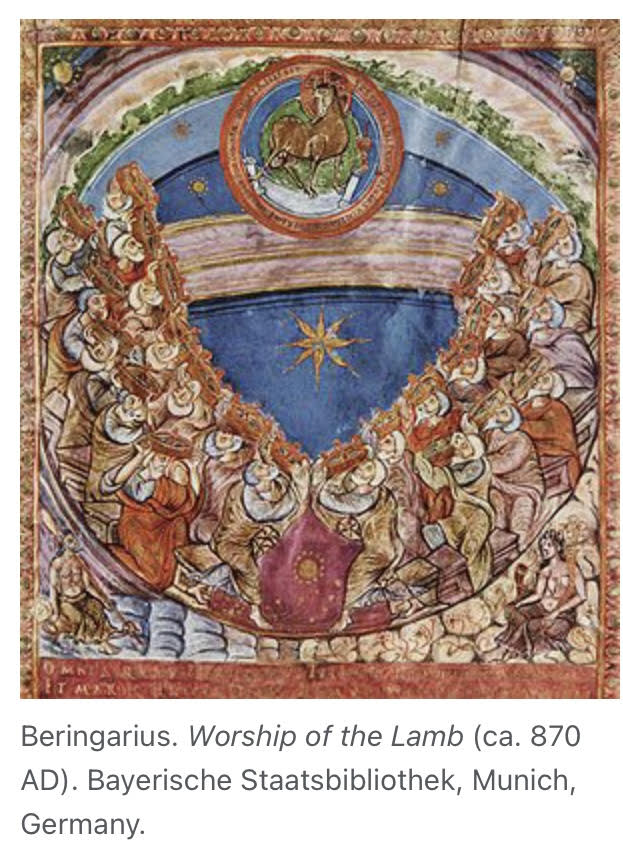
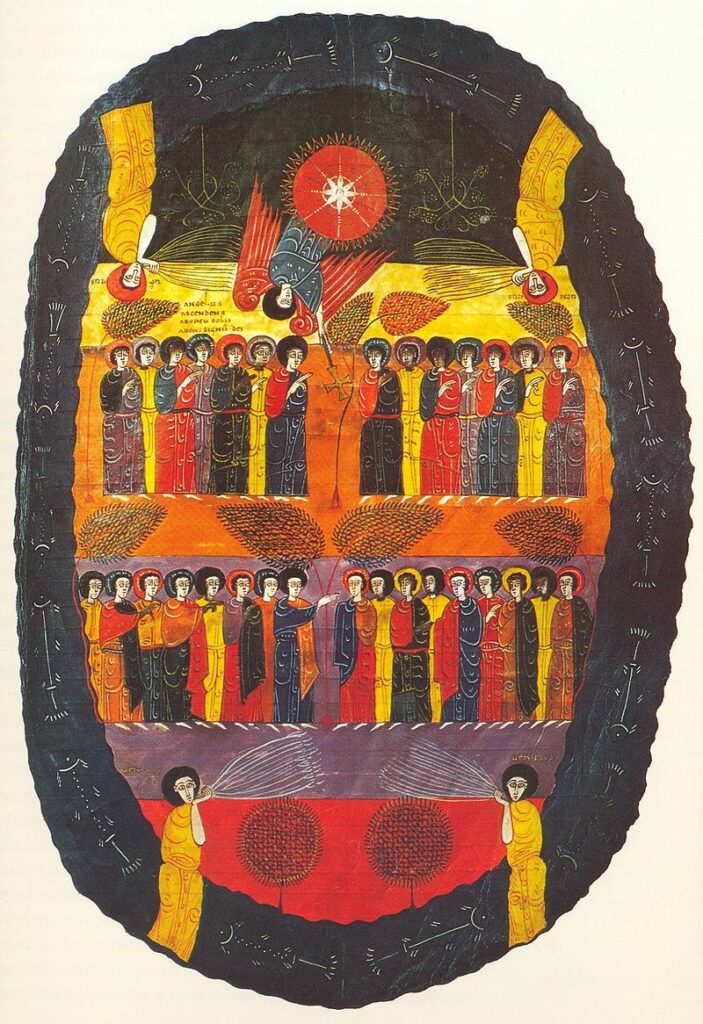
Page from a famous illuminated manuscript painted by an unknown artist, depicting the 144,000 from Revelation 7, from a copy of the Commentary on the Apocalypse by Saint Beatus of Liébana

Then I looked, and there before me was the Lamb, standing on Mount Zion, and with him 144,000 who had his name and his Father’s name written on their foreheads. And I heard a sound from heaven like the roar of rushing waters and like a loud peal of thunder. The sound I heard was like that of harpists playing their harps. And they sang a new song before the throne and before the four living creatures and the elders. No one could learn the song except the 144,000 who had been redeemed from the earth. (Apocalypse 14:1-3)

SO much to say about such a brief passage! Modern commentaries often claim that the 144,000 are the Messianic Jews who accept that Jesus is the Messiah but in the early Church there was no such distinction between ethnic Jews and Gentile Christians. Classic commentaries by church Fathers interpret the 144,000 as emblematic of the perfected Church–12x12x1000 being the 12 apostles x 12 tribes of Israel x 1000 (perfection). That is also why the 1,000 year reign of Christ is an emblem of history perfected, not a literal 1,000 years as we know the cycle of 365 days x 1000.

The new song of the new day of salvation grows out of the song of deliverance sung by Israel on the shore of the Red Sea after the Exodus. (Have I told y’all about this already? I think I have.) The new song is also the Sanctus (“Holy! Holy! Holy!”) sung by the angels as they stand around the Throne of God and which we join them singing during the celebration of the Eucharist. During the Eucharist, we stand with the 144,000 before the Throne–together with the elders (presbyters) and four living creatures; together, we sing the Sanctus and give thanks for all that the Holy Trinity have done for us.

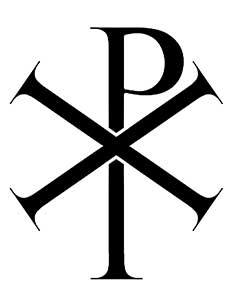
The saved are marked with the name of the Lamb and his Father, just as the followers of the Beast are marked by the diabolic number. But the classic commentary on the Apocalypse by Tyconius has something very different to say: according to Tyconius, the diabolic mark of the Beast is not described in Chapter 13. Rather, the number at the end of Chapter 13 is “616” and is “the number of a [certain] man,” i.e. the Son of Man, the Lamb of God. The number 616 is the total of alpha and omega, the first and last letters of the Greek alphabet and refer to Christ. It is also the total of the letters XIS, the first and last letters of “Christ Jesus.” Therefore, Tyconius understands the numbers 616 to indicate the famous Chi Rho emblem of Christianity. It is this emblem which is described as marked on the 144,000 at the beginning of Chapter 14.

Other early commentators say that the sign marked on the 144,000 is the cross drawn in chrism-oil by the bishop with his thumb when converts were baptized.

How’s that for a totally unexpected set of ideas about the 666 that we discussed last week?!