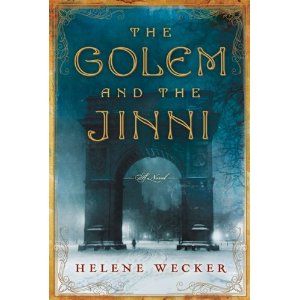
The Golem and the Jinni

The Golem and the Jinni, by Helene Wecker

The Golem and the Jinni, by Helene Wecker

I was recently at the Midwinter meeting of the ALA and picked upr The Golem and the Jinni by Helene Wecker and was very impressed. She first introduces us to the Golem, a woman made of clay and brought to life by Kabbalistic magic, who arrives alone in turn-of-the-century New York City. Then we meet the Jinni, who also arrives alone in Manhattan. We follow parallel storylines that are both complicated yet easy to follow as we discover the “back story” of these two characters even as we follow their adventures in New York. In an amazing series of twists and turns, all the storylines are brought together in the final confrontation of the book.

Ms. Wecker describes the magic in wonderfully understated terms. She also is very creative in filling in the gaps or “unpacking” the legendary origins of golems and jinn, unting her own imagination to traditional lore. The portrait of immigrant New York is also exquisite.

My only difficulty with The Golem and the Jinni was making myself read it slowly enough to appreciate the language and the story when I wanted to rush ahead to see what happens next!
Happy birthday, Pamela Colman Smith!

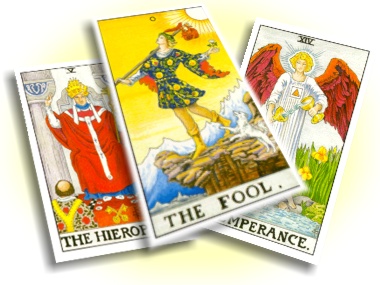
Tarot cards with the famous images designed by Pamela Colman Smith.

Tarot cards with the famous images designed by Pamela Colman Smith.

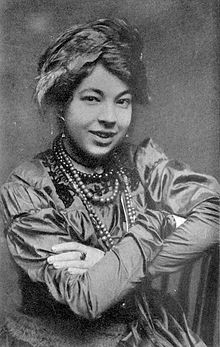
Pamela Colman Smith, c. 1912; she died on September 18, 1951.

Pamela Colman Smith, c. 1912

Pamela Colman Smith, best known for her illustration of the tarot deck that now bears her name [Rider-Waite-Smith] and has become the standard deck nearly all readers begin and learn with and continue to use throughout their reading careers, was born on February 16, 1878. Born in England and raised in New York, she studied art at the Pratt Institute in Brooklyn. She returned to England when her father died in 1899 and continued her work as an illustrator which she had begun in the US. Her work included illustrating works by Bram Stoker and she began designing costumes and stage sets for the theatre company Stoker was affiliated with.

Her friend Yeats introduced her to the Heremetic Order of the Golden Dawn and she joined in 1901. Having met Waite, he commissioned her to produce a tarot deck in 1909. Published by William Rider & Son of London, the deck was the first to depict illustrations for all the cards, Minor Arcana as wellas Major, and has remained the most popular and easily available deck.

The images she designed for the Major Arcana were evidently based on Waite’s detailed instructions but he simply gave her a list of the meanings associated with the Minor Arcana cards and left her to design the images for those herself. Most likely, she drew all the images in pen-and-ink and then used watercolor to complete the work.

Shortly after the publication of the tarot deck, Pamela converted to Roman Catholicism. She died in Cornwall, 18 September 1951 penniless and in debt, evidently having received no royalties from the card images she had produced and for which she had been paid a flat fee.

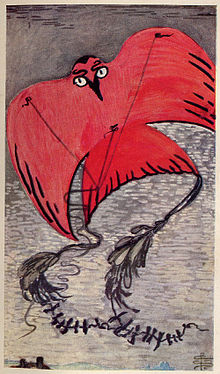
Illustration for the first edition of Bram Stoker's Lair of the White Worm in 1911

Illustration for the first edition of Bram Stoker’s Lair of the White Worm in 1911

Love is in the air!

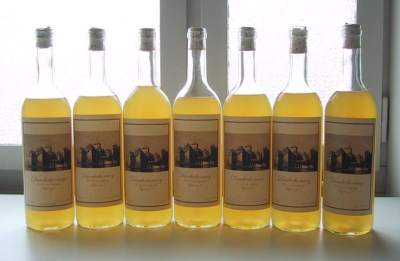
It was a Norse custom to give a newlywed couple enough mead (i.e. honey wine) to last for a month. Hence, our term "honeymoon" ti describe the first weeks of marriage.

It was a Norse custom to give a newlywed couple enough mead (i.e. honey wine) to last for a month. Hence, our term “honeymoon” ti describe the first weeks of marriage.


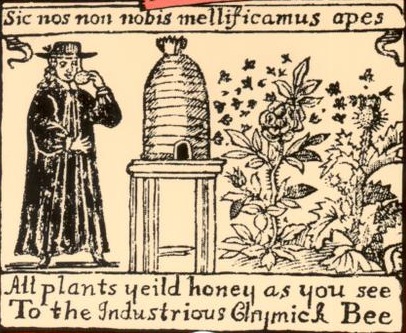
Collecting the honey to make mead or use to preserve/sweeten food. Collecting the honey to make mead or use to preserve/sweeten food.[/caption

With the modern celebration of Valentine’s Day nearly upon us, can thoughts of love magic be far behind? A number of traditional ways to win another’s heart have been used over the years. One way a woman could win a man’s heart was by feeding him food into which she had mixed some of her own blood (menstrual blood was especially effective). Catching the reflection of mating birds in a mirror on Thursday was the first step in a more complicated love spell. After catching the reflection, a person would give the mirror to his or her chosen and once the receiver looked into the mirror, they would be irresistibly infatuated with the mirror-giver. Or a woman might resort to the much more simple use of caraway seeds, cloves, or coriander to win the affection of the man she had chosen. One English love potion included the kidney of a rabbit, the womb of a swallow, and the heart of a dove while an ancient Greek love potion used a stallion’s semen or a mare’s vaginal discharge.

Garlic, saffron, ginger, or even vanilla(!) were more likely to be used in erotic magic, which was less concerned with affection, and more likely to be aimed by men at women. Wax images could be pierced by pins to incite lust. Striking the intended with hazel or willow branches was also thought to inspire lust. Or you could obtain a few hairs from your intended’s head, tie them in a knot with twine, and then keep the amulet on your thigh or around your genitals to draw your intended’s attentions.

Of course, there were ways to deflect this sort of magic as well. Lily or lettuce could break love spells or decrease lust and thwart unwanted attentions. Just be sure not to confuse which herbs you feed to which guest at your table!