
Cinematic Magic

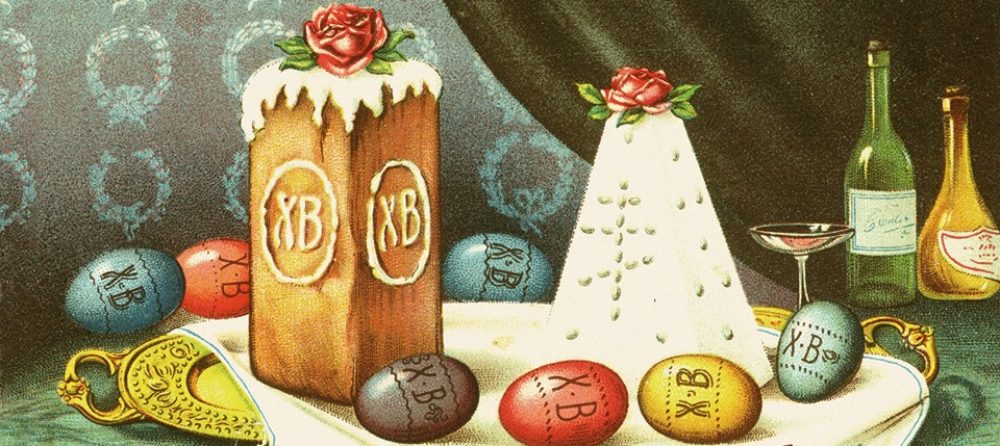
Poppy blossoms attract good luck and fortune. Poppy seeds are said to grant the ability to become invisible.

Poppy blossoms attract good luck and fortune. Poppy seeds are said to grant the ability to become invisible.

Do you have a favorite actor or actress? How about a favorite movie or director? Want to give your favorite some help at the Academy Awards? What magical ways might influence the Academy’s choices on Sunday night?

One way is to carve your wish (that is, the name of the actor/actress, director, or movie) on a shard of bamboo and then bury it.

There are many herbs associated with obtaining good luck or success. Allspice or nutmeg can be burnt as incense to send luck to your movie favorites. Roses bring luck to those to whom they are sent, as can a blooming poppy. (You can also soak the poppy seeds in wine for fifteen days and drink the wine once a day for five days. If you eat nothing else during those five days, you will then have the ability to make yourself invisible!)

If the weather cooperates, you can pluck the first violet of the season to win the fulfillment of your wish.

Strawberry leaves attract luck to those who carry them in a pocket. Maybe you can send a message to your Oscar choices and suggest they put a handful of strawberry leaves in their pocket before walking down the red carpet on Sunday.
 

Witches on Broomsticks

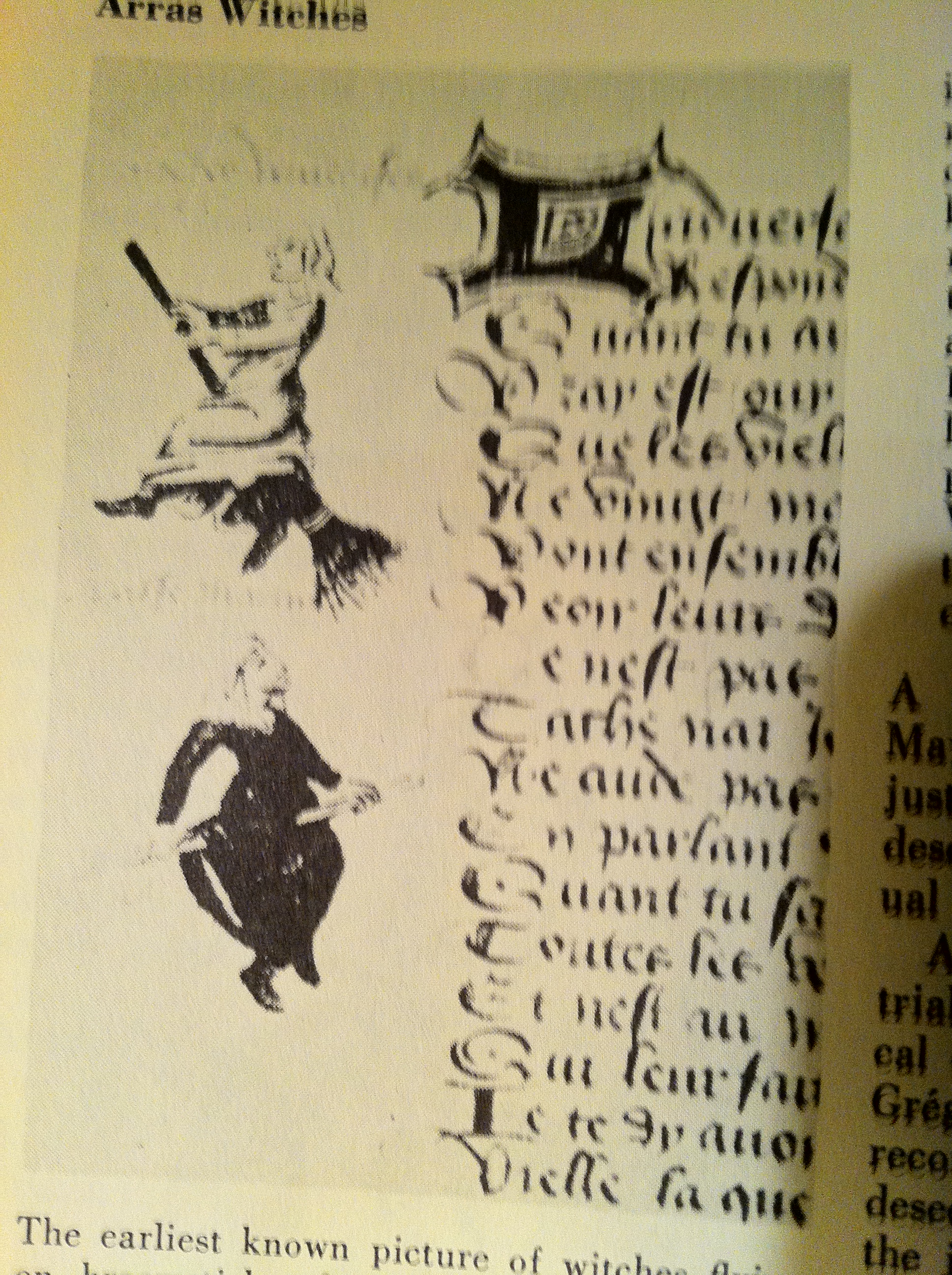
The earliest known depiction of witches on broomsticks (c. 1440).

The earliest known depiction of witches on broomsticks (c. 1440).

One of the most common ideas about witches is that they fly through the sky on broomsticks – although very few are known to spell out messages like “Surrender Dorothy!” as they do so. Even the students at Hogwarts learn to fly on broomsticks. The assumption is that anyone magical MUST fly around on a broomstick!

But the original reports of witches flying through the air focused more on the ointments they used than on the implements involved. Most often, the ointment was to be rubbed by the witch onto his or her own skin. Sometimes the ointment was to be rubbed on the implement the witch would straddle. These instruments were always the tools used in maintaining a fireplace, so witches would ride pokers and tongs as well as brooms. The flights were also always at night, so the Wicked Witch of the West’s smoke-written message would not have been visible in the night sky.

What was in these magical ointments that made it possible to fly? The ingredients vary from recipe to recipe but always include at least one drug that is now called “hallucinogenic” in addition to several other gruesome ingredients like human fat, so the modern theory is that the ointment caused the witch to experience flying. (If the ointment was applied directly to the skin or was first applied to the fireplace tool and then absorbed through the witch’s skin as he or she straddled the poker or tongs or broom, it would still have the same effect as the witch would typically be nude while straddling the anointed implement.)

The reports of flight would also describe the witches leaving their material bodies in bed or sitting asleep in front of the fireplace as their spiritual bodies rode the brooms and tongs through the sky. This distinction between “earthly” and “astral” bodies was vital to the accusations brought against witches at their trials. During the great witch hunts, none of the accused were thought to practice anything so tawdry as simply jumping onto a broomstick to fly away into the night. It was always the astral body which went flying and the earthly body which remained at home. (It is only in the more recent movies and television shows that witches bring their earthly bodies “along for the ride.”) So the traditional broom-lore and the modern theory of drug-induced hallucinations that would mimic flight mesh rather well.


A Great New Review on Publishers Weekly!

This review of Come Hell or High Water, Part 1: Wellspring just appeared in Publishers Weekly:

Morris generates some genuine chills and thrills in this entertaining series opener that alternates between the 14th and 21st centuries. The author gets things off to a good start with a powerful opening set in 1356 Prague, as an herbalist named Fen’ka is burned at the stake for being a witch. With her last breath, she curses her killers—”When this fire dies, let all their nightmares come to life.” Next, the action shifts to 2002, as Magdalena, who works in Charles University’s literature and folklore department, encounters Fen’ka’s ghost after receiving a warning from a fortune-teller. The author’s background in medieval history stands him in good stead in the 14th-century sections, as he slips in interesting details to help make the fantastic plausible.

THANK YOU@ PUBLISHERS WEEKLY!
🙂