

Aries the Ram

Aries, the ram, is the first sign of the zodiac in western astrology.

Aries, the ram, is the first sign of the zodiac in western astrology.

The sign Aries, the ram, is the first sign of the zodiac in traditional western astrology. The sun enters this constellation on or about the vernal equinox, which was the New Year Day of the Middle Ages. Today, those born between March 20 and April 19 are considered to be born in Aries. The sign is ruled by Mars (which means it is associated with confidence and self-assertion, aggression, sexuality, energy, strength, ambition and impulsiveness) and considered a “fire” sign (i.e. with positive, extrovert characteristics).

Certain acts of ritual magic were considered especially effective if performed during the days of Aries. Strength, authority, and leadership could be supported and increased — or decreased and made weak — with magic while the sun or the moon passed through this sign. Divination concerning attacks of various sorts or aggression would be performed during this period. Nations and places — not only people — were considered to be under the protection of specific signs of the zodiac and England, Germany, Poland, Palestine, Syria,  Lithuania belonged to Aries.

In general terms, an Aries personality is often enthusiastic, outward looking, brave and adventure-loving. The dark side of these traits, however, might also be present, to a greater or lesser extent: selfishness, quick to be angry, impatient or foolhardy.

A complete horoscope would include not only the birthsign and ruling planet but the position of the other planets in the various other constellations and signs of the zodiac. All these impact the final reading and the skilled interpretation of the chart is what most people consider “real” astrology.

Spring has Sprung!

Stonehenge is considered by many to be a Druid ritual/astronomical site used to mark the seasonal solstices or equinoxes.

Stonehenge is considered by many to be a Druid ritual/astronomical site used to mark the seasonal solstices or equinoxes.

 The spring equinox was long considered the beginning of the year in many places; one of which, England, only adopted January 1 as New Year’s Day in 1752. Many of the egg-beliefs now associated with Easter were previously equinox-based. But the springtime equinox always marks the balance of light and dark, night and day and is the magical marker that indicates the world is steadily moving toward the zenith of light (midsummer).

If you make a wish upon seeing the first robin on the day of the vernal (springtime) equinox and complete the wish before the robin flies away, it will come true!

Luckily, your chance to make this wish is soon — the vernal equinox is this week! The pre-industrial, pre-modern world considered February 1-2 to be the first day of spring and the equinox to be “mid-spring,” but most of the modern world thinks of the equinox as the “first day of spring.” Although the equinox marks a consistent astronomical event (crossing the midpoint between the longest and shortest days of the year), the calendar date of the equinox has shifted considerably.

Julius Caesar ordered that the date of the equinox would be known as March 25 and that was the pivot around which the rest of the year rotated. But as the (slightly inaccurate) calendar grew more and more out of alignment with the position of the sun, the equinox crept up earlier and earlier until it was actually happening on March 11. When Pope Gregory XIII revised the calendar in 1582, the equinox was restored to March 25. But even though the current calendar is more accurate than Julius Caesar’s, it has still allowed the equinox to drift. Throughout most of my childhood, the equinox was observed on March 21; now, it is often observed on March 20 (as it is this year).

“Beware the Ides of March!”

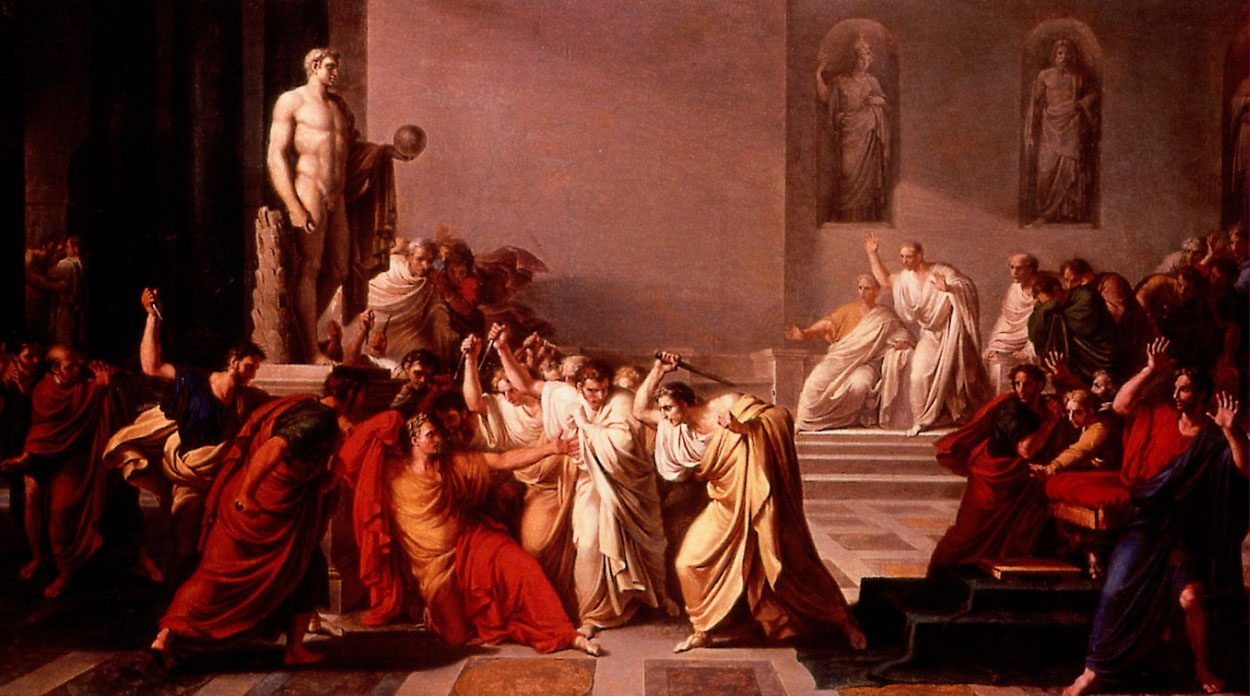
Vincenzo Camuccini, "Morte di Cesare", 1798,

Vincenzo Camuccini, “Morte di Cesare”, 1798,

“Beware the ides of March!” the prophet warned Julius Caeser in 44 B.C. and Caeser was assassinated shortly thereafter, on the ides. Ever since, the Ides of March has been a day associated with doom, disaster, or failure in some form. But what is the “ides”?

Unlike currently used dates, which are numbered sequentially from the beginning of the month, the Romans and medieval Europeans counted backwards from three fixed points: they designated the “kalends,” the “nones,” and the “ides” and all other dates were based on these. (ex. the kalends = the 1st, the nones = the 5-7th, and the ides = the 13-15th days of the month). For instance, rather than saying, “Today is March 3” they would say, “Today is three days before the nones of March.” The kalends marked the new moon, the nones was the half-moon and the ides was the full moon.

The ides of the month marked the full moon and thus the following days of each month were governed by the waning moon, a good time for curses as dark magic grew more powerful as the nights grew darker. Not only would dark magic grow stronger but the darker nights also made crime in general more likely. That the last half of each month was steeped in evil and disaster was underscored by its association with the assassination of Caeser.