Cherries


A love spell from Japan involves tying a strand of hair to a cherry tree in blossom.

A love spell from Japan involves tying a strand of hair to a cherry tree in blossom.

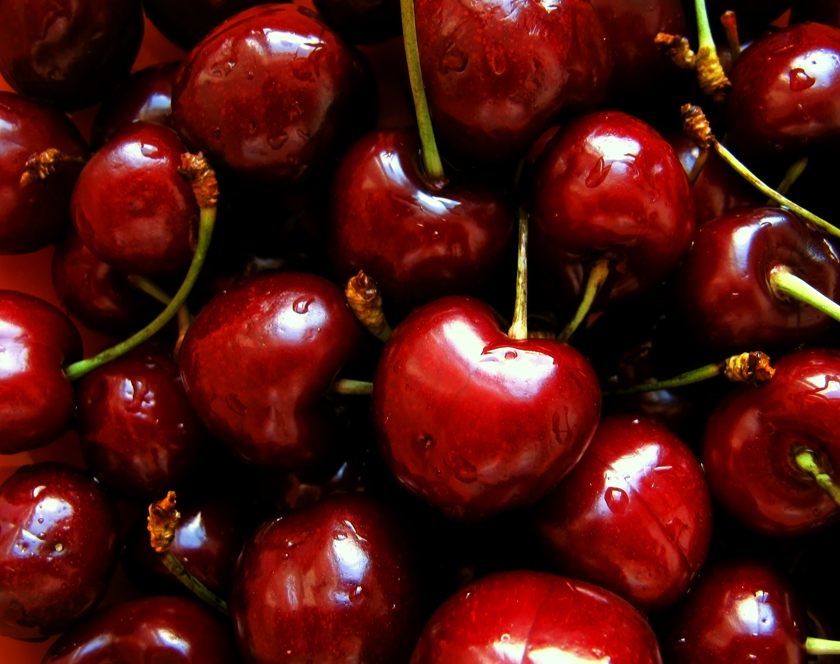
Cherries are associated with Venus, water, love, divination, and death. One method to discover how many years of life remain for you is to stand beneath a cherry tree and shake it and count the number of cherries which fall around you, indicating the number of years that remain until your death. Perhaps because of this practice, cherry juice can be used as a substitute for blood in magical recipes.

Drawing of Mary and cherry tree

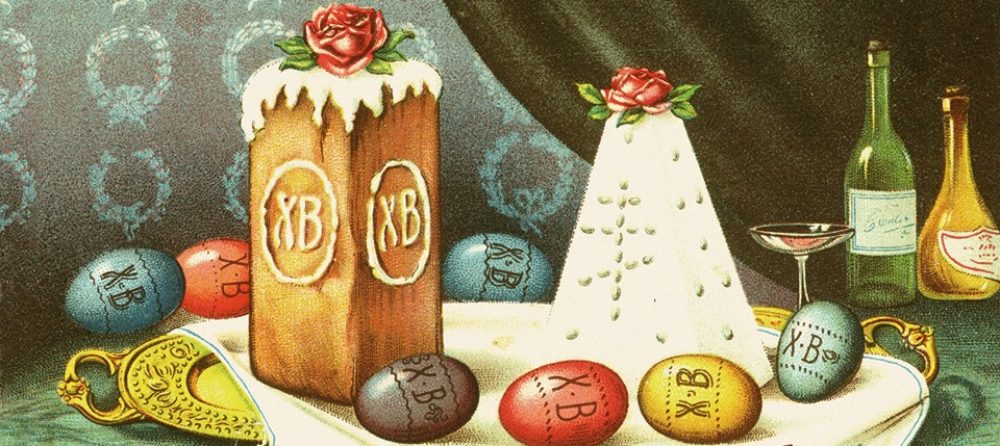
In the former Czechoslovakia it was customary to cut cherry branches on the Feast of St Barbara on 4 December and bring these into the warmth of the house to have blossom at Christmas. However, the tree of course flowers naturally at or around Easter, especially if Easter is late, and in England, in the Chilterns, some of the abundant blossoms were used to decorate churches at Easter.

A cherry orchard will be certain of having a rich crop if the first ripe cherry is eaten by a woman who has just given birth to her first child. However, another Bohemian tale which brings together the Virgin, cherries, birth and death goes: When a mother loses a child, she eats neither strawberries nor cherries until the day of St. John the Baptist (June 24, the traditional date of Midsummer). It is said that at that time the Virgin goes about heaven giving this fruit to the little children. If a mother has not been self-denying, and has eaten of this fruit, when the Virgin comes to the child of such a one, she says: “Poor child, there isn’t much left for you, your mother ate your share.” So mothers of deceased children abstain from fruit until the Midsummer following the child’s death.

Wild cherry folklore has unusual associations with the cuckoo, whereby the bird has to eat three good meals of cherries before it may stop singing. Another use of cherries in predicting death is a children’s oracular rhyme from Buckinghamshire:

‘Cuckoo, cherry tree,
Good bird tell me,
How many years before I die’,

with the answer being the next number of cuckoo calls the singer heard.
John Dee, magician extraordinaire

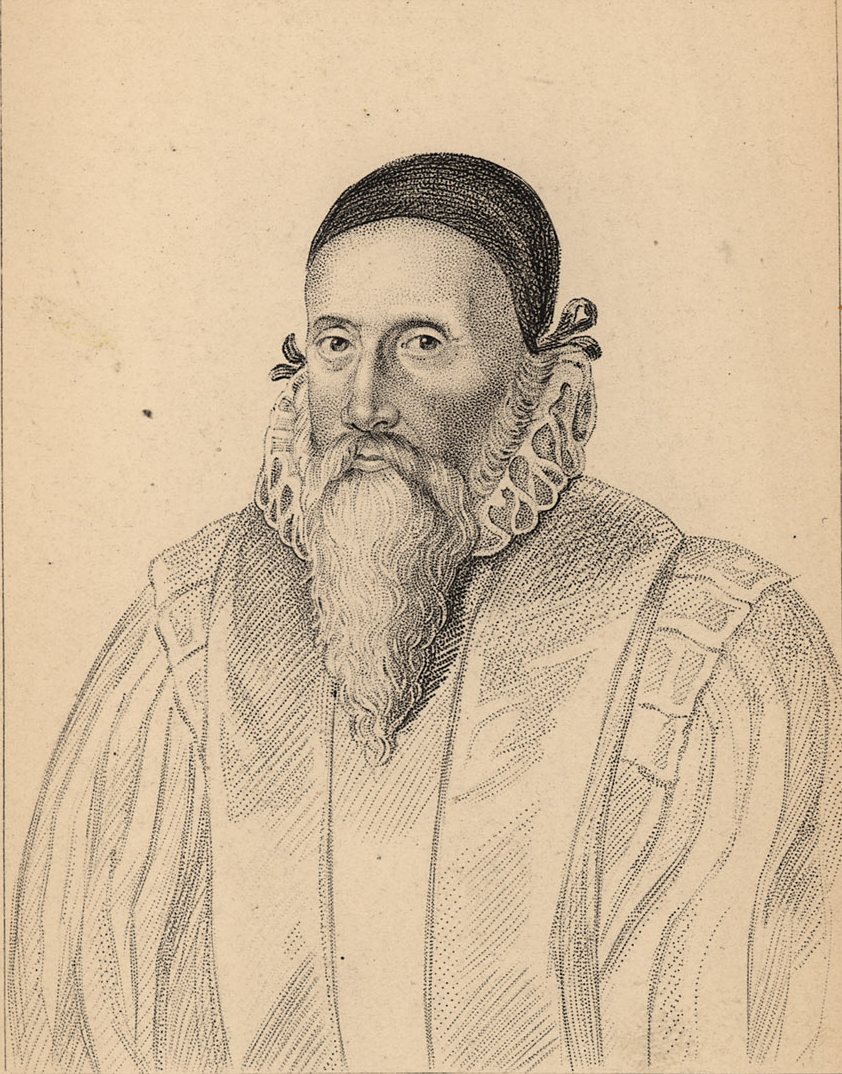
A portrait of John Dee.

A portrait of John Dee.

John Dee (13 July 1527–1608 or 1609) was a Welsh mathematician, astronomer, astrologer, occultist, navigator, imperialist and consultant to Queen Elizabeth I. He devoted much of his life to the study of alchemy, divination and Hermetic philosophy.

Dee straddled the worlds of science and magic just as they were becoming distinguishable. One of the most learned men of his age, he had been invited to lecture on advanced algebra at the University of Paris while still in his early twenties. Dee was an ardent promoter of mathematics and a respected astronomer, as well as a leading expert in navigation, having trained many of those who would conduct England’s voyages of discovery.

Dee sought to contact angels through the use of a “scryer” or crystal-gazer, who would act as an intermediary between Dee and the angels. Dee’s first attempts were not satisfactory, but, in 1582, he met Edward Kelley who impressed him greatly with his abilities. Dee took Kelley into his service and began to devote all his energies to his supernatural pursuits. These “spiritual conferences” or “actions” were conducted with an air of intense Christian piety, always after periods of purification, prayer and fasting. Dee was convinced of the benefits they could bring to mankind. (The character of Kelley is harder to assess: some have concluded that he acted with complete cynicism, but delusion or self-deception are not out of the question. Kelley’s “output” is remarkable for its sheer mass, its intricacy and its vividness). Dee maintained that the angels laboriously dictated several books to him this way, some in a special angelic or Enochian language.

Dee and Kelley began a nomadic life in Central Europe, but they continued their spiritual conferences, which Dee recorded meticulously. He had audiences with Emperor Rudolf II in Prague Castle. During a spiritual conference in Bohemia, in 1587, Kelley told Dee that the angel Uriel had ordered that the two men should share their wives. Kelley, who by that time was becoming a prominent alchemist and was much more sought-after than Dee, may have wished to use this as a way to end the spiritual conferences. The order caused Dee great anguish, but he did not doubt its genuineness and apparently allowed it to go forward, but broke off the conferences immediately afterwards and did not see Kelley again. Dee returned to England in 1589.

July 12, 1801: Vampires home free after two strikes

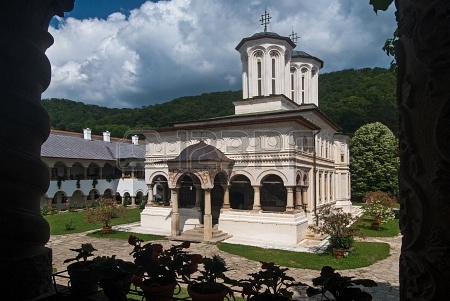
The Monastery of Horezu, a UNESCO World Heritage site in Wallachia, Romania

The Monastery of Horezu, a UNESCO World Heritage site in Wallachia, Romania

Wallachia, the region of southern Romania and which borders the more famous region of Transylvannia to the north, was an independent principality until 1859, when it united with Moldavia to form the basis of the modern state of Romania, with Transylvania joining 59 years later (1918) to form the new Kingdom of Romania which was first established 1881.

In 1801, before its unification with Moldavia, there was still a fervent and widespread belief in vampires among the farmers and rural peasants though modern science was beginning to dispel vampiric beliefs among the aristocracy. One of the more common ways of dispatching a vampire in the countryside was to exhume the body and decapitate the corpse. If that did not work, the body was exhumed again and a wooden stake driven through it or it might be turned to face down. If all else failed, a third exhumation could lead the to burning of the corpse (which was a difficult undertaking and therefore the last resort of the vampire dispatchers).

It was the continued exhumation of corpses which came to the attention of the Wallachian authorities. On July 1, 1801 there was a proclamation made that in Wallachian territory a corpse could not be exhumed more than TWICE if it was suspected of being a vampire!