Icon of St. George the Victorious, slaying the dragon which had eaten all the young virgins of a North African town.
St. George’s Day honors the man who famously saved a town and its princess from a fearsome dragon. It is celebrated on the date of his death, usually taken as 23rd April. In Dracula, St. George’s Day falls on May 5th, following the Eastern Orthodox tradition of using the Julian calendar. According to legend, St. George died as a martyr when he refused to give up his Christian faith before the pagan Roman emperor Diocletian.
Emily Gerard, a 19th Century author who lived in Transylvania and recorded its culture and traditions, wrote about St. George’s Day in an essay about Transylvanian superstition. This was later included in The Land Beyond the Forest, a book read by Bram Stoker:
“Perhaps the most important day in the year is St George’s, the 23rd of April (corresponds to our 5th of May), the eve of which is still frequently kept by occult meetings taking place at night in lonely caverns or within ruined walls, and where all the ceremonies usual to the celebration of a witches’ Sabbath are put into practice.
The feast itself is the great day to beware of witches, to counteract whose influence square-cut blocks of green turf are placed in front of each door and window. This is supposed effectually to bar their entrance to the house or stables, but for still greater safety it is usual here for the peasants to keep watch all night by the sleeping cattle.”
St George’s Day was a major feast and national holiday in England on a par with Christmas from the early 15th century. The Cross of St. George was flown in 1497 by John Cabot on his voyage to discover Newfoundland and later by Sir Francis Drake and Sir Walter Raleigh. In 1620 it was the flag that was flown by the Mayflower when the Pilgrim Fathers arrived in Plymouth, Massachusetts.
In Bulgaria, it is also believed to be a magical day when all evil spells can be broken. It was believed that the saint helps the crops to grow and blesses the morning dew, so early in the morning they walked in the pastures and meadows and collected dew, washed their face, hands and feet in it for good luck and even in some rural parts of Bulgaria it was a custom to roll in it naked.

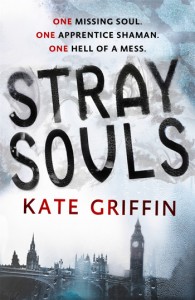 When Sharon Li unexpectedly discovers she’s a shaman, it’s not a moment too soon: London’s soul is lost. Using her newfound oneness with the City, she sets about saving London from inevitable demise, but the problem is she has no clue where to start. Meanwhile, a mysterious gate has opened, and there are creatures loose that won’t wait for her to catch up before they go out hunting. Now Sharon and her motley crew of magical misfits must find a way to save the world…