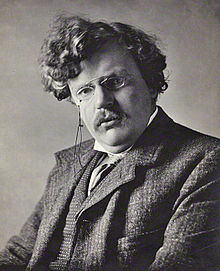
G.K. Chesterton (d. 14 June, 1936)

G.K. Chesterton, born 29 May 1874-died 14 June, 1936

G.K. Chesterton, born 29 May 1874-died 14 June, 1936

I remember being mesmerized by Chesterton’s Man Who Was Thursday when I first read it, nearly 35 years ago! I was startled to discover, near the end of the book, when Thursday — who has been searching for Sunday for most of the book — finally meets Sunday and the description of Sunday — in my mind’s eye — revealed Fr. Aidan Kavanagh, my favorite professor at the Yale Divinity School! I can still quote from memory several paragraphs from the chapter titled “The Ethics of Elfland” in his book, Orthodoxy.

Chesterton is well known for his fictional priest-detective Father Brown and for his reasoned apologetics. Even some of those who disagree with him have recognized the universal appeal of such works as Orthodoxy and The Everlasting Man. Chesterton, as a political thinker, cast aspersions on both Progressivism and Conservatism, saying, “The whole modern world has divided itself into Conservatives and Progressives. The business of Progressives is to go on making mistakes. The business of the Conservatives is to prevent the mistakes from being corrected.”

Chesterton usually wore a cape and a crumpled hat, with a swordstick in hand, and a cigar hanging out of his mouth. He had a tendency to forget where he was supposed to be going and miss the train that was supposed to take him there. It is reported that on several occasions he sent a telegram to his wife Frances from some distant (and incorrect) location, writing such things as “Am in Market Harborough. Where ought I to be?” to which she would reply, “Home”. Because of these instances of absent-mindedness and of Chesterton being extremely clumsy as a child, there has been speculation that Chesterton had undiagnosed developmental coordination disorder.

Indie Reader Discovery Awards

IR Discovery Awards says, "COME HELL OR HIGHWATER, PART 2: RISING is a sprawling fantasy epic that takes the reader on an exciting ride through centuries' worth of Prague history and folklore. "

IR Discovery Awards says, “COME HELL OR HIGHWATER, PART 2: RISING is a sprawling fantasy epic that takes the reader on an exciting ride through century’s worth of Prague history and folklore. “

The Indie Reader Discovery Awards recently announced that PART 2: RISING of the “Come Hell or High Water” trilogy has qualified for their “Seal of Approval!” In addition to their remarks in the photo caption above, they also wrote:

“Reminiscent of Sergi Lukyanenko’s The Night Watch, COME HELL OR HIGH WATER is an intricate, tightly woven modern fairy tale that tells a fanciful story in a realistic, believable way….”

Thank you, IR Discovery Awards!

An Ancient Egyptian Health Plan?

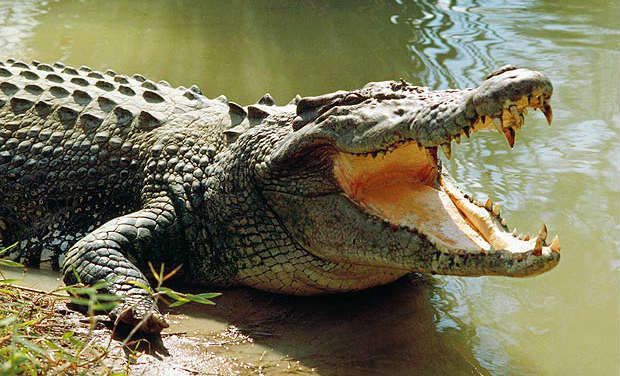
Crocodiles were associated with Sobek, a god responsible for pharaonic power, fertility, and military prowess, but served additionally as a protective deity with apotropaic qualities, invoked particularly for protection against the dangers presented by the Nile river.

Crocodiles were associated with Sobek, a god responsible for pharaonic power, fertility, and military prowess, but served additionally as a protective deity with apotropaic qualities, invoked particularly for protection against the dangers presented by the Nile river.

My current writing project is an academic book about Byzantine attitudes towards sexuality in the 4th–14th centuries. I found that the early Egyptian monks, as well as the later Byzantine monastic charters, insisted that there should be no female animals kept on monastic farms as the monks would be tempted to use them in untoward ways. This fear seemed exaggerated to me, so I did some checking to see how real the likelihood of bestiality was.

It turns out that bestiality was not only common in rural areas but was a part of pagan worship and folk magic. Egyptian gods were always depicted in animal form or as human-animal hybrids and Greco-Roman mythology described gods and goddesses assuming animal form to seduce humans. In northern Europe, heroes and royal families claimed to be descended from animal ancestors who bestowed their strength, cunning, and other abilities on the clan. Sex with certain animals was reported to heal certain diseases.

One example of the healing powers unleashed by acts of bestiality struck me in particular. In ancient Egypt, the god Sobek was depicted in alligator form and was said to have helped Isis collect the body parts of her son Horus and raise him from the dead as well as impregnating Isis and giving her into the protection of a “bask” or group of crocodiles. Because of this, sex with a crocodile was said to heal certain life-threatening diseases and the Egyptians developed a way of catching and then flipping a crocodile onto its back and restraining it so that it could not resist penetration. Clearly this form of bestiality was a large group activity and not something engaged in by a man ashamed and alone in the dark, though it is hard to imagine how terrible the disease must have been to drive people to resort to this as a cure!