Ascension Day, Part 2

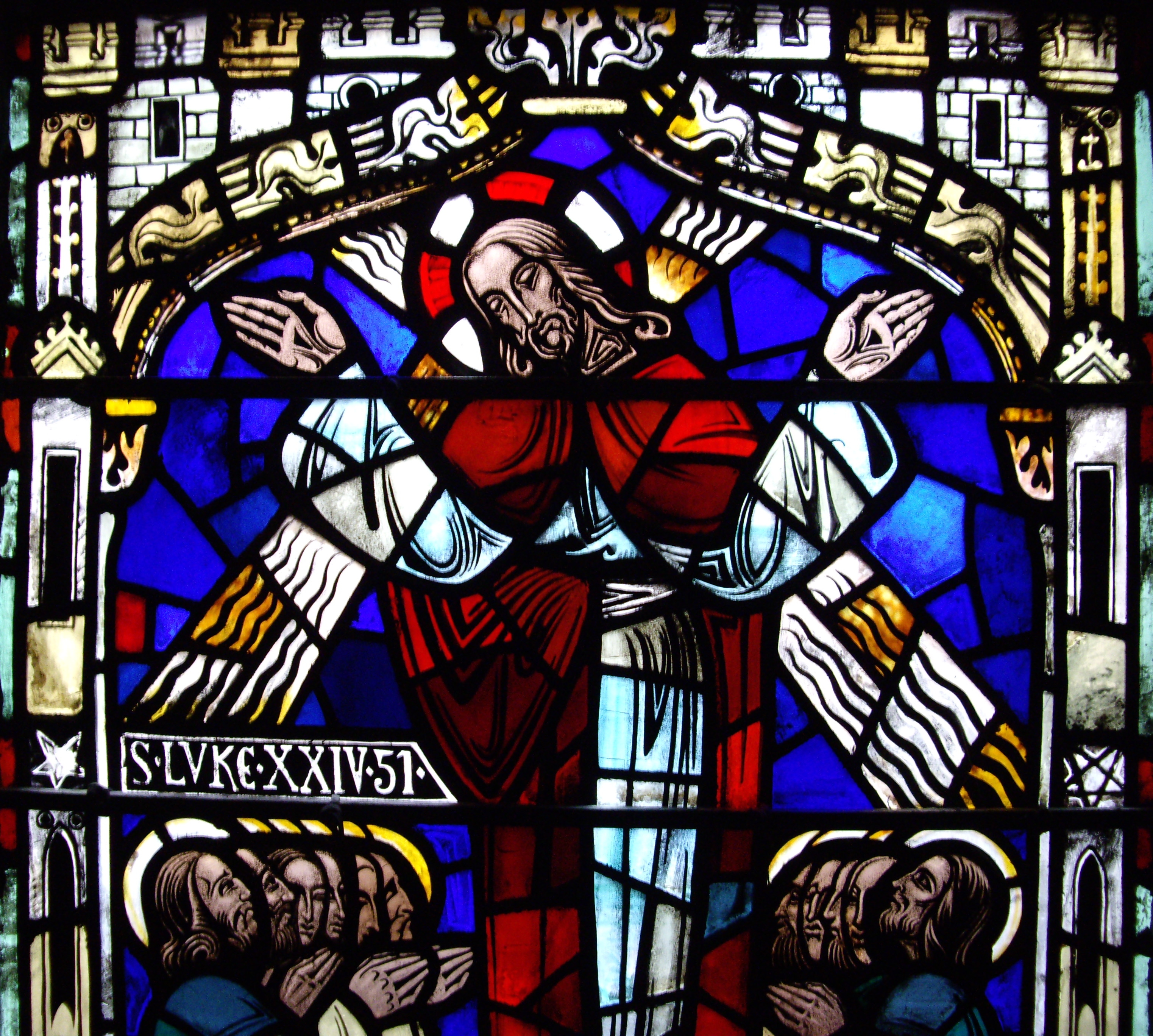
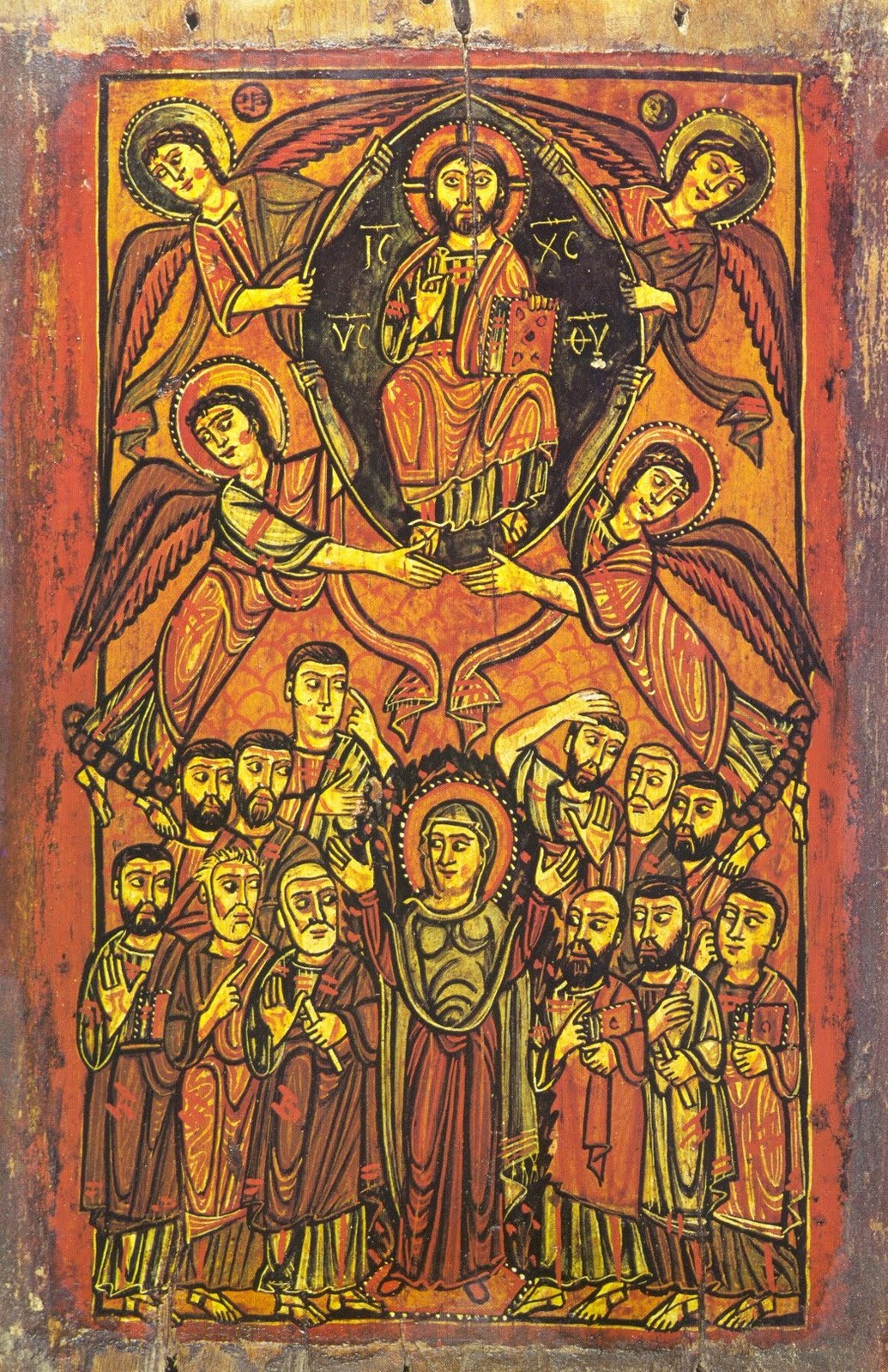
Icon of Ascension Day, showing Christ enthroned in glory above with the apostles and Mother of God below. The Ascension icon can also be viewed as an image of Christ coming at the end of time to judge the world.

Icon of Ascension Day, showing Christ enthroned in glory above with the apostles and Mother of God below. The Ascension icon can also be viewed as an image of Christ coming at the end of time to judge the world.

Ascension Day is an important day in the church calendar and in the rural, farming calendar as well. It is also an important day among the Pennsylvania Dutch (The Pennsylvania Dutch, commonly called “Amish,” maintained numerous religious affiliations, with the greatest number being Lutheran or Reformed, but many Anabaptists as well.)

Among the Pennsylvania Dutch sewing on Ascension Day is strictly forbidden. Other work of many kind, especially farm work, is also eschewed. Lightning has been reportedly striking those sewing or working on Ascension Day. Rain water from an Ascension Day storm is thought to cure eye and vision problems if used to wash the eyes with. Not only does rain fall and thunder rumble down from the heavens above, these are generally associated with Thursdays; as Ascension is always a Thursday, making the 40th day after Easter, thunder came to be associated with Ascension as well. (The Pennsylvania Dutch name for “Thursday” is a variant of the word for “thunder.”)

Reportedly in Bulgaria the grandmother of each family will go to the cemetery on Ascension Eve and lays face down atop the grave of the most recently deceased family member. She prays there a while for that family member and for all the deceased ancestors, following which she nicks her left breast (above the heart) and lets a few drops of blood fall onto the grace to feed the ghost(s) and bring blessing to the deceased for another year. Happy ancestors will bring fertility and good luck to the family, their farms and farm animals until the next Ascension Day.

For more, see the excerpts from Eastertide in Pennsylvania: A Folk-Cultural Study.

St. Dymphna of Geel (May 15)

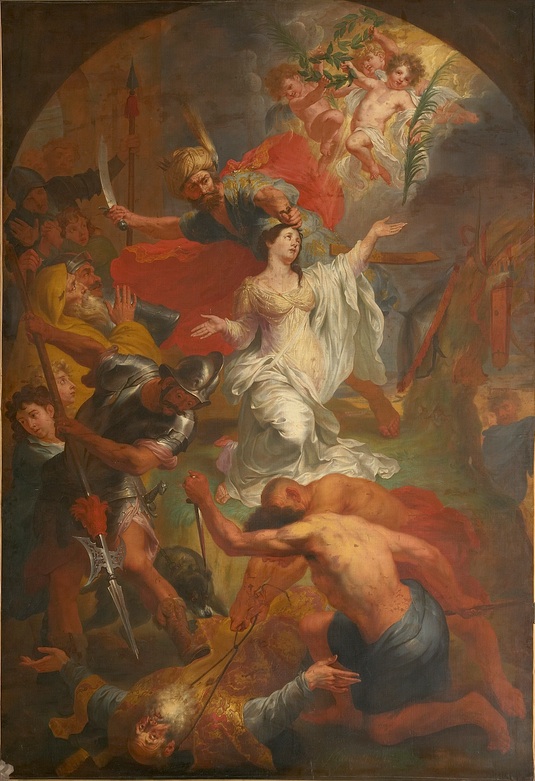
The beheading of Saint Dymphna" by Godfried_Maes

The beheading of Saint Dymphna” by Godfried_Maes

Ii is a sad fact that incest in folklore is found in many countries and cultures in the world.

The Brothers Grimm story, “Allerleirauh”, also known in various forms as “Donkey Skin,” Deerskin,” or “Many Fur” is the horrific tale of a king who develops an unsuitable passion for his daughter after the king’s wife dies. The daughter runs away, disguises herself, and eventually finds a new career and a good romantic partner after a lot of hard work and heartache.

St. Dymphna is the patron saint of incest victims. She is also the patroness of the nervous, emotionally disturbed, mentally ill, and those who suffer neurological disorders – and, consequently, of psychologists, psychiatrists, and neurologists. he also protects runaways and royal girls.

According to the Christian tradition, she lived in the 7th century and was the daughter of a pagan Irish king and his Christian wife. She was murdered by her father. The story of St. Dymphna was first recorded in the thirteenth century by a canon of the Church of St. Aubert at Cambrai, commissioned by the Bishop of Cambrai, Guy I (1238–1247). The author expressly stated that his writings were based upon a longstanding oral tradition and a persuasive history of inexplicable and miraculous healings of the mentally ill.

Dymphna’s father Damon, a petty king of Oriel, was pagan, but her mother was a devout Christian. When Dymphna was around 14 years old, she consecrated herself to Christ, taking a vow of chastity. Shortly thereafter, her mother died. Damon had loved his wife deeply, and in the aftermath of her death his mental health sharply deteriorated. Eventually the king’s counsellors pressed him to remarry. Damon agreed, but only on the condition that a bride as beautiful as his deceased wife was procured for him. After searching fruitlessly, Damon began to desire his daughter, because of the strong resemblance she bore to her mother. When Dymphna learned of her father’s intentions she swore to uphold her vows, and fled his court along with her confessor Father Gerebernus, two trusted servants and the king’s fool. Together they sailed towards the continent, eventually landing in what is present-day Belgium, where they took refuge in the town of Geel.

One tradition states that once settled in Geel, St. Dymphna built a hospice for the poor and sick of the region. However, it was through the use of her wealth that her father would eventually ascertain her whereabouts, as some of the coins used enabled her father to trace them to Belgium. Damon sent his agents to pursue his daughter and her companions. When their hiding place was discovered, Damon travelled to Geel to recover his daughter. Damon ordered his soldiers to kill Father Gerebernus and tried to force Dymphna to return with him to Ireland, but she resisted. Furious, Damon drew his sword and struck off his daughter’s head. She was said to have been 15 years old when she died.

In 1349 a church honoring Saint Dymphna was built in Geel. By 1480, so many pilgrims were coming from all over Europe, seeking treatment for the mentally ill, that the church housing for them was expanded. Soon the sanctuary for the mad was again full to overflowing, and the townspeople began taking them into their own homes. Thus began a tradition for the ongoing care of the mentally ill that has endured for over 700 years and is still studied and envied today. Patients were, and still are, taken into the inhabitants of Geel’s homes. Never called patients, they are called boarders, and are treated as ordinary and useful members of the town. They are treated as members of the host family. They work, most often in menial labor, and in return, they become part of the community. Some stay a few months, some decades, some for their entire lives. At its peak in the 1930s, over 4,000 ‘boarders’ were housed with the town’s inhabitants.
Ascension Day: “Beating the Bounds”

Ascension Day, celebrated on the 40th day after Easter, is always a Thursday and marks the last post-Resurrection appearance of Christ to the apostles.

Ascension Day, celebrated on the 40th day after Easter, is always a Thursday and marks the last post-Resurrection appearance of Christ to the apostles.

Ascension Day was a vital day in the pre-modern and agricultural cultures of Christian Europe. In many places it marked the beginning of the ploughing and planting seasons and in England there were processions to ask for God’s blessing on the crops to be planted. These processions often included “beating the bounds,” a practice in which young men would be led around the boundaries of each local farm and their backs lightly beaten so as to impress upon them where the limits of each farmer’s lands were; beating the boys’ backs helped stamp the landmarks and boundaries of each field into the boys’ memories so that any future disputes between farmers could be resolved by asking the boys what they remembered of the processions.

Some parishes continue the custom (e.g. the church of St Michael at the North Gate in Oxford). Today members of the parish walk round the parish boundaries, marking boundary stones (e.g. by writing on them in chalk) and hitting them — rather than the boys of the parish — with sticks. In addition to settling disputes between farmers, knowledge of the parish boundaries was once important since churches had certain duties such as the care of children born out of wedlock in the parish. One of the purposes served by beating the bounds was that of warning the young men of the parish that any sexual misbehavior ought to take place with women who lived outside the parish.

In Venice the ceremony of the Wedding with the Sea was traditionally celebrated on the Feast of the Ascension, while in Florence the holy day was observed by having a dove slide down a string from the high altar of the cathedral to ignite a large decorative container filled with fireworks in front of the main entrance of the cathedral.

There is a veritable treasure trove of folklore and folk practices associated with Ascension Day in the Encyclopedia of Superstitions, Folklore, and Occult Sciences, which you can read here. You can also read more in the very interesting study Eastertide in Pennsylvania which describes Pennsylvania Dutch customs.