Epiphany Cake

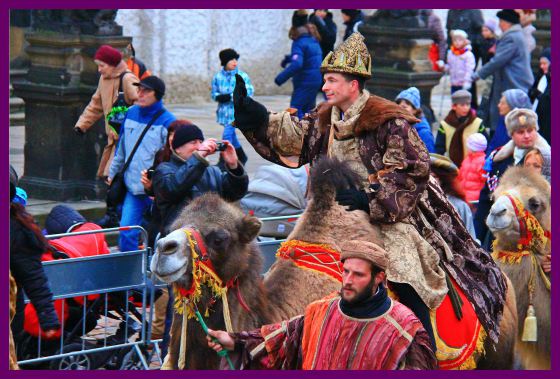
One of the kings from the 2015 Epiphany parade in Prague.

One of the kings from the 2015 Epiphany parade in Prague.

Epiphany, traditionally celebrated on January 6, is the celebration (in Western Christianity) of the arrival of the Magi to adore the Christ Child. (Among the Eastern Christians, the Epiphany is the celebration of the Baptism of Christ.) There are many traditional festivities, such as the Three Kings Parades — one of the best is in East Harlem! But the one in Prague (seen above) is pretty splendid as well.

An Epiphany Cake, also called a King Cake, is customarily served at the festive dinner on January 6. Inside the cake are often placed a bean or other trinkets, to indicate good fortune or wealth in the coming year as well as to mark who will be responsible for baking the cake at the next Epiphany celebration.

Here is my favorite Epiphany Cake recipe:

Ingredients:
2 1/4 cups flour
1 1/2 cups sugar
3 tsps. baking powder
1 tsp salt
1/2 cup butter
1 cup milk
1 1/2 tsps. vanilla
2 eggs

Directions:
Preheat oven to 350 degrees. Lightly grease and flour cake pan.
Melt the butter in a small pan on the stove.
Mix together all the dry ingredients.
Add the eggs, vanilla, and milk. Mix well.
Add the melted butter. Mix well again.
Pour batter into cake pan.
Bake approx. 45-60 minutes.

Most important: Don’t forget to lick the bowl and spoon!

Icing (if desired):
1/4 cup butter, melted and cooled
1/4 cup cream
2 tsps. vanilla
3 cups sugar

Combine the butter, cream, and vanilla.
Slowly add the sugar.
Add more sugar or a few more drops of cream to reach the proper consistency.
Spread on cool cake.

Again — don’t forget to lick the bowl and spoon!

Blog Stats 2015

Read-all-about-it

This just in! We got the stats on the performance of the StephenMorrisAuthor.com blog during the year that we just rang out! During 2015, it seems that:

The concert hall at the Sydney Opera House holds 2,700 people. This blog was viewed about 14,000 times in 2015. If it were a concert at Sydney Opera House, it would take about 5 sold-out performances for that many people to see it.

The busiest day of the year was December 7th with 162 views. The most popular post that day was Frankincense.

The other most posts that were viewed the most times over the course of the year were
1. Lily of the Valley (originally posted May 2013)
2. Emerald (originally posted May 2013)
3. Marigold, the “birth flower” of October (originally posted October 2013)
4. Pope Innocent VIII and the witches (originally posted July 2013)
5. Daffodil, the flower of March (originally posted March 2013)

To compare with the blog performance in past years, click here and here.

What was YOUR favorite post??

Holy Innocents’ Day

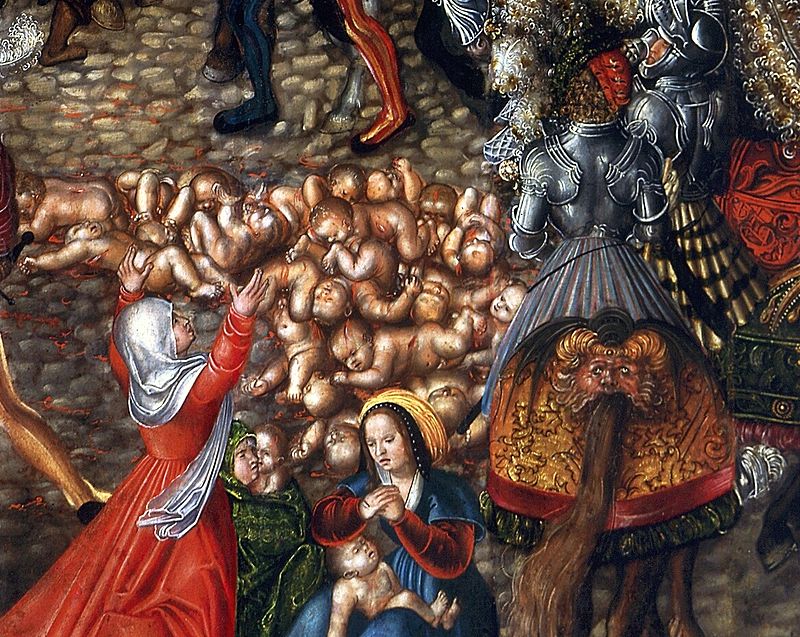
The Massacre of the Innocents (detail) by Lucas Cranach the Elder (c. 1515), National Museum in Warsaw.

The Massacre of the Innocents (detail) by Lucas Cranach the Elder (c. 1515), National Museum in Warsaw.

Also known as Innocents’ Day or Childermas, this day commemorates the massacre of all the male children two years and under in Bethlehem as ordered by King Herod, who hoped that the infant Jesus would be among them. Not surprisingly, this day has long been regarded as unlucky—particularly for getting married or undertaking any important task. Edward IV of England went so far as to change the day of his coronation when he realized it would fall on December 28. Most modern folk recognize the account of the slaying of the children from the popular Coventry Carol.

In ancient times, the “Massacre of the Innocents” was reenacted by whipping the younger members of a family. But over the years the tables turned, and in some countries it has become a day when children play pranks on their elders. In Mexico, Childermas is the equivalent of April Fool’s Day. In some areas of western Europe, the day of the week on which Holy Innocents’ fell was considered a holiday in each following week of the year until the next celebration of the feast. Or, in some places, that weekday was considered unlucky and ill-omened in each week until the next Holy Innocents’ Day.

The Greek liturgy asserts that Herod killed 14,000 boys, the Syrians speak of 64,000, many medieval authors of 144,000 (the number of the young men in white described in Revelation 14:3). Modern writers reduce the number considerably, since Bethlehem was a rather small town. Modern scholars now consider the number of children killed to have been more likely fifteen or twenty. This cruel deed of Herod is not mentioned by the Jewish historian Flavius Josephus, although he relates quite a number of atrocities committed by the king during the last years of his reign. The number of these children was so small that this crime appeared insignificant amongst the other misdeeds of Herod. One ancient historian relates that when Augustus heard that amongst the boys of two years and under Herod’s own son also had been massacred, he said: “It is better to be Herod’s hog [ous], than his son [houios],” alluding to the Jewish law of not eating, and consequently not killing, swine.