
Stars and Cards: Pisces

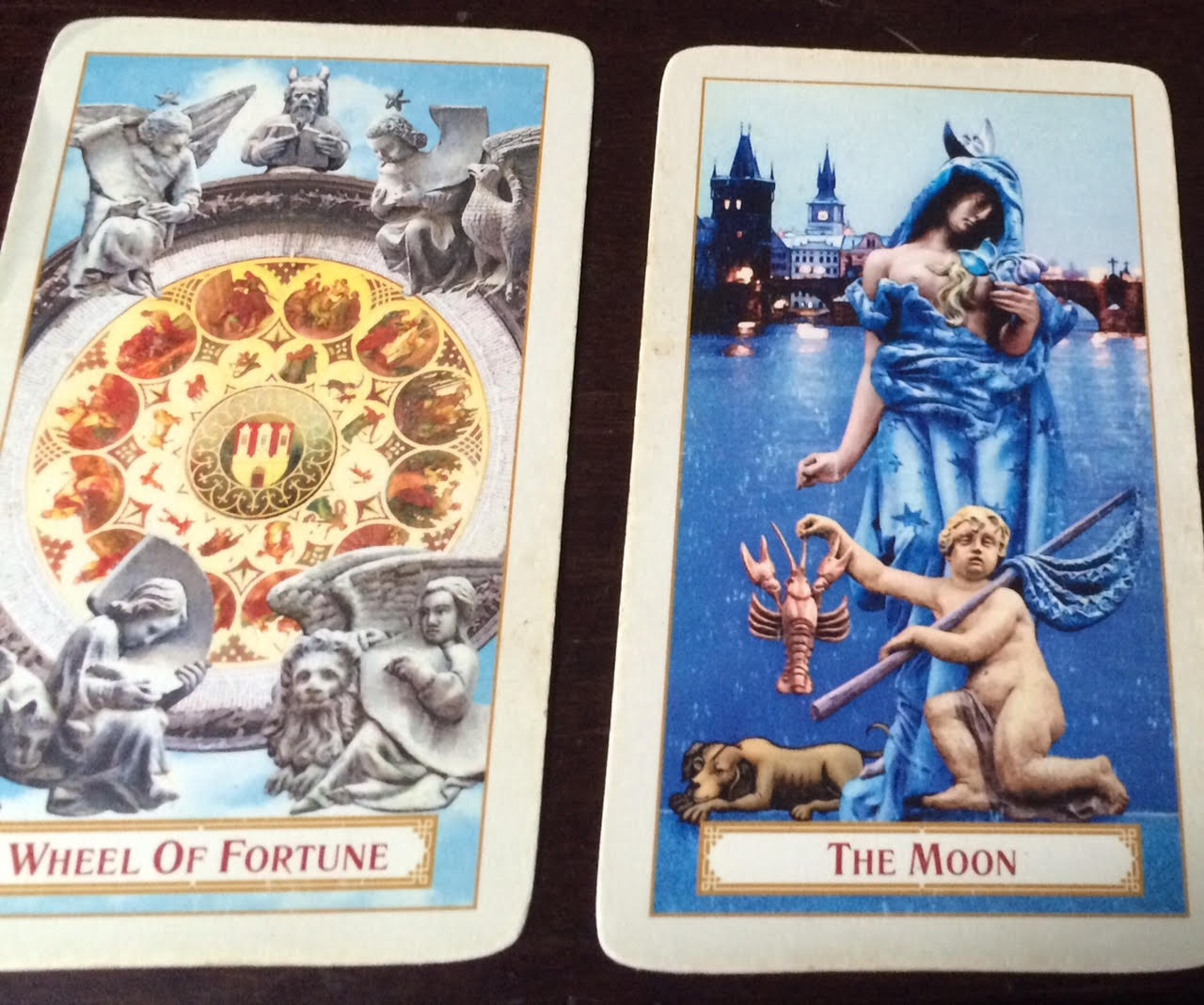
The Wheel of Fortune and The Moon -- shown here from the Tarot of Prague deck, available from Baba Studios -- are both associated with Pisces.

The Wheel of Fortune and The Moon — shown here from the Tarot of Prague deck, available from Baba Studios — are both associated with Pisces.

On February 18, the Sun begins its month-long voyage through Pisces, the sign of the two fish, which is associated with the eighteenth trump of the tarot, the Moon card. Pisces is traditionally thought to be ruled by Jupiter, associated with the tenth tarot trump, the Wheel of Fortune. The more modern idea that Neptune rules Pisces leads to the astrological sign’s association with the twelfth trump of the tarot, the Hanged Man. In the ancient world, Pisces was also associated with the land of Israel and the Jewish inhabitants there.

Neptune is the ancient god of the seas, and the Moon, depicted on the eighteenth tarot trump, controls the ocean tides. Appropriately, the sign Pisces belongs to the water element. The tarot’s watery suit of Cups illustrates scenes related to love, friendship and vicissitudes of human emotions. The Moon card is often interpreted as a warning that someone is not seeing clearly or is being deluded in some way, which are negative aspects of Pisces.

As a Water sign, Pisces is characterized by empathy and expression of emotions. Pisces people are considered to be compassionate, artistic, intuitive, gentle, wise, and musical although they can also be fearful, overly trusting, sad, desire to escape reality, or want to be a victim/martyr.

Pisces, together with the Wheel of Fortune and the Moon, ask everyone: What areas in life are you not seeing clearly? Are your actions motivated by love or by desire? Do you need to act with more compassion? Are you neglecting your spirituality for material gain?
#StValentineDay 2016

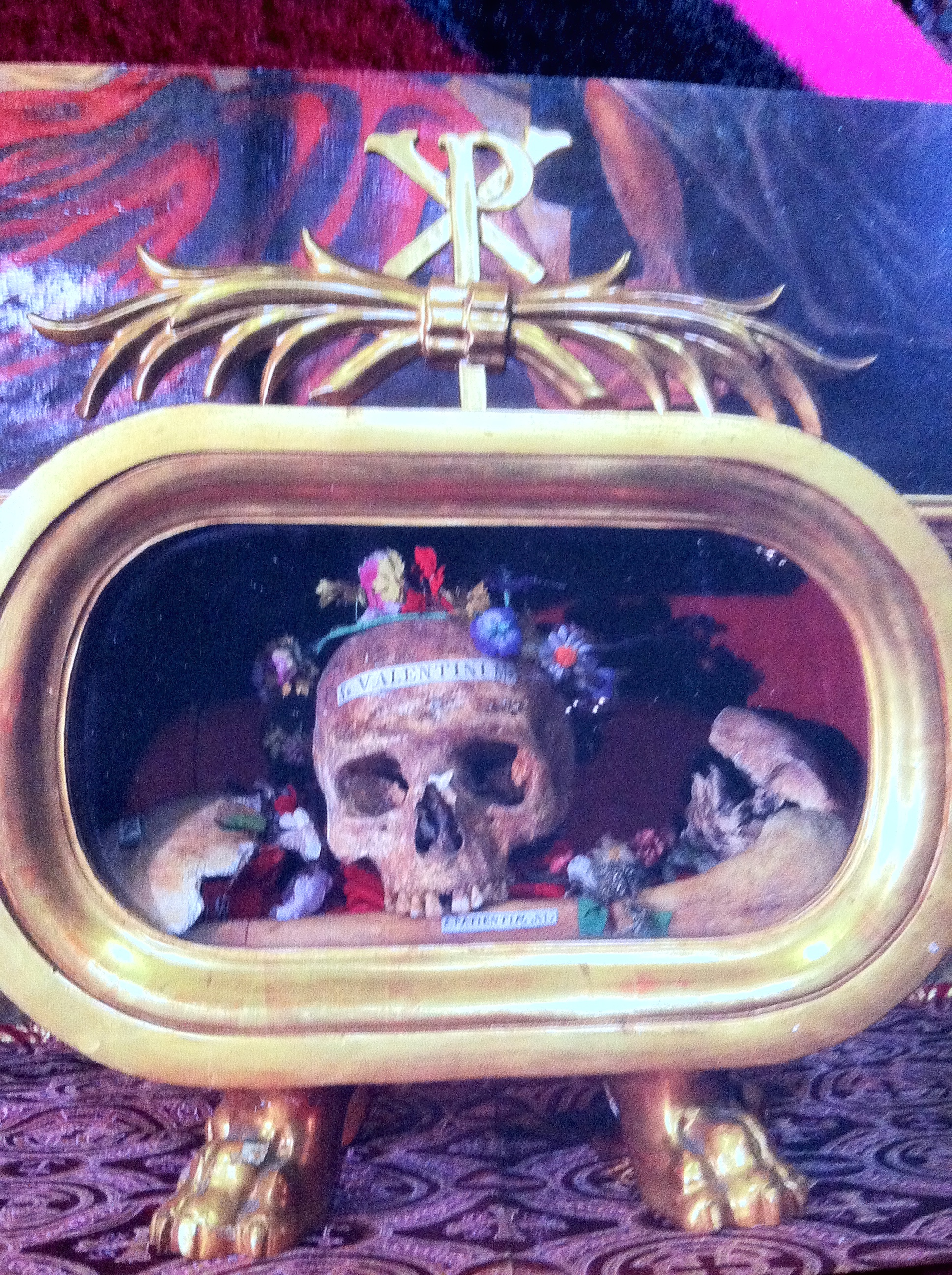
The skull and other relics of St. Valentine, a priest martyred in Rome during the early centuries of Christianity, now kept on a side altar in the Basilica of Santa Maria in Cosmedin in Rome.

The skull and other relics of St. Valentine, a priest martyred in Rome during the early centuries of Christianity, now kept on a side altar in the Basilica of Santa Maria in Cosmedin in Rome.

With the modern celebration of Valentine’s Day nearly upon us, can thoughts of love magic be far behind? A number of traditional ways to win another’s heart have been used over the years. One way a woman could win a man’s heart was by feeding him food into which she had mixed some of her own blood (menstrual blood was especially effective). Catching the reflection of mating birds in a mirror on Thursday was the first step in a more complicated love spell. After catching the reflection, a person would give the mirror to his or her chosen and once the receiver looked into the mirror, they would be irresistibly infatuated with the mirror-giver. Or a woman might resort to the much more simple use of caraway seeds, cloves, or coriander to win the affection of the man she had chosen. One English love potion included the kidney of a rabbit, the womb of a swallow, and the heart of a dove while an ancient Greek love potion used a stallion’s semen or a mare’s vaginal discharge.

Garlic, saffron, ginger, or even vanilla(!) were more likely to be used in erotic magic, which was less concerned with affection, and more likely to be aimed by men at women. Wax images could be pierced by pins to incite lust. Striking the intended with hazel or willow branches was also thought to inspire lust. Or you could obtain a few hairs from your intended’s head, tie them in a knot with twine, and then keep the amulet on your thigh or around your genitals to draw your intended’s attentions.

Of course, there were ways to deflect this sort of magic as well. Lily or lettuce could break love spells or decrease lust and thwart unwanted attentions. Just be sure not to confuse which herbs you feed to which guest at your table!

St. Brigid’s Day 2016

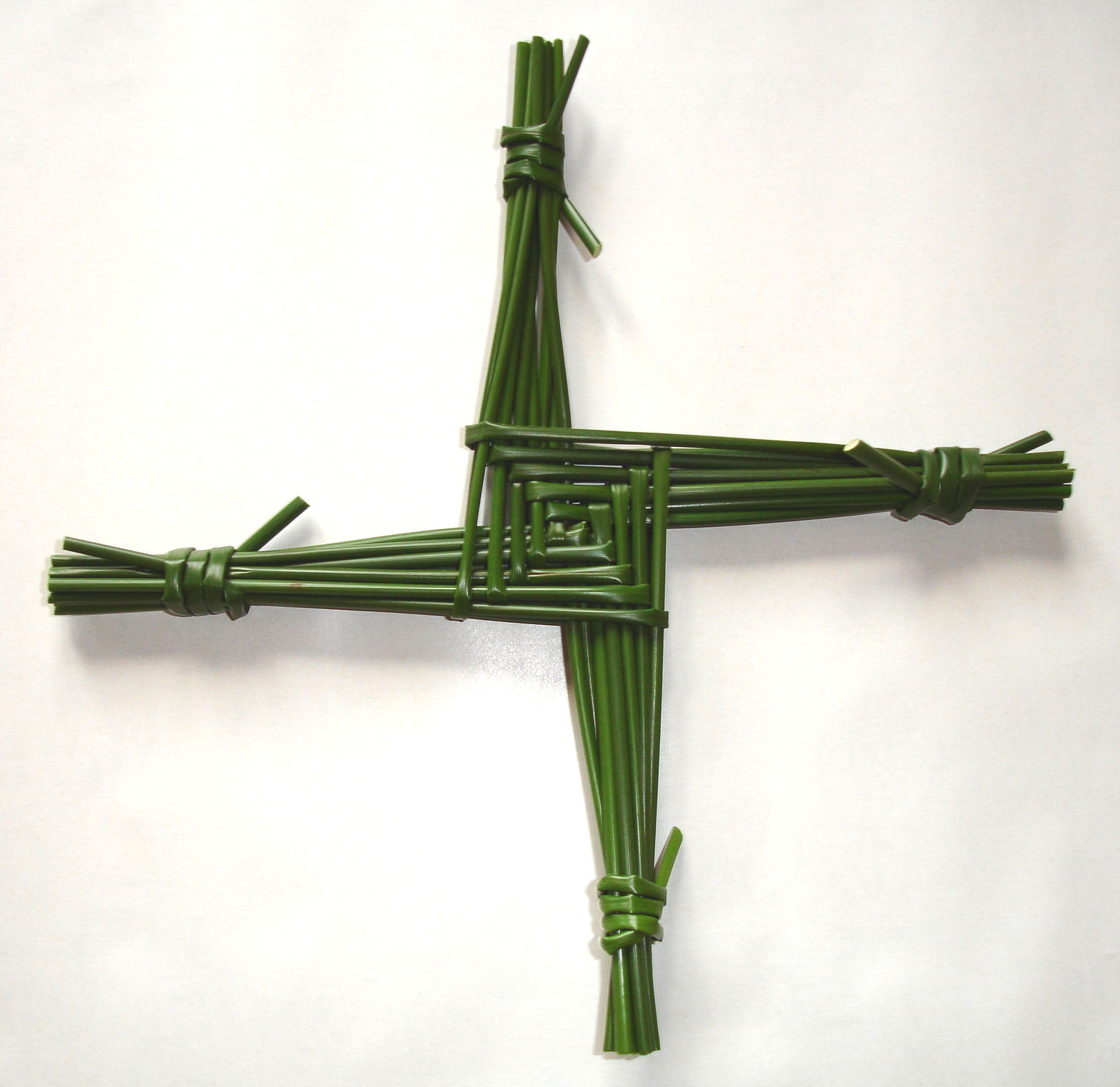
Legend says that while St. Brigit sat alongside a dying man one night, she picked up a handful of rushes from the floor and wove a cross, explaining the Gospel to the dying man as she made the cross. Nowadays many make similar crosses and hang them up to protect their house or barn until the next February.

Legend says that while St. Brigit sat alongside a dying man one night, she picked up a handful of rushes from the floor and wove a cross, explaining the Gospel to the dying man as she made the cross. Nowadays many make similar crosses and hang them up to protect their house or barn until the next February.

Saint Brigit of Kildare or Brigid of Ireland (c. 451–525) is one of Ireland’s patron saints, along with Patrick and Columba. Irish hagiography makes her an early Irish Christian nun, abbess, and founder of several monasteries of nuns, including that of Kildare in Ireland, which was famous and was revered. Her feast day is 1 February, which was formerly celebrated as a pagan festival (Imbolc) marking the beginning of spring and the lambing season.

Once a leprous woman asked her for milk, but there was none available so St. Brigid gave her cold water instead. The water turned into milk and when she had drunk it, the woman was healed.

Like her mentor St. Patrick, Brigid was fond of ale and is reputed to have been the best brewer in the land. She supplied beer out of one barrel to eighteen different churches. This single barrelful not only supplied these eighteen different churches, but each church had enough ale to last from Maundy Thursday until Trinity Sunday.

One of the most prettiest legends concerning Saint Brigid tells us that another version of her name was “Bride” and as “St. Bride” she was the patroness of the Knights of Chivalry. They began the custom of calling the girls they each married their own “brides” or “Brigits;” and that from the Knights of Chivalry the word bride came into general usage in the English language.

In very traditional homes, two devout practices are still observed on the Eve of St. Brigid’s Feast Day (February 1st). A strip of cloth called “brat Bhride” (Brigid’s mantle) is hung outside the door. A loaf of oat bread baked in the shape of a cross and a sheaf of straw are left on the windowsill. For on that night, Brigid travels through the land with her red-eared cow bestowing blessings on those who keep the old ways.