Stars and Cards: Taurus

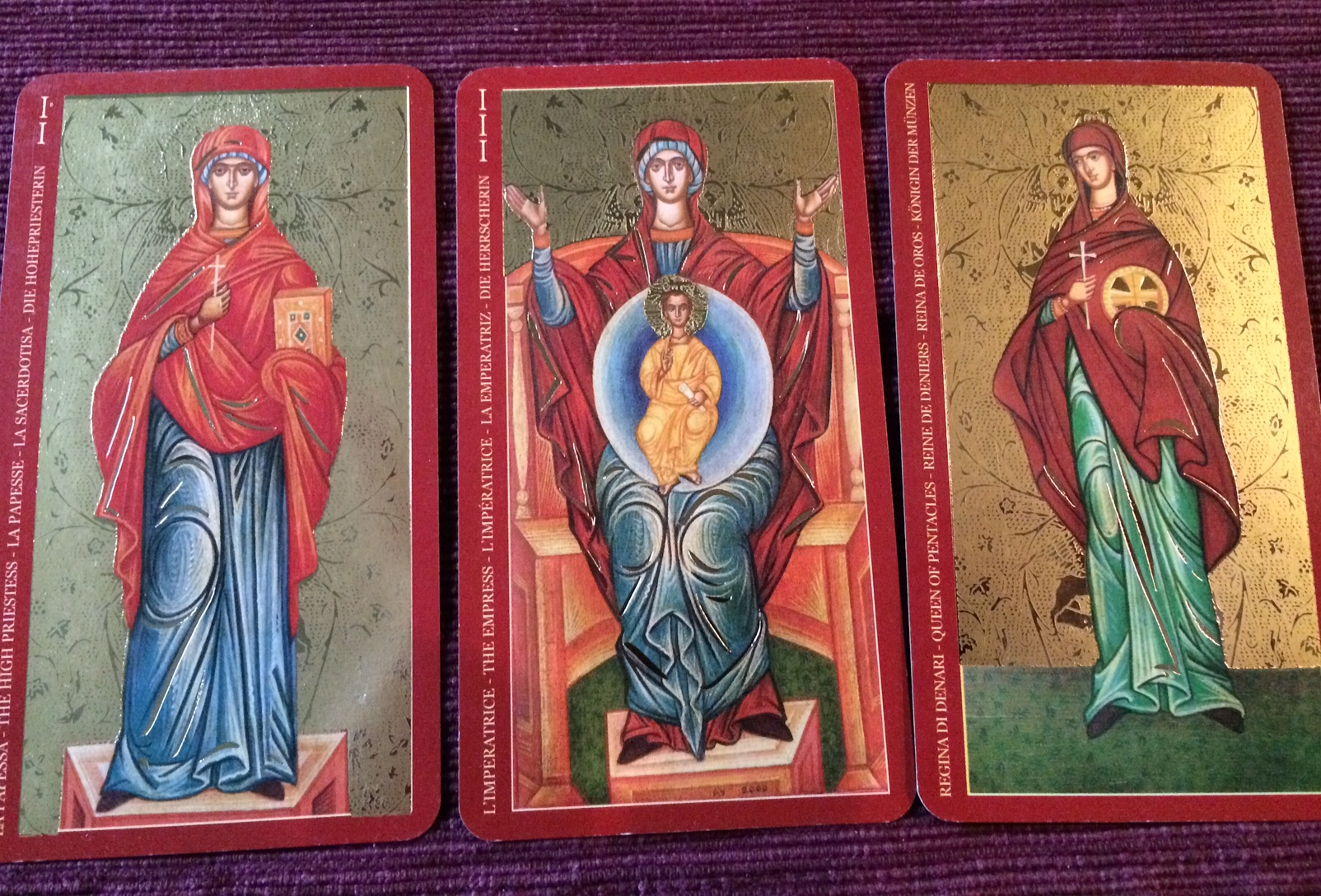
"The Golden Tarot of the Tsar" (by A.A.. Atanassov and available thru Lo Scarabeo) depicts the Mother of God as the Empress, St. Parasceva as the High Priestess, and an anonymous woman martyr as the Queen of Pentacles.

“The Golden Tarot of the Tsar” (by A.A.. Atanassov and available thru Lo Scarabeo) depicts the Mother of God as the Empress, St. Parasceva as the High Priestess, and an anonymous woman martyr as the Queen of Pentacles.

Taurus people love everything that is good and beautiful, and they are often surrounded by material pleasures. People born under Taurus (April 20 – May 20) are very sensual and tactile. Touch is extremely important for them, both in business and in romance. Stable and conservative, Taurus is among the most reliable signs of the zodiac. Stubbornness is a trait that forces them to stick with projects to the end, in order to comply with the standards. As an earth sign (associated with the tarot suit of Pentacles), Taurus can be overprotective of their loved ones. They are great in making money and they will stick to their projects until it is successfully completed.

Bulls are often known for their stubbornness, but this can also be interpreted as a complete commitment to the execution of tasks. This makes Taurus people excellent workers and great friends, because they are always there, no matter what.

Their ruling planet Venus (associated with the tarot Empress), represents love, attraction, beauty and creativity. Thus, Taurus can be an excellent cook, entertainer, artist. They are loyal and don’t like sudden and unwanted changes. The moon, associated with the High Priestess card, is considered more important than usual in an astrological chart when it is found in the sign of Taurus.

These cards, together with the Bull, ask us several questions. Do you need spiritual guidance from a wise counselor? Are you being as fruitful as you can with the gifts nature has given you? Have you been paying enough attention to your inner life or just focusing on the outer life? Where are you in the cycle of planting your seeds, cultivating your garden and reaping what you have sown? In what part of your life do you need to “die” in order to be reborn?
May Day! Happy Summer!

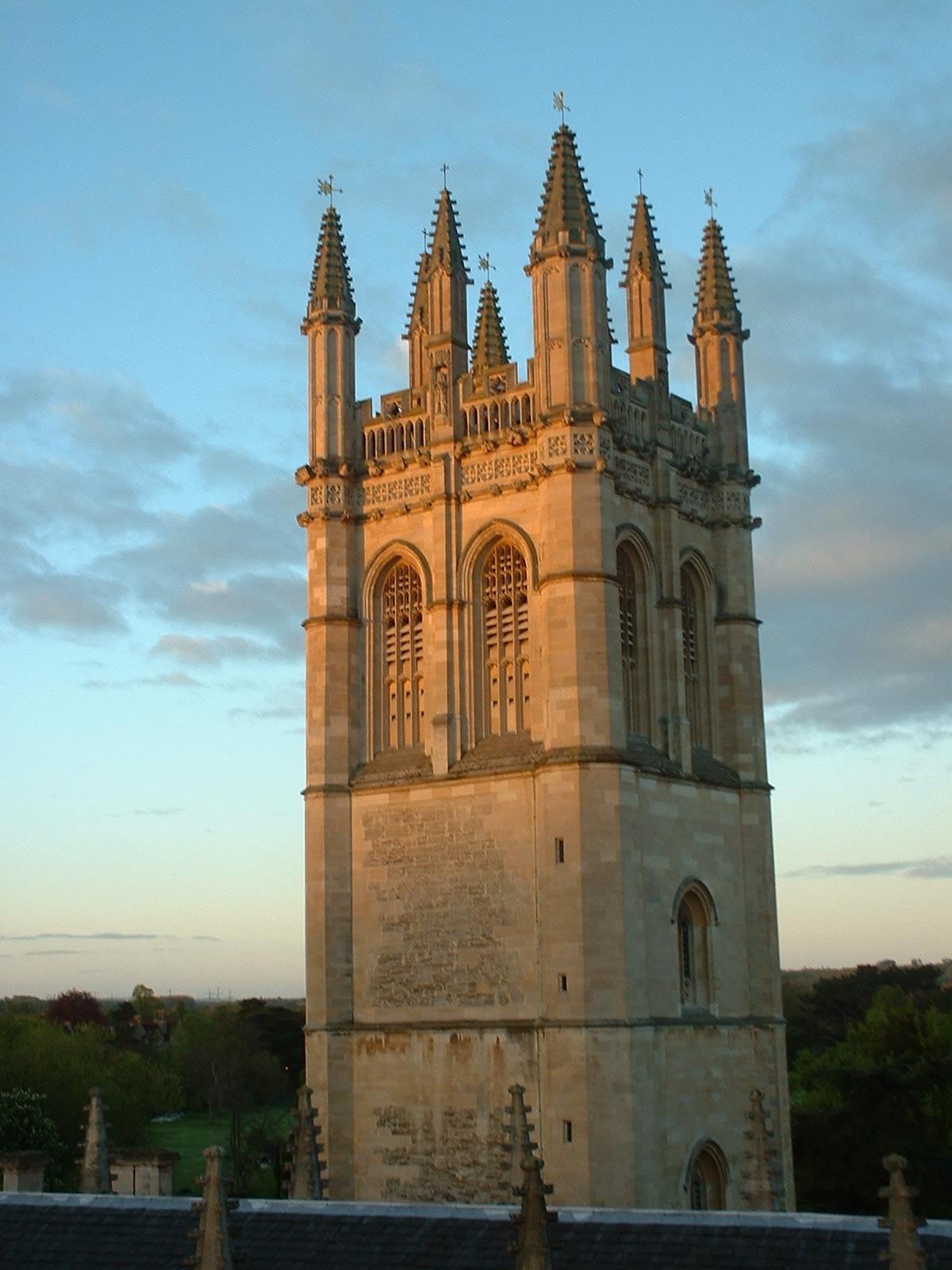
Magdalen Tower, Oxford, is the center of the historic May Day celebrations in the university town.

Magdalen Tower, Oxford, is the center of the historic May Day celebrations in the university town.

May Day celebrations appeared in pre-Christian times, with the Floralia, festival of Flora, the Roman goddess of flowers, during the Roman Republic era; during the Middle Ages, the Walpurgis Night celebrations of the Germanic countries marked the last winter frolic of witches and devils. May Day is also associated with the Gaelic Beltane, most commonly held on April 30. The day was a traditional summer holiday in many pre-Christian European pagan cultures. While February 1 was the first day of spring, May 1 was the first day of summer; hence, the summer solstice on June 25 (now June 21) was Midsummer.

Secular versions of May Day, observed in Europe and America, may be best known for their traditions of dancing around the Maypole and crowning the Queen of May. Fading in popularity since the late 20th century is the giving of “May baskets,” small baskets of sweets or flowers, usually left anonymously on neighbors’ doorsteps. I remember making May baskets in elementary schools and Maypole games on the playground.

May Day is celebrated at the University of Oxford with special gusto. The day starts early (at 6 a.m.!) with the Magdalen College Choir singing a hymn, the Hymnus Eucharisticus, from the top of Magdalen Tower, a tradition of over 500 years. Large crowds normally gather under the tower along the High Street and on Magdalen Bridge. (Magdalen Tower is one of the oldest parts of Magdalen College, Oxford, situated directly in the High Street. Built of stone from 1492, when the foundation stone was laid, its bells hung ready for use in 1505, and completed by 1509, it is an important element of the Oxford skyline. At 144 feet high, it is the tallest building in Oxford. It dominates the eastern entrance to the city, towering over Magdalen Bridge and with good views from the Botanic Garden across the street.) This is then followed by general revelry and festivities including Morris dancing, impromptu music, etc., for a couple of hours. There is a party atmosphere, despite the early hour. In fact, there are normally all-night balls the night before, so some people (especially students) are in formal attire (e.g., black tie/white tie or ball gown).

St. George’s Eve and the Master of Wolves

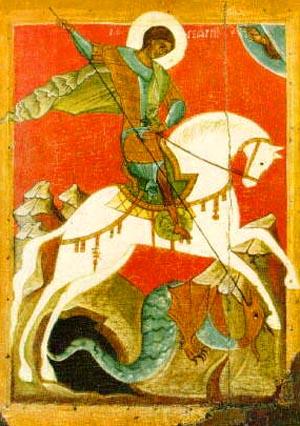
Russian icon of St. George battling the dragon

Russian icon of St. George battling the dragon

There are many legends and customs associated with the celebration of St. George’s Day on April 23 or the night before (St. George’s Eve). One of the most mysterious is that of the Master of the Wolves. On St. George’s Eve a man is wandering in the forest, becomes tired, and climbs into a tree to rest. He falls asleep. When he awakes, he sees the Master of the Wolves below him, who is giving out food to the wolves or werewolves, sometimes sending them in all directions to search for food. The last in line is the Lame Wolf. Since there is no more food, the Master of the Wolves says he can eat the man watching from the tree.

Among part of the southern Slavs (Serbs, Macedonians, Bulgarians) the legends and beliefs about the Master of the Wolves are also connected with numerous commandments, prohibitions and customs associated into the so-called “wolf holidays”. Legends about some type of Master of the Wolves can also be found in written form among the majority of southern and eastern Slavs, partially also among the Poles, and among the Estonians, the Gagauz in Moldavia, in Latvia, Romania and in an incomplete form even in France. His function, as can be established from the legends and beliefs, is to lead the wolves and determine what they may and may not eat. In some versions of the legend, the Master of Wolves is St. George himself! (For more about the Master of Wolves, read here.)

In the book Dracula, by Bram Stoker, evil things are said to occur on St George’s Day, beginning at midnight. The date of St George’s Day presented in the book, 5 May (on the Western, Gregorian calendar), is St George’s Day as observed by the Eastern Orthodox churches of that era:
“Do you know what day it is?” I answered that it was the fourth of May. She shook her head as she said again: “Oh, yes! I know that, I know that! but do you know what day it is?” On my saying that I did not understand, she went on: “It is the eve of St. George’s Day. Do you not know that tonight, when the clock strikes midnight, all the evil things in the world will have full sway?”(Excerpt from Dracula, 1897)