
Vidovdan

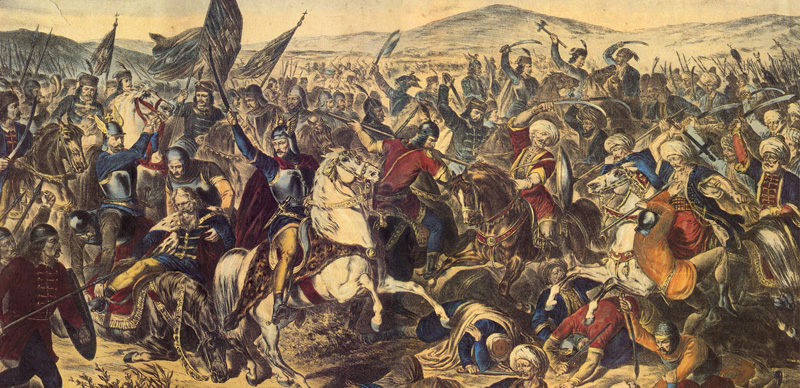
St. Vitus' Day (Vidovdan) marks the Ottoman defeat of the Serbians at Kosovo in 1389.

St. Vitus’ Day (Vidovdan) marks the Ottoman defeat of the Serbians at Kosovo in 1389.

St. Vitus, a Christian in Sicily who was killed for his faith in A.D. 303, is commemorated each year in mid-June. He is most often associated with epileptics or those who have seizures for other reasons, because he looked as if he was having a seizure as a lion killed him and tore his body to shreds. He is also said to protect against lightning strikes, animal attacks and oversleeping. He is the patron of the cathedral in Prague.

He is also important in the history of Serbia. It was on his feast day (known as “Vidovdan” in Serbian) that the Serbian army, led by Prince Lazar, was defeated by the Ottoman army led by Sultan Murad in the field of Kosovo. The defeat at Kosovo on Vidovdan came to be considered the defining moment of Serbian national consciousness as it was the first time that several of the Serbian clans set aside their local disputes and came together for a common purpose (under the leadership of Prince Lazar). The anniversary of the defeat at Kosovo is particularly important to Serbian history, tradition, and national identity. The date is ingrained in the Serb consciousness, and is the date on which South Slav nationalist Gavrilo Princip assassinated Archduke Franz Ferdinand, setting off a chain of events that led to the outbreak of World War I.

Reliable historical accounts of the battle are scarce. The bulk of both armies were wiped out in the battle; both Lazar and Murad lost their lives in it. Although Ottomans managed to annihilate the Serbian army, they also suffered high casualties which delayed their progress. Serbs were left with too few men to effectively defend their lands, while the Turks had many more troops in the east. Consequently, one after the other, the Serbian principalities that were not already Ottoman vassals became so in the following years.

One of my best friends in seminary, a third generation Serbian-American, said once, “Only the Serbians would make a national holiday out of their worst-ever military defeat!”

Stars and Cards: Gemini

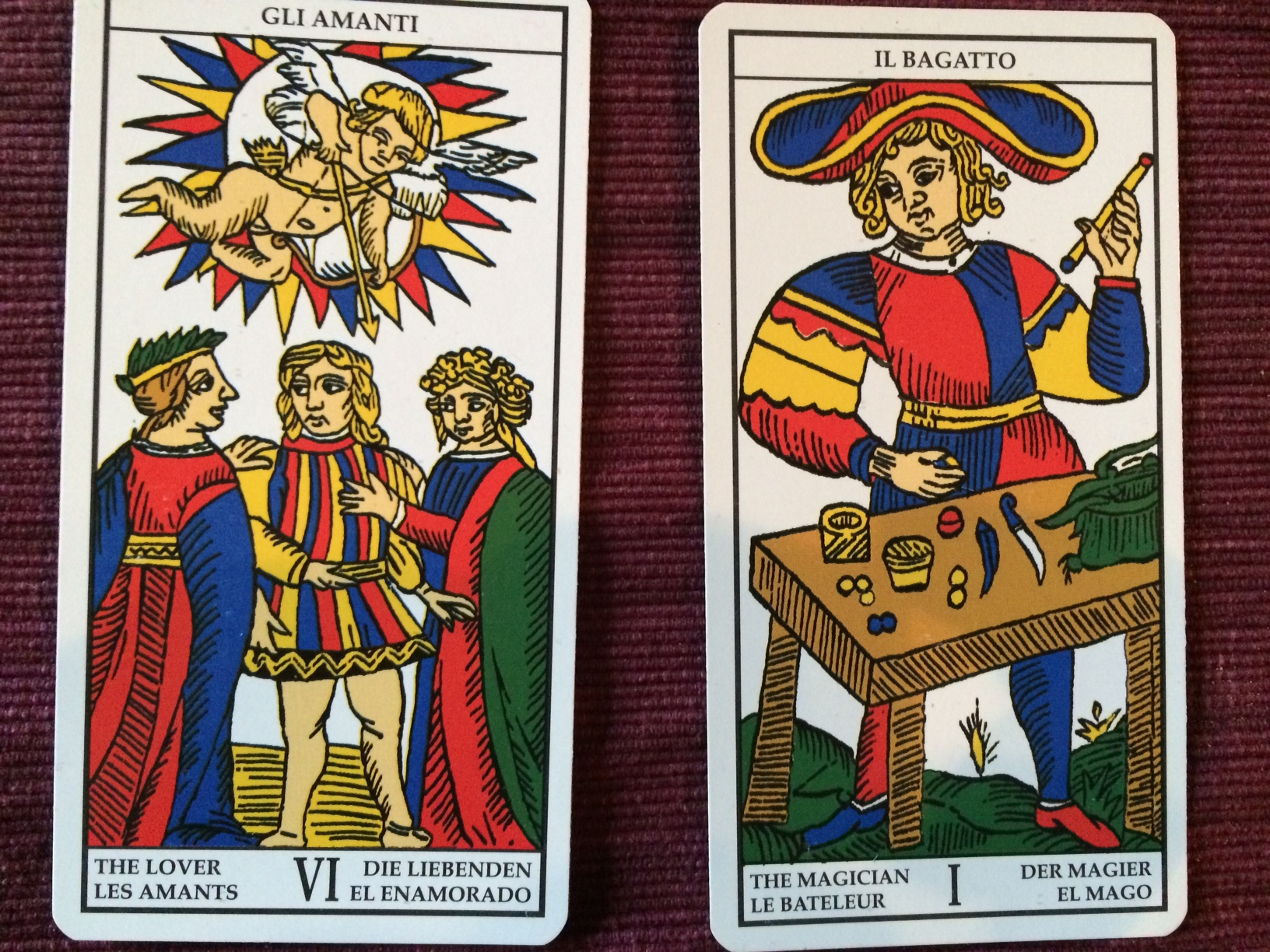
The Lovers and the Magician from the Tarot of Marseille deck, published by Lo Scarabeo.

The Lovers and the Magician from the Tarot of Marseille deck, published by Lo Scarabeo.

The sun begins its month-long journey through Gemini, the sign of the zodiac associated with the Lovers trump of the tarot, on May 21. The sign Gemini belongs to the element air and is ruled by the planet Mercury (the Greek messenger of the gods), which is linked to the Magician trump of the tarot. The tarot’s air suit of swords illustrates typical scenes of daily life related to intellect, communication, logic, strife, conflict, choice, decision-making and the overcoming of adversity.

As an air sign, Gemini is concerned with all aspects of the mind. This zodiac sign is ruled by Mercury, which is a planet that represents communication, writing and teaching others. They get fascinated by almost everything in the world and they have a feeling as if there is not enough time to experience everything they want to see. This makes them excellent artists, writers and journalists. Gemini sign means that sometimes people born under this sign have a feeling that their other half is missing, so they are forever seeking for new friends, mentors and colleagues.

During the time of the sign Gemini, we have an excellent opportunity to meditate on the tarot’s Lovers and Magician cards, as well as the suit of swords of the minor arcana. Ponder the myths of Castor and Pollux, and of Helen of Troy — all figures associated with the constellation Gemini. Do you show your loved one how much you really care? What are the important decisions you are facing in your life and what are the potential consequences? Where must you turn away from the things of childhood and assume your position as an adult member of society? How can you use your talents to work magic in your own life and in the lives of those around you?

May Wine

Woodruff is associated with the planet Mars and the element of Fire.

Woodruff is associated with the planet Mars and the element of Fire.

Even if it is a few days past the end of May, there is still time to enjoy a glass or two of May wine!

May wine, a popular spring-time beverage in Germany or German-speaking areas, is made by steeping sweet woodruff in white wine. Sweet woodruff has a strong scent, which increases when the woodruff wilts. The fragrance persists as the woodruff dries, and the dried plant is used in potpourri and as a moth deterrent. Dried woodruff is also used, mainly in Germany, to flavor May wine, sweet juice punch, syrup for beer (Berliner Weisse), brandy, jelly, jam, a soft drink (Tarhun, which is Georgian), ice cream, and herbal tea. Also very popular are Waldmeister flavored jellies, with and without alcohol. In Germany it is also used to flavor sherbet powder, which features prominently in Günter Grass’s novel The Tin Drum.

Woodruff is carried by business-folk to attract wealth and prosperity or by soldiers and athletes to attract victory. Anyone who carries a bit of woodruff in a leather sachet is protected against harm, especially harmful magic or ill wishes. In astrology, Mars is the planet of energy, action, and desire. It is the survival instinct, and can be thought of as the “leftover” animal nature of man. It is this association with the planet Mars that causes woodruff to drive its bearer to success and victory and fights against the harmful magic directed against its bearer (leather being associated with soldiers’ protective “armor” in the ancient or medieval world since metal protective gear — i.e. a knight’s suit of armor — was too expensive for most peasant soldiers).

Maybe a glass or two of May Wine is just what I need to get rich or win the Olympics? Or protect myself against witchcraft and black magic? I should definitely enjoy some May Wine before selecting the numbers the next time I buy a lotto ticket!