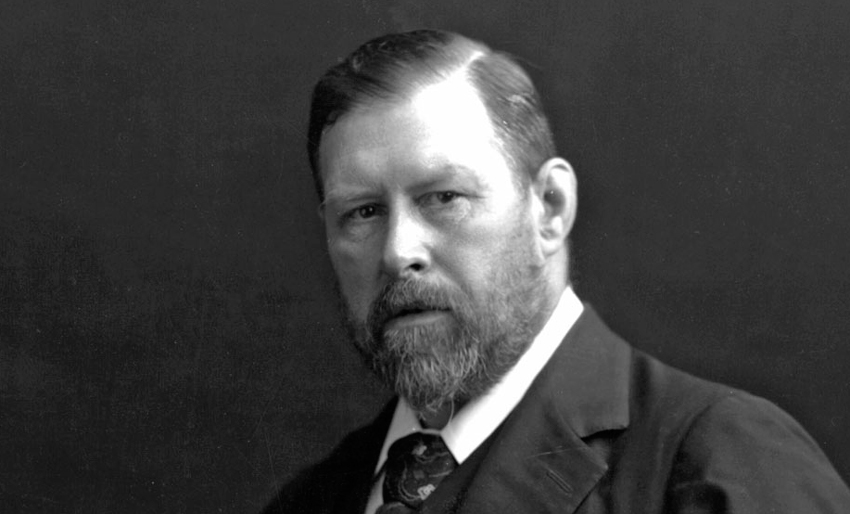
Happy Birthday, Bram!

Bram Stoker, an Irish author-actor-playwright, is best known for his novel Dracula.

Bram Stoker, an Irish author-actor-playwright, is best known for his novel Dracula.

Abraham “Bram” Stoker (born November 8, 1847 – died April 20, 1912) was an Irish novelist and short story writer, best known today for his 1897 novel Dracula. During his lifetime, he was better known as personal assistant of actor Henry Irving and business manager of the Lyceum Theatre in London, which Irving owned. (Stoker’s residence and parish church can still be visited in Dublin.)

Although Stoker himself never visited Romania or the Carpathian Mountains, he spent several years researching European folklore and mythological stories of vampires. He also met Ármin Vámbéry, a Hungarian writer and traveler, whose dark stories of the Carpathians may have also contributed to Stoker’s inspiration.

Stoker’s most infamous character, the vampire Dracula, has gone on to appear in many “incarnations” or guises. In the Dresden Files series, Stoker’s novel is said to be a hunter’s manual for the Black Court vampires, now all but extinct as a result. Bela Lugosi played the vampire in both stage and film versions of the story. The new Something in the Blood by David Skal was reviewed in the New York Times at the end of October; it is an examination of where all the sexual energy and tension in the book comes from. One study, Who was Dracula? explores and uncovers the wide range of source material – from folklore and history, to personas including Oscar Wilde and Walt Whitman. There are many versions of The Annotated Dracula and each opens new windows into the world of Stoker and his famous, bloody creation.
From Faith to Fantasy: How the Priesthood Shaped My Fiction

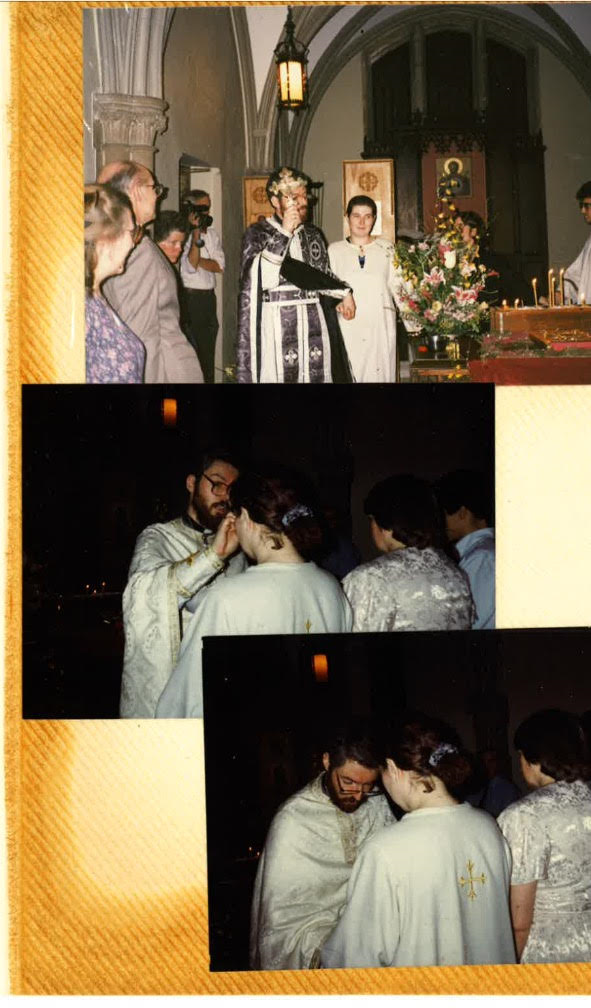
Holy Saturday (1991) at St. Mary Magdalen parish in Lampman Chapel at Union Theological Seminary. (photo courtesy of Alexandra Chistyakova LaCombe)

Holy Saturday (1991) at St. Mary Magdalen parish in Lampman Chapel at Union Theological Seminary. (photo courtesy of Alexandra Chistyakova LaCombe)

I served as parish priest for a small Eastern Orthodox congregation on the Upper West Side of Manhattan and at Columbia University for many years. I celebrated services, preached sermons, performed marriages and funerals. I counseled the confused and the despairing, taught those with questions, rejoiced with the joyful. I read. I shared what I had discovered on my own journey. Most importantly, I listened. Most people already knew the answers to their own questions; they just needed someone to help them listen to themselves.

Hopefully, that listening and sharing is reflected in my writing. I listen to the characters and help them to discover who they are and what journeys they are on. I share aspects of myself with each of them and they share themselves with me; if I am quiet and listen, I can share not only their joys and frustrations and despair myself but communicate their experience to my readers.

One aspect of Eastern Orthodoxy that is distinct from other styles of Christianity is the ongoing, living voice of Tradition. This is not simply a blind or rigid adherence to the past. As G.K. Chesterton wrote, “Democracy says everyone’s voice counts, even if they are stable hands or cowherds. Tradition says that everyone’s voice counts, even if they are dead. We shall not be governed by the oligarchy of those who simply happen to be alive. Some vote with stones, as in ancient Greece. Others vote with tombstones.” In order to do Orthodox theology in a modern context, we must be in dialogue with the great preachers and thinkers of the 4th-5th-6th centuries as much as we are in dialogue with modern thinkers; when wrestling with issues today, it is probably even more important to be in dialogue with the preachers and thinkers of the formative periods of Orthodox thought and practice than with those who simply happen to be our contemporaries.

My novels are shaped by the folklore, legends, and history of the places where they are set: the Baltic States (Estonia-Latvia-Lithuania), Poland, Bohemia (the modern Czech Republic), Ireland. My characters interact with those authentic pre-modern beliefs and practices, retelling and reshaping them for modern audiences. I introduce characters to each other that might not have met in their original settings but that have stories and experiences to share with each other. By sharing their experiences, they enrich each other and the readers who can eavesdrop on their conversations or thoughts.

Priesthood is primarily a way of being, of bridge-building. In writing, I try to be my truest self and attempt to build bridges between cultures and histories, practices and experiences, characters and readers.

(This essay first appeared as my guest post on Eve Heart’s blog in September 2016.)

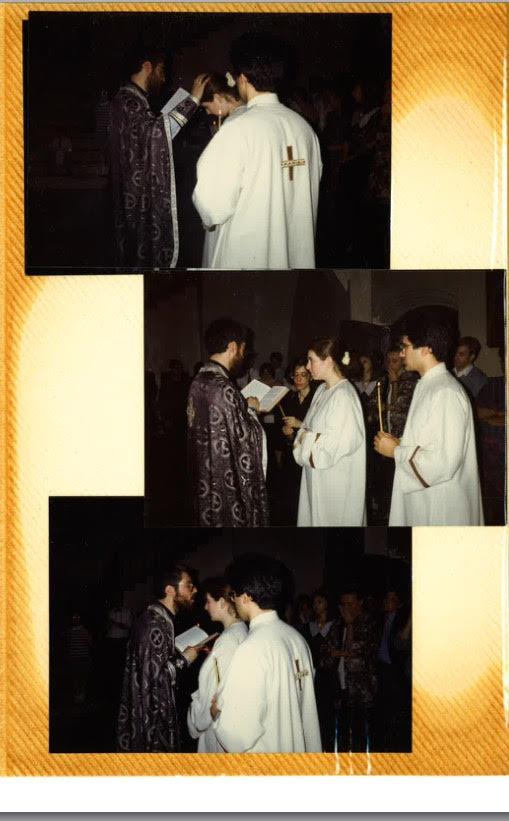
Another photo of Holy Saturday 1991. (photo courtesy of Alexandra Chistyakova LaCombe)

Another photo of Holy Saturday 1991. (photo courtesy of Alexandra Chistyakova LaCombe)

Kindle Countdown to Hallowe’en!

jack-o-lantern-pumpkins-11288879970iujp

HAPPY HALLOWE’EN! TRICK OR TREAT!

Both Come Hell or High Water, Part 2: RISING and STORM WOLF are participating in the Kindle Countdown discount program on October 27-31, just in time to get the perfect reading for Hallowe’en OR Samhain on your Kindle or Kindle app! What a treat!

Both books go on sale October 27 and the price gradually rises until midnight on October 31, when both books resume their usual Kindle prices.

Remember that sales of Come Hell or High Water, Part 2: RISING help support the American Red Cross as part of the #VampireBooks4Blood program as well!

See the entire Come Hell or High Water trilogy here.

Read about the history of jack o' lanterns at http://www.history.com/topics/halloween/jack-olantern-history

Read about the history of jack o’ lanterns at http://www.history.com/topics/halloween/jack-olantern-history