
April 7: National Beer Day

Got hiccups? Plunge a dagger into a mug of beer and then drink it all in one breath. You’ll be cured!

National Beer Day celebrates the end of Prohibition with the Cullen-Harrison Act, which went into effect on April 7, 1933.

A thirsty public lined up outside breweries in 20 states and Washington, DC on April 6, or “New Beer’s Eve,” counting down until midnight. They purchased 1.5 million barrels and April 7 has unofficially been National Beer Day ever since.

Beer has a long history in folklore and mythology as well as US legal history. Aegir was primarily the Norse God of the Sea, but was also the brewer to the Gods of Asgard. He and his nine daughters (the billow maidens) brewed ale in a large pot given to Aegir by Thor. His association to brewing is most likely due to the foam on the ocean looking similar to the foamy head of an ale. Aegir was also a terrific host. The mugs in his house refilled themselves with more ale when you drained your cup so your never went thirsty. Albina was the goddess of white barley, which was used to make beer; one of the earliest names for the British Isles, Albion, is thought to come from her name. (Find out more gods and goddesses of beer here.)

St. Amand is the patron of bar staff, bartenders & beer merchants while St. Urban of Langres is the patron of coopers (barrel makers). St. Hildegard of Bingen protects hop-growers.

Beer is said to froth and bubble if an absent loved one is in danger. See? Never let a relative go drinking without you!

It is also said that if spilled beer runs toward you that good luck is coming your way which may be the source of the custom in some parts of Russia to pour beer over a groom’s horse at the wedding! But if you dream of beer, then trouble is on its way.

Don’t forget to celebrate beer on September 9 as well–since 2013, it’s been designated “International Buy a Priest a Beer Day!”

April Daisies

Daisy, the flower of April, is associated with the planet Venus and the deities Freya, Artemis (Diana), and Thor.

“April showers bring May flowers,” they say. But its nearly April and April flowers are pretty important as well.

Daisy was said to have sprung from the tears of Mary Magdalen and associated with April whose “showers are sweet with fruit” according to Geoffrey Chaucer. Daisy is a “feminine” flower whose element is water (according to the alchemists). According to an old saying, spring has not fully arrived until you can step on 12 daisies. Daisy can be used in magic to promote lust and love. Thor used daisy-chains when he disguised himself as Freya to fool the giant  Thrymer, who wanted Freya as his wife.

When you were little, do you remember plucking the petals of a daisy while reciting, “S/he loves, s/he loves me not?” I remember my aunt plucking a daisy from my grandparents’ garden and asking the flower this question about her fiancé. This repetitive questioning will reveal the true feelings of a potential lover. Picking the first daisy of the season will make you an uncontrolled flirt and sleeping with a daisy under your pillow will bring an absent lover back to you.

Daisy can be eaten to relieve stomach ulcers (as Henry VIII did). King Henry’s family came from Wales, where daisy was used to cure insanity, treat smallpox, tumors, jaundice and skin diseases. According to an ancient Celtic legend, daisies came from the spirits of children who died at birth; therefore daisies are also associated with innocence.

Spring and innocence and love all go together, right? Pluck a daisy and hold all three in your hand. Gather a vaseful of April daisies and attract spring and innocence and love to your house.

“Is fiction, which makes fact alive, fact too?”

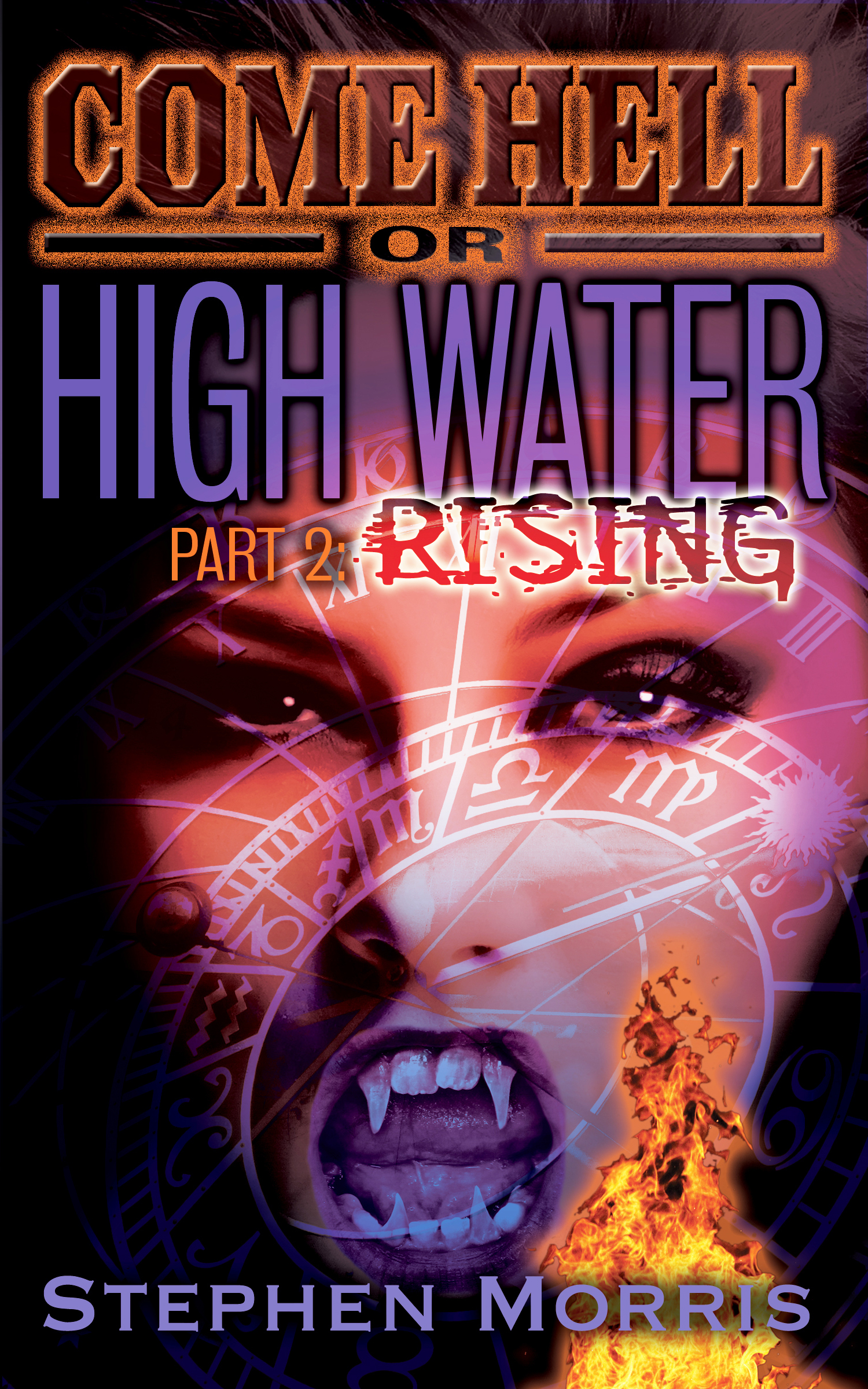
Alexandra Cheira, a scholar of fairy tales and mythology at the University of Lisbon, recently presented a paper about the Come Hell or High Water trilogy at a conference. Her paper examines the relationship between historical fact and legend in the books; she uses the question Robert Browning asks in The Ring and the Book as the title for her paper (and I use it for the title of this post). Alexandra says that the interplay of fact and fairy tale in trilogy presents “a whole picture of the city, in which well-done research is matched by believable story-telling, so much so that the realistic narrative is interspersed by supernatural occurrences which do not strike even the most skeptical reader as out of character.”

She also writes that “the narrative structure is also well-balanced between realism and fantasy, with the description of the conferences, the delegates and the general camaraderie that accompanies them acting as a down-to-earth catalyst for the supernatural parts. The narrative tone is informed – but never lecturing – and the reader does actually learn a lot on a variety of subjects without realizing it.”

Alexandra concludes, “All in all, Morris has managed to create an urban-historical fantasy which pairs fiction and fact and brings to question what is real and what is imagined. ‘Fiction’ is an aid to ‘fact,’ something that can better a story, so that Morris’s ‘fictional facts’ do indeed ring true in the wider context of the novels.”

I am very happy that Alexandra chose to discuss Come Hell or High Water in her paper at the conference. As with all good critiques, she taught ME something about the books that I had not realized as I was writing them!