Pysanky Can Save the World

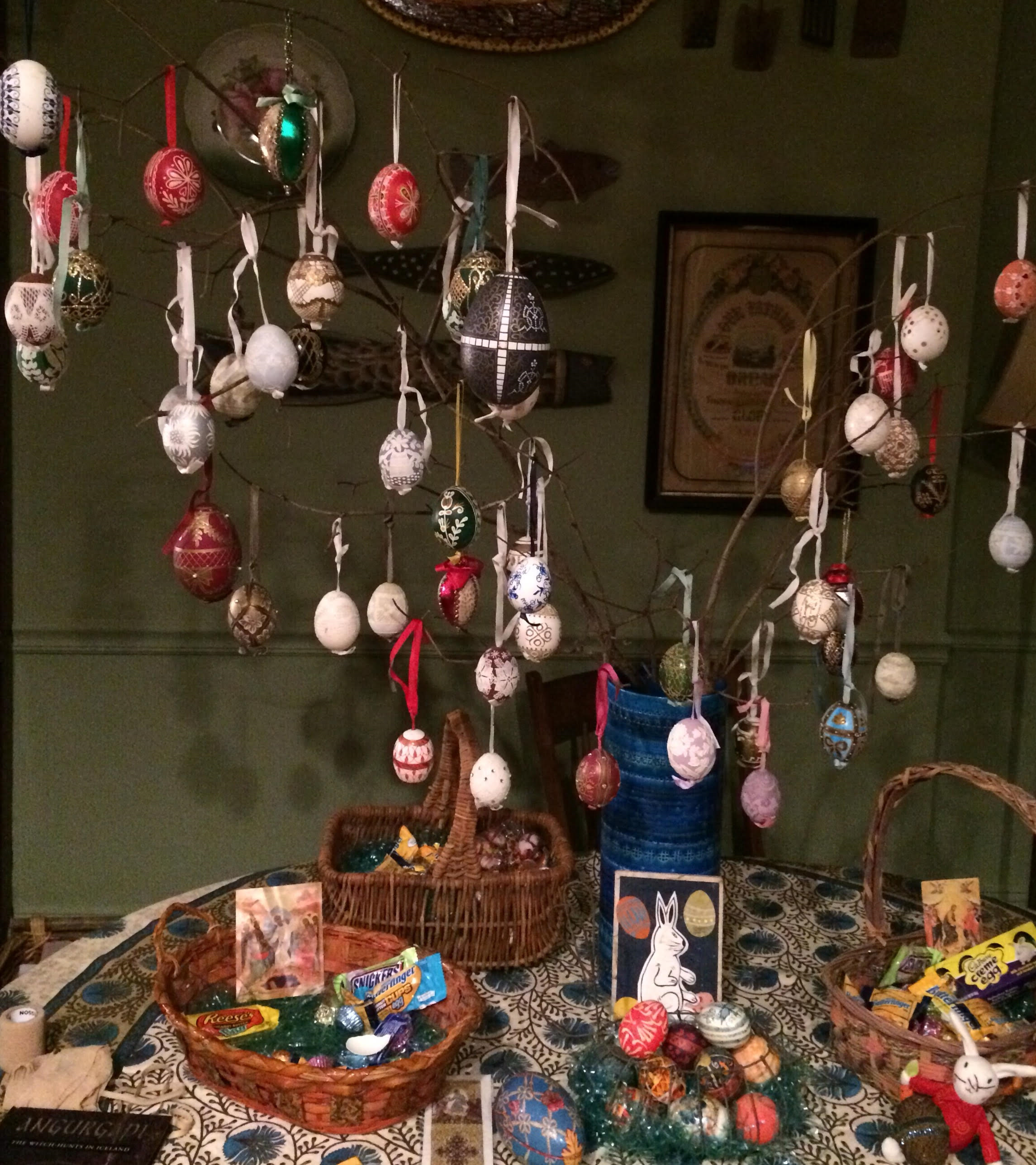
My collection of decorated eggs from Prague and Salzburg on display as an Easter egg tree in 2015.

Pysanky are the decorated eggs in Ukraine or other Slavic areas which are a very important part of the holiday season. It is important to keep making new pysanky every year to replace those that were broken by accident last year because the pysanky keep an evil dragon away from the earth. The more pysanky there are in the world, the further away the dragon must hide. But if there are too few pysanky, then the dragon can come closer and if there are really not enough pysanky in the world then the dragon can eat the earth!

Easter baskets were traditionally baskets of holiday food (meat, cheese, eggs — all the things that people were supposed to be fasting from during Lent!) that were brought to church to be blessed. Easter Monday was a good time to keep eating what was in the Easter baskets as well as enjoy the decorations and displays of Easter eggs. In many parts of Central Europe, people make “Easter trees” to hang their elaborately decorated Easter eggs on.

Pysanky were thought to protect households from evil spirits, catastrophe, lightning and fires. Pysanky with spiral motifs were the most powerful, as the demons and other unholy creatures would be trapped within the spirals forever.

Pysanky held powerful magic, and had to be disposed of properly, lest a witch get a hold of one. She could use the shell to gather dew, and use the gathered dew to dry up a cow’s milk. The witch could also use bits of the eggshell to poke people and sicken them. The eggshell had to be ground up very finely (and fed to chickens to make them good egg layers) or broken into pieces and tossed into a running stream.

The cloth used to dry pysanky was powerful, too, and could be used to cure skin diseases. And it was considered very bad luck to trample on a decorated egg -– God would punish anyone who did with a variety of illnesses.

There were superstitions regarding the colors and designs on the pysanky. One old Ukrainian myth centered on the wisdom of giving older people gifts of pysanky with darker colors and/or rich designs, for their life has already been filled. Similarly, it is appropriate to give young people pysanky with white as the predominant color because their life is still a blank page. Girls would often give pysanky to young men they fancied, and include heart motifs. It was said, though, that a girl should never give her boyfriend a pysanky that has no design on the top and bottom of the egg, as this might signify that the boyfriend would soon lose his hair.
Holy Week Folklore

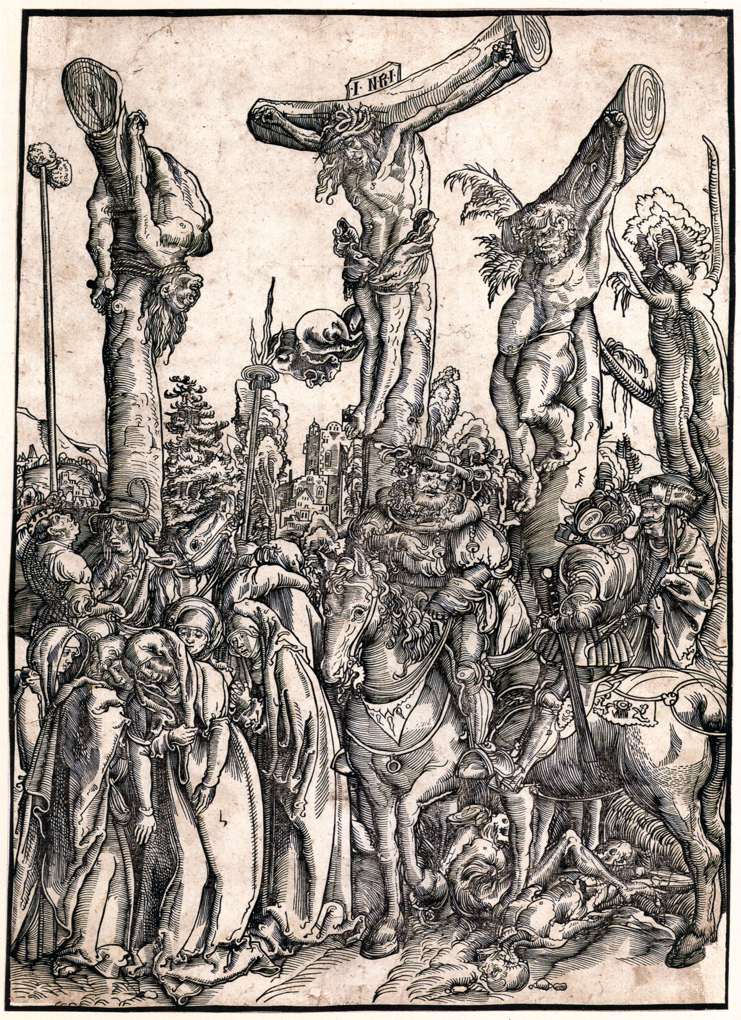
A detail showing Christ and the two theives on their crosses from “The Crucifixion” by Cranach the Elder (woodcut from approx. 1500-1504)

Holy Week, the days between Palm Sunday and Easter, is one of the most important and busiest times of the year in traditional European societies. Everyone is busy baking and cleaning and preparing for the great festival. There are many church services, especially at the end of the week on Thursday, Friday, and Saturday.

One of the more fascinating or frightening folktales of Holy Week tells us that in Prague and the Czech countryside, underground vaults, caves, and holes that contain hidden treasure will open up shine with a faint light as the Passion is chanted in church. A treasure-seeker can go outside church then and see these places and mark them to come back later. Or, if the treasure-seeker can’t wait to get rich, he can go inside the caves right then but he must get out before the last verse of the Passion reading is complete as the vault or cave will shut when the reading is complete and the treasure-seeker will be trapped inside until the next year.

In Russia, the tale is told that anyone who dies on Good Friday will be ushered directly into heaven just as the Good Thief was. (Many artists who painted depictions of the two thieves actually used the bodies of criminals who had been executed on the wheel as their models as no one was crucified any more; if you look closely, you can still see the thieves’ limbs twisted and bent in strange ways that don’t match descriptions of crucifixions because of their torture on the wheel.)

Much of the folklore associated with Holy Week involves protection of various sorts: To protect against the evil eye, wax from candles burned in church during the Holy Week services would be stuck to the heads of children or animals. Hanging a wreath on the door after sunset on Good Friday will protect the house against lightning. Hot cross buns baked on Good Friday and hung in the kitchen will protect against poverty and if they are hug over the bed, will protect against nightmares.

What Do I Write?

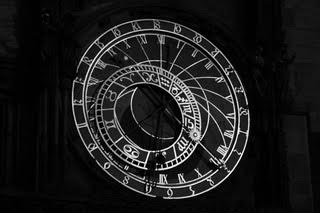
Evil and black magic lurk in the shadows of Prague beneath The Astronomical Clock on the Old Town Square. (photo by Joseph O’Neill, 2016)

What Do I Write?

What do the COME HELL OR HIGH WATER trilogy and the STORM WOLF novel have in common? They are supernatural/fantasy thrillers that straddle timelines and cultures.

The Come Hell or High Water trilogy alternates between 1350s Prague and contemporary Prague. A witch curses the city in the 1350s and the curse is reawakened in the modern city; the curse works its way through the life of the town in both time periods as a handful of people in each period race to stop it before Prague is destroyed.

Storm Wolf follows the adventures of Alexei, the last werewolf in 1880s Estonia who is driven to become a killer and frantically searches throughout Estonia, Latvia, Lithuania, Poland, and Bohemia for a sorcerer who can save him from the wolf-magic.

All the fantastic or magickal aspects of my novels are based on authentic medieval and Renaissance occult beliefs or practices; these are the real deal! (You can use them as recipe books, if you want. This is what people actually did if they wanted to use the supernatural to achieve their goals.) The books also incorporate local legends and history so that you get a taste of what it was really like in Central Europe or the Baltic States in the Middle Ages, the late 19th century, or now.

I’m currently working on Earth to Earth, Ashes to Ashes which is a novel about an Irish female vampire and the ghost of a witch who have kidnapped three high school boys from Waterford in August, 2002; their uncle, a professor of Irish folklore, and a graduate student try to rescue them from the vampire and the witch before they are lost forever in the Otherworld.

You can subscribe to my email list to get seasonal reading suggestions (who doesn’t need a good book for the beach? Or to curl up with in the winter as the snow falls outside?) as well as hear about my upcoming projects. See the spot over to the right? Where it says “Newsletter” and “Subscribe?” Just type your email in the box there and click “Subscribe.” Thank you for keeping in touch!

Now, you can HOP to the next blog on the tour! Or here.

Step #5 – Be sure you mark your calendar! As a Blog Hop participant, you will be responsible for checking your link and the Blog Hop once it is live to confirm it works.

The goal is to create a kind of “daisy chain” that readers can follow from site to site to B2BCyCon.com to site.