Midsummer 2017


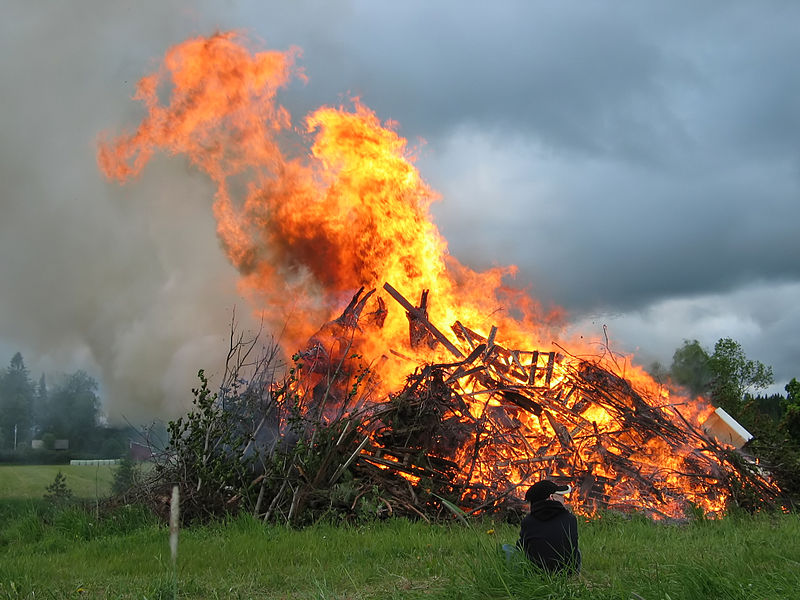
A bonfire for Midsummer in Mäntsälä, Finland.

A bonfire for Midsummer in Mäntsälä, Finland.

The summer solstice, more commonly known as Midsummer, marked the longest day of the year and the zenith of magical power often called “white magic.” Magic worked on Midsummer was most often concerned with life and fertility. Jumping through the Midsummer bonfire was a way to attract fertility, good luck, and prosperity to both the jumper and the surrounding fields. The bonfires of Midsummer are traditionally kindled from the friction of two sacred woods, fir and oak. Nine different types of herbs are thrown upon the Midsummer fire: mistletoe, vervain, St. John’s Wort, heartsease, lavender, and a choice of four others chosen from herbs typical of this season such as yarrow. Folks would feast, dance and jump the fire for luck and fertility. The herds were driven through the embers in days long ago to purge disease and illness from them. When the fires had burned down, folks would carry ashes back to their homes to sprinkle on fields, the four corners, and lay embers on the hearth. The ashes bring powers of protection, health and luck.

Water is the other important aspect of Midsummer. In times past folks swam in waters that flowed towards the rising sun as it climbed in Midsummer morning sky. Bathing in springs and rivers on Midsummer brings healing, cleansing and protection. The dew of Midsummer is said to bestow health to whomever drinks of it. Especially powerful is fetching running water of Midsummer morn and mixing it with ashes from the bonfire, sprinkling it around the house, yard and on oneself bestows protection and luck. Iceland combined the beliefs about bathing and dew into one practice: Icelandic folklore says that if you bathe naked in the morning dew on the morning of June 24, you will keep aging at bay for longer.) Midsummer Eve, the night before the solstice, is the evening of herbs. The herbs and flowers gathered this night are considered exceptionally potent. St John’s Wort, burdock, thorn, and nettle , should be harvested on Midsummer Eve and hung on doors or windows and placed around the home for protection. Royal Fern seeds which are gathered at midsummer are said to make the possessor invisible. They who find Royal Fern blossoms on Midsummer’s eve become wise, lucky, and wealthy. Women wear braided circlets of clover and flowers, while men wear chaplets of oak leaves and flowers around their heads. In times past, livestock were also decorated with garlands made of flowers, foliage, and oak leaves.
Napoleon of Notting Hill

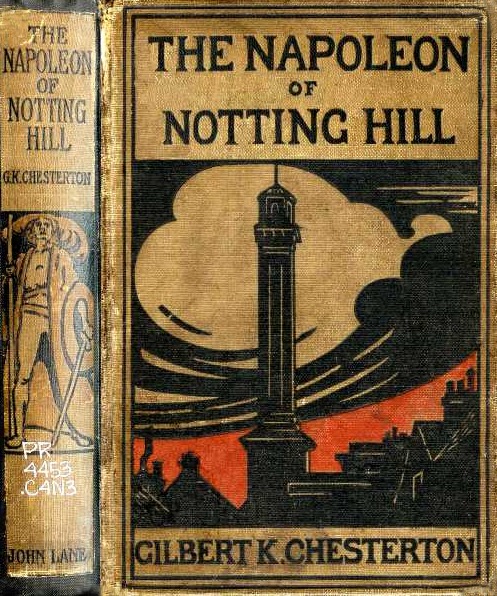
G.K. Chesterton published “The Napoleon of Notting Hill” in 1904.

Picture a London in the future where democracy is dead. A little government minister with virtually no experience governing is made King. The boroughs are suddenly declared separate kingdoms with their own city guard, banner and gathering cry and the capital is plunged into a strange type medieval warfare. Then Notting Hill declares its independence?

When G.K. Chesterton wrote his classic Napoleon of Notting Hill in 1904, the Russo-Japanese War was just beginning and the first ever New Year’s Eve celebration in Times Square was held. Edward VII sat on the British throne. But it is a book surprisingly relevant to the contemporary world. The book revolves around loyalty to the local and taking our neighbors seriously; it is an early demonstration of the axiom, “Think globally, act locally!” But this loyalty to our neighborhood is far from the cries of “America first!” that involve turning our back on the rest of the world. It is our loyalty to our neighborhood that forces us to realize our interdependence on the rest of the world and how each neighborhood needs the others if any are to flourish. Need a good book this summer? Pick up this one!

Chesterton’s The Man Who Was Thursday is credited with inspiring the conversion of C.S. Lewis to Christianity and Michael Collins to the cause of the Irish Republic. It also was one of Neil Gaiman’s inspirations for Neverwhere.

Balrogs … and “Less is More!”

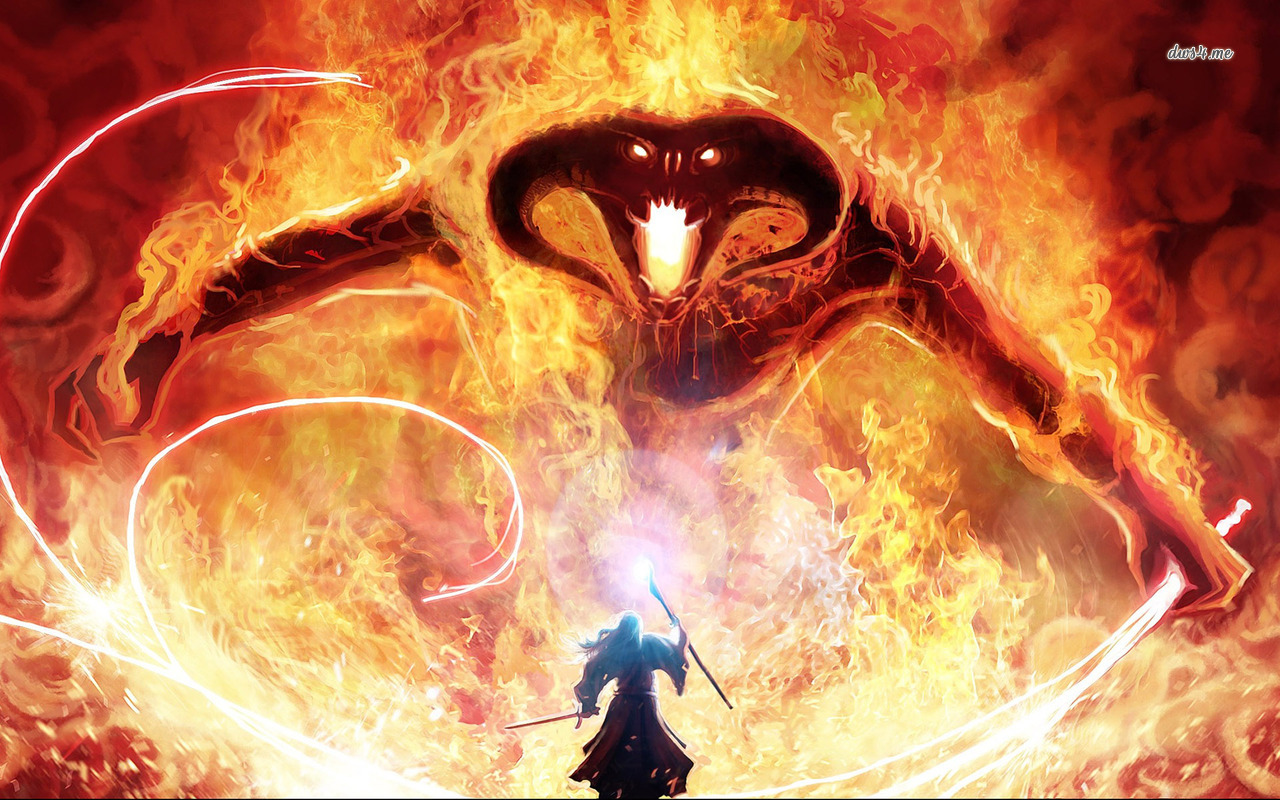
One artist’s depiction of the Balrog confronting Gandalf in “The Lord of the Rings” by J.R.R. Tolkien

Recently in my Tolkien Literature Reading Group, one of the members asked me what I, “as a writer,” thought about a certain scene in The Lord of the Rings. I think it was the scene where Gandalf confronts the Balrog in Moria. Tolkien simply says that the Balrog “was like a great shadow, in the middle of which was a dark form, of man-shape maybe, yet greater” with a mane, a sword, and wings. Gandalf defies it, claiming his status as “a servant of the Secret Fire, wielder of the flame of Anor.” Tolkien doesn’t bother to tell us what the source of this Secret Fire is nor what the flame of Anor is. Each reader is left to imagine the details of the Balrog; it was only in the various film interpretations of the LOTR that viewers were passively fed the Balrog’s details because film required the visual presentation of the Balrog in all its fearsome glory.

I realized that Tolkien, in that particular scene and in many others as well (once I thought about it), did not say nearly as much as most readers think he does in terms of description and detail. He writes JUST ENOUGH and then lets us — each reader — fill in the details. That way each of us is more invested in the scene, in what happens, and in what results come of it. We supply our own vision of beauty and ugliness, what is frightening or comforting, what propels or inhibits the characters.

Too often writers supply too much — too much description, too many motivations, too many words. We need to trust readers more to fill in these details themselves. We overwrite. We over-describe. We need to allow the reader(s) to contribute their own efforts to fill in the gaps and make the scene more compelling. All too often, this is what happens anyway: we can describe a character’s exact appearance, down to the last detail, but the reader will recreate them in whatever way seems appropriate to that reader in order to make the character “beautiful” or “sneaky” or whatever the character’s most important trait is. (I remember that I first read The Hobbit immediately after finishing The Wind in the Willows and I have always pictured Bilbo as a rather large frog wearing Victorian clothes in many scenes, simply another version of Mr. Toad.)

Allowing the reader to contribute to the scene not only makes the scene much more effective but helps us writers to become better writers as well. It might seem lazy to say less about a character or a scene but it actually forces us to be more thoughtful and concise. It makes us think about what is really important about the scene or character and drop anything extraneous.

THAT’S the hard part!