
May Day! Happy Summer!

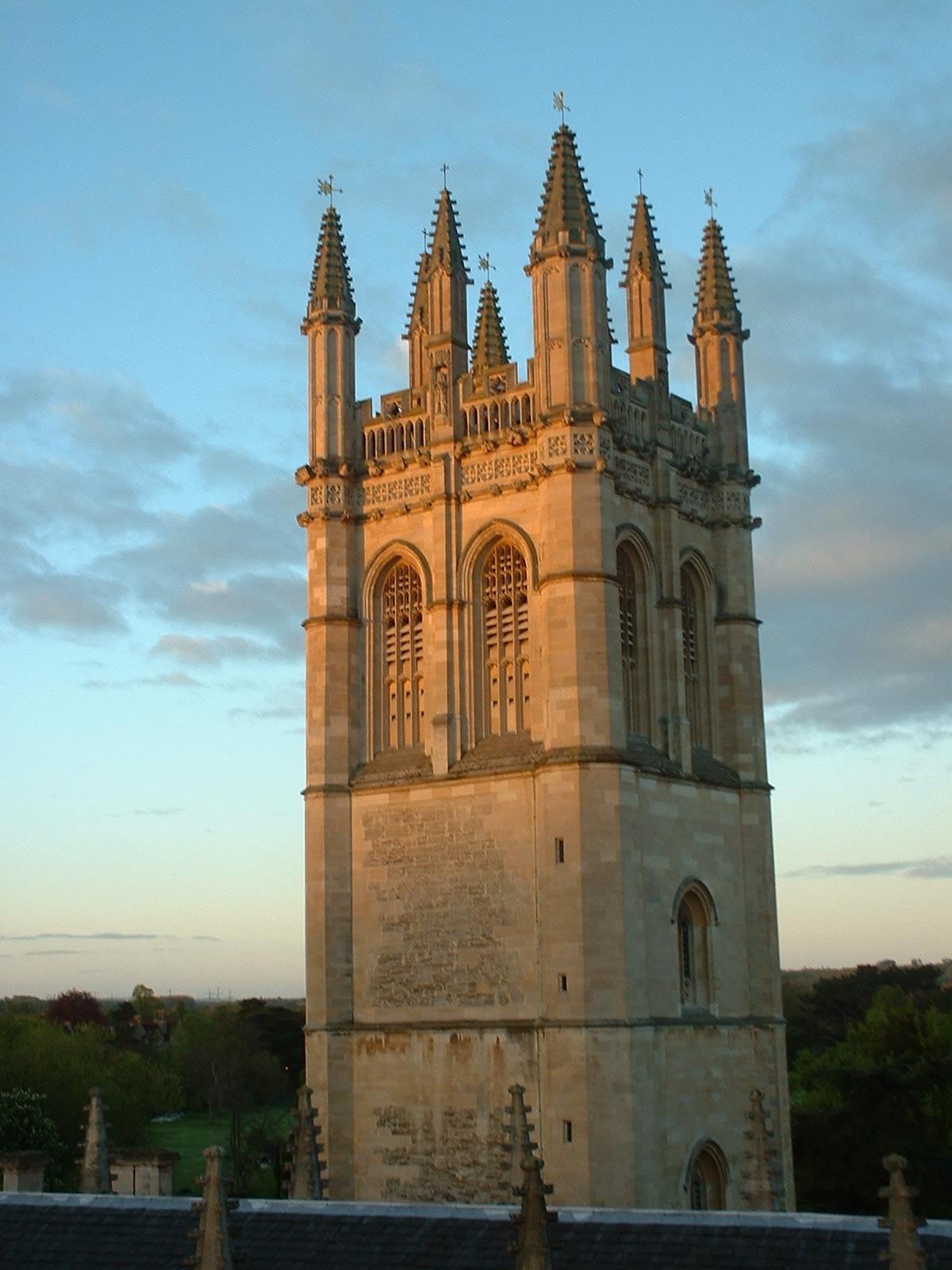
Magdalen Tower, Oxford, is the center of the historic May Day celebrations in the university town.

Magdalen Tower, Oxford, is the center of the historic May Day celebrations in the university town.

May Day celebrations appeared in pre-Christian times, with the Floralia, festival of Flora, the Roman goddess of flowers, during the Roman Republic era; during the Middle Ages, the Walpurgis Night celebrations of the Germanic countries marked the last winter frolic of witches and devils. May Day is also associated with the Gaelic Beltane, most commonly held on April 30. The day was a traditional summer holiday in many pre-Christian European pagan cultures. While February 1 was the first day of spring, May 1 was the first day of summer; hence, the summer solstice on June 25 (now June 21) was Midsummer.

Secular versions of May Day, observed in Europe and America, may be best known for their traditions of dancing around the Maypole and crowning the Queen of May. Fading in popularity since the late 20th century is the giving of “May baskets,” small baskets of sweets or flowers, usually left anonymously on neighbors’ doorsteps. I remember making May baskets in elementary schools and Maypole games on the playground.

May Day is celebrated at the University of Oxford with special gusto. The day starts early (at 6 a.m.!) with the Magdalen College Choir singing a hymn, the Hymnus Eucharisticus, from the top of Magdalen Tower, a tradition of over 500 years. Large crowds normally gather under the tower along the High Street and on Magdalen Bridge. (Magdalen Tower is one of the oldest parts of Magdalen College, Oxford, situated directly in the High Street. Built of stone from 1492, when the foundation stone was laid, its bells hung ready for use in 1505, and completed by 1509, it is an important element of the Oxford skyline. At 144 feet high, it is the tallest building in Oxford. It dominates the eastern entrance to the city, towering over Magdalen Bridge and with good views from the Botanic Garden across the street.) This is then followed by general revelry and festivities including Morris dancing, impromptu music, etc., for a couple of hours. There is a party atmosphere, despite the early hour. In fact, there are normally all-night balls the night before, so some people (especially students) are in formal attire (e.g., black tie/white tie or ball gown).
St. Brigid’s Day 2016

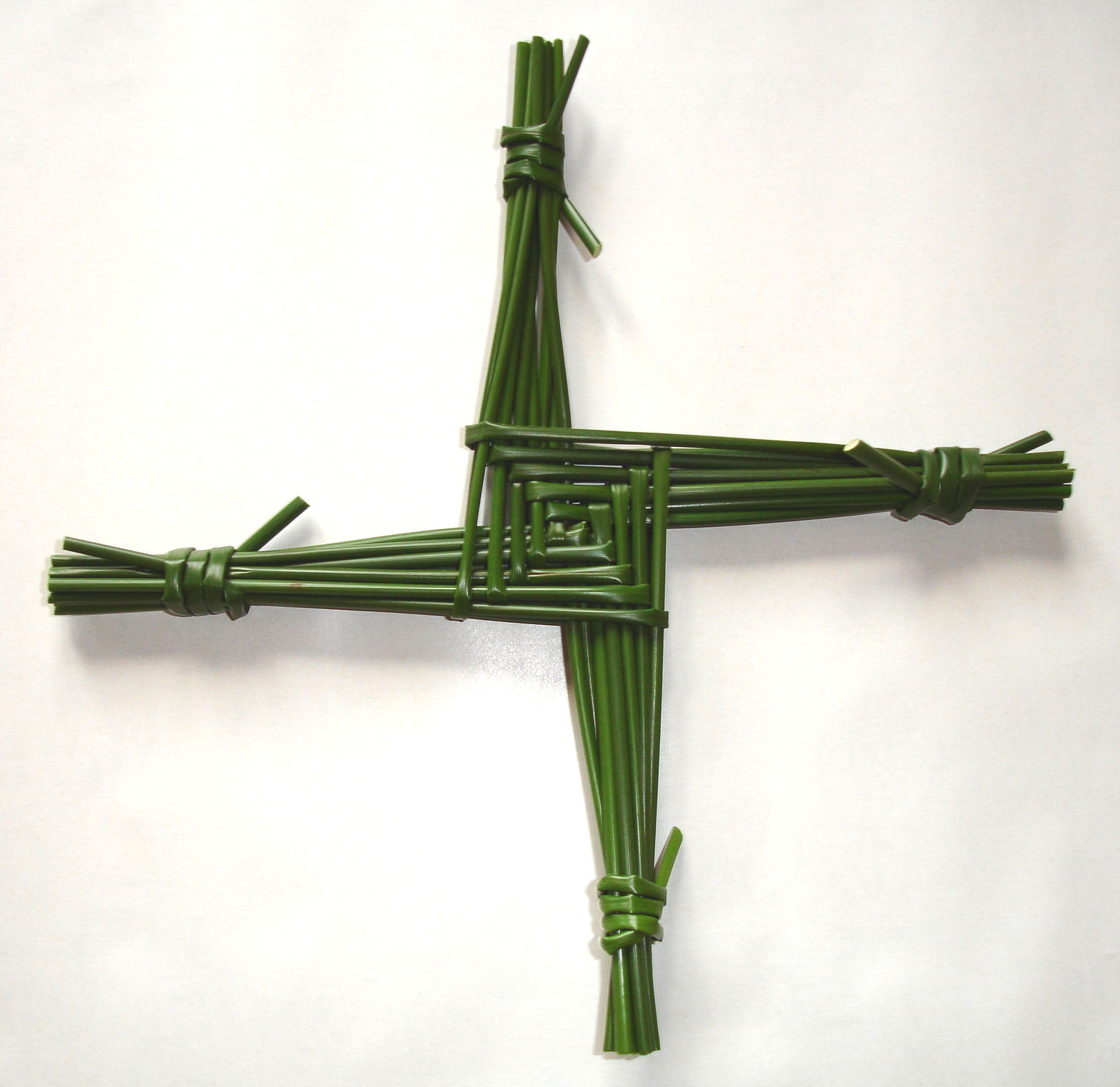
Legend says that while St. Brigit sat alongside a dying man one night, she picked up a handful of rushes from the floor and wove a cross, explaining the Gospel to the dying man as she made the cross. Nowadays many make similar crosses and hang them up to protect their house or barn until the next February.

Legend says that while St. Brigit sat alongside a dying man one night, she picked up a handful of rushes from the floor and wove a cross, explaining the Gospel to the dying man as she made the cross. Nowadays many make similar crosses and hang them up to protect their house or barn until the next February.

Saint Brigit of Kildare or Brigid of Ireland (c. 451–525) is one of Ireland’s patron saints, along with Patrick and Columba. Irish hagiography makes her an early Irish Christian nun, abbess, and founder of several monasteries of nuns, including that of Kildare in Ireland, which was famous and was revered. Her feast day is 1 February, which was formerly celebrated as a pagan festival (Imbolc) marking the beginning of spring and the lambing season.

Once a leprous woman asked her for milk, but there was none available so St. Brigid gave her cold water instead. The water turned into milk and when she had drunk it, the woman was healed.

Like her mentor St. Patrick, Brigid was fond of ale and is reputed to have been the best brewer in the land. She supplied beer out of one barrel to eighteen different churches. This single barrelful not only supplied these eighteen different churches, but each church had enough ale to last from Maundy Thursday until Trinity Sunday.

One of the most prettiest legends concerning Saint Brigid tells us that another version of her name was “Bride” and as “St. Bride” she was the patroness of the Knights of Chivalry. They began the custom of calling the girls they each married their own “brides” or “Brigits;” and that from the Knights of Chivalry the word bride came into general usage in the English language.

In very traditional homes, two devout practices are still observed on the Eve of St. Brigid’s Feast Day (February 1st). A strip of cloth called “brat Bhride” (Brigid’s mantle) is hung outside the door. A loaf of oat bread baked in the shape of a cross and a sheaf of straw are left on the windowsill. For on that night, Brigid travels through the land with her red-eared cow bestowing blessings on those who keep the old ways.

Crowhaven Farm

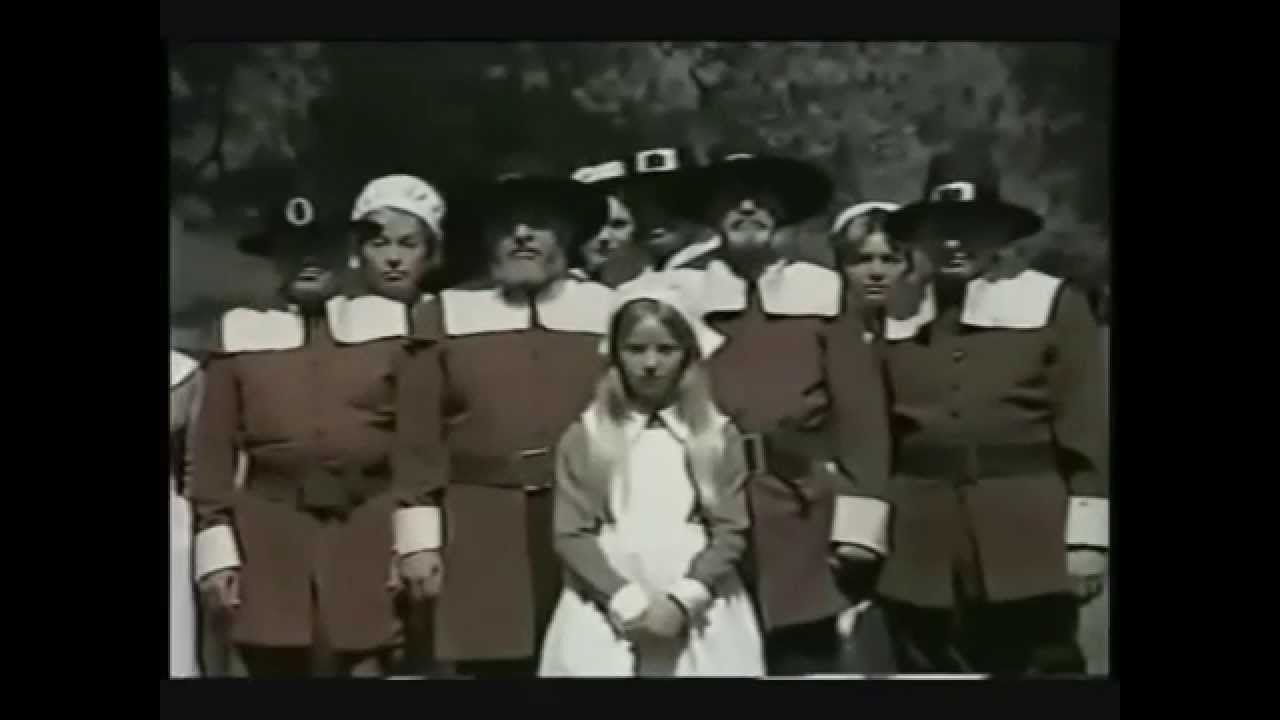
The witches of Crowhaven Farm gather to confront Hope Lange, a modern woman who still owes them for a favor they performed for her in a previous life.

The witches of Crowhaven Farm gather to confront Hope Lange, a modern woman who still owes them for a favor they performed for her in a previous life.

This screen shot opened the MOVIE OF THE WEEK episode every Tuesday and Wednesday evenings on ABC -- back in the days when there were only 3 networks, plus PBS!

This screen shot opened the MOVIE OF THE WEEK episode every Tuesday and Wednesday evenings on ABC — back in the days when there were only 3 networks, plus PBS!

When I was in middle school, one of the scariest movies I have ever seen was broadcast as an ABC Tuesday night made-for-tv Movie of the Week. (Looking over the list of films shown during the run of the series, I still recognize many of them!) But the most riveting was Crowhaven Farm.

First broadcast in the autumn of 1970, Crowhaven Farm starred Hope Lange (known for the series The Ghost and Mrs. Muir) and Paul Burke (known for the television series Twelve O’clock High). As one horror review blog puts it:

“The writers of this show clearly understood horror, they understood that fear is in the mind and that nothing terrifies people more than their own imaginations. Contemporary television shows too much, it tells too much. Crowhaven Farm is spooky, scary, downright terrifying, simply because it makes you think.

The movie tells the story of a modern woman, played by Hope Lange, who still owes the local witches for a favor they did her during a previous life during the 1600s. Too cowardly to give the witches what they asked for, in both her previous and current lives, she forces them to resort to other methods to be rewarded for the favors they did for her as well as exact revenge for how she cheated them in the 1600s. It is a remarkably subtle movie, with nuances and foreshadowings. It does not rely on slashing-and-gashing to frighten the viewer and many of its most frightening images, which appear here for the first time, later became clichés of the genre.

I heartily recommend that you spend an hour-and-fifteen-minutes to watch this classic movie, which is available here on YouTube. Send me your comments about it, especially if you have never seen it before or have not seen it since you were in high school yourself — I still get chills, just thinking about it!