Eostre and Easter… O, My!

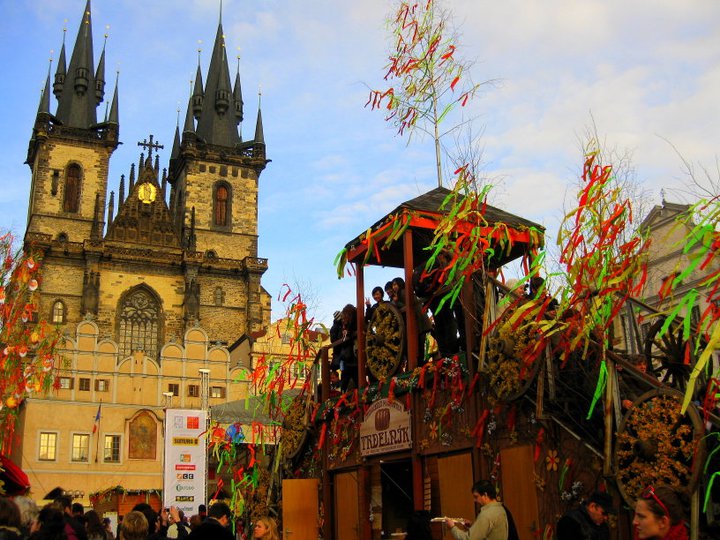
Willow switches are available in the Easter Market in the Old Town Square of Prague. Boys and young men use the switches to swat young ladies in a modern, stylized version of an ancient springtime fertility rite.

Willow switches are available in the Easter Market in the Old Town Square of Prague. Boys and young men use the switches to swat young ladies in a modern, stylized version of an ancient springtime fertility rite.

In most languages, the Christian festival of Christ’s Resurrection is known as “Pascha” or some other version of the name for “Pesach” (Passover), the Jewish feast Jesus celebrated at the Last Supper and during which he was crucified and risen. Only in English is the Christian festival called “Easter,” derived from the Anglo-Saxon goddess Eostre whose springtime feast was supplanted by that of Christ. (Estrogen and estrus and other related words are also derived from the name of the goddess as well.)

Eostre was the goddess of bounty and new life, the regeneration of nature post-winter and fertility. She was attended by rabbits (known for their prolific reproductive abilities) and decorated eggs were exchanged in her honor. (In some places, these decorated eggs were then buried in the earth as gifts to Eostre so that she could know the hopes and dreams of her children, which were depicted in the paintings on the eggs, and then fulfil them.)

A variety of practices were indulged in that were said to promote the fertility of humans and of crops, including switching young women with braided willow branches. Bonfires were a common fertility rite in the non-Christian world and St. Patrick had a major confrontation with the pagan High King of Ireland because he lit the Christian fire for Easter before the king lit the fertility bonfire nearby.

Stories of descent into the netherworld (i.e. winter) and ascent from the netherworld (i.e. spring) were told in connection with Eostre’s celebration, such as that of Persephone and Hades. The well-known “spring cleaning” of homes was part of preparing to welcome Eostre’s arrival back in the world.
Candlemas

Marking the 40th day after Christmas, Candlemas celebrates the triumph of light/spring over darkness/winter. Candles blessed on this day were among the most powerful talismans available to ordinary folk in the Middle Ages.

Marking the 40th day after Christmas, Candlemas celebrates the triumph of light/spring over darkness/winter. Candles blessed on this day were among the most powerful talismans available to ordinary folk in the Middle Ages.

Marking the 40th day after Christmas, Candlemas celebrates the triumph of light/spring over darkness/winter. Candles blessed on this day were among the most powerful talismans available to ordinary folk in the Middle Ages.

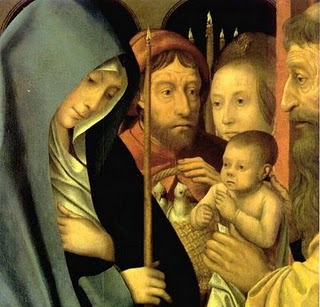
Candlemas, the name taken from the custom of blessing the year’s supply of candles on this day, is the 40th day after Christmas and marks the day Jesus was brought into the Temple by the Mother of God and acclaimed by the elder Simeon as “the light of revelation to the Gentiles and the glory of … Israel.” He also told the Mother of God that a sword would pierce her own heart during the ministry of her Son.

Candlemas, attached to the older feast of Imbolc and the quarter-day between Winter Solstice and Vernal Equinox and thus marking the first day of spring, was even more popular than Christmas in many areas (such as those under the influence of Byzantium and Byzantine Christian culture). People would flock to the churches to obtain the candles blessed on this day as the power of these candles to dispel darkness, death, illness, demons, and nearly anything else that might be considered dangerous to humans was widely reputed to make them the most powerful weapons in the medieval arsenal against evil.

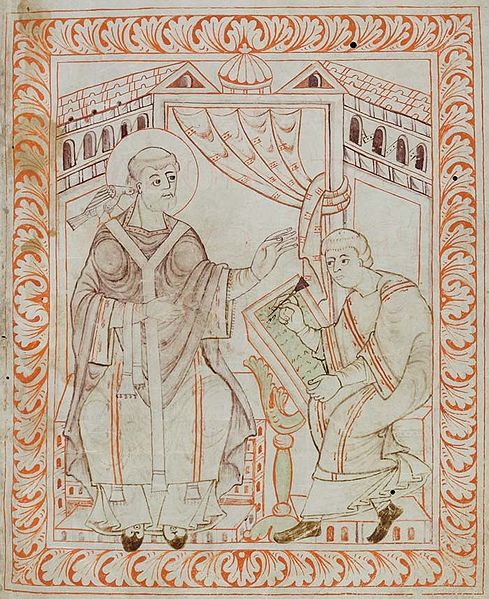
It was also common in western Europe for new archbishops or other leading churchmen to receive their pallium (the “stole,” a vestment similar to a scarf that drapes around the shoulders) on this day, woven from wool sheared from lambs on St. Agnes’ day (January 21).

10th century illumination of St. Gregory the Great wearing his pallium.

10th century illumination of St. Gregory the Great wearing his pallium.


Imbolc: The first day of Spring

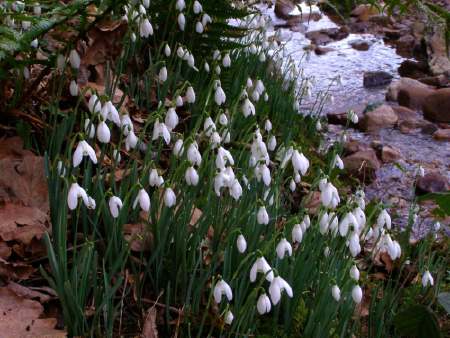
Snowdrops at a creek announce Imbolc. The first blooms of snowdrops or blackthorns or the first birth of the new lambs were often considered the announcement of Imbolc's arrival. (photo by Tony Eaglehart)

Snowdrops at a creek announce Imbolc. The first blooms of snowdrops or blackthorns or the first birth of the new lambs were often considered the announcement of Imbolc’s arrival. (photo by Tony Eaglehart)

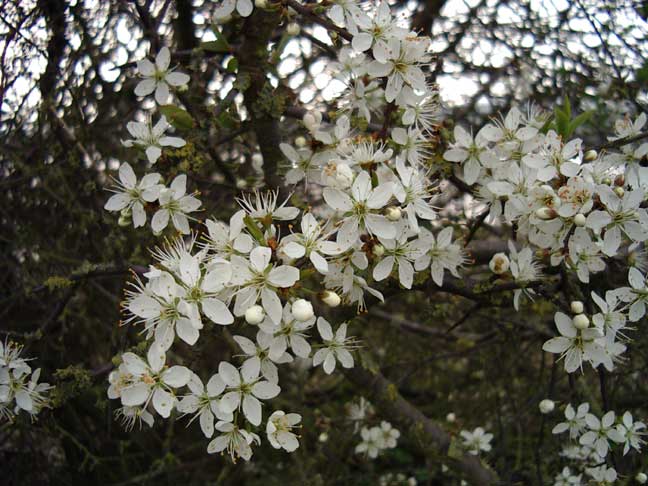
Blackthorn blooming at Imbolc.

Blackthorn blooming at Imbolc.

The Celtic — and magical! — festival of Imbolc, celebrated February 1-2, was considered the first day of spring in Celtic cultures and across Europe in general during the medieval period. Although we nowdays generally consider the soltice or equinox the first day of a season (December 21 as the first day of winter, March 21 as the first day of spring, June 21 as the first day of summer, and September 21 as the beginning of autumn), those days were previously considered the mid-seasons. (That is why we can sing Christmas carols about “midwinter” in December and have Midsummer night dreams in June!) The traditional changes of the seasons were the “quarter days” which marked the midpoints between the mid-seasons. So we get the Celtic/magical festivals of Samhain (October 31, the first day of winter), Imbolc (February 1-2, the beginning of spring), Beltane (May, the first day of summer), and Lammas (August 1, the beginning of autumn). 

Because Imbolc is the beginning of spring, it is often associated with various means of predictng the coming weather which is so crucial during the planting season of agricultural societies. Hence, we consult the groundhog to determine if he sees his shadow or not in order to know if cold and snow will last another six weeks or not. In Serbia, a bear who wakes from his hibernation to stumble out of his cave and see his shadow will know whether to go back to sleep for another six weeks or not, based on whether he sees his shadow.Imbolc was believed to be when the Cailleach—the divine hag of Gaelic tradition—gathers her firewood for the rest of the winter. Legend has it that if she wishes to make the winter last a good while longer, she will make sure the weather on Imbolc is bright and sunny, so she can gather plenty of firewood. Therefore, people would be relieved if Imbolc is a day of foul weather, as it means the Cailleach is asleep and winter is almost over. At Imbolc on the Isle of Man, where she is known as Caillagh ny Groamagh, the Cailleach is said to take the form of a gigantic bird carrying sticks in her beak.