
June Wedding Magic

Wearing "something old" represents the bride's past, while the "something new" symbolizes the couple's happy future. The bride is supposed to get her "something borrowed" from someone who is happily married in the hope that some of that person's good fortune rubs off on her. "Something blue" denotes fidelity and love.

Wearing “something old” represents the bride’s past, while the “something new” symbolizes the couple’s happy future. The bride is supposed to get her “something borrowed” from someone who is happily married in the hope that some of that person’s good fortune rubs off on her. “Something blue” denotes fidelity and love.

June is a popular month for weddings. Not only is the weather generally beautiful for weddings and other celebrations, June was considered named after the Roman goddess Juno, the goddess of marriage and the wife of the supreme deity Jupiter.

However, the Romans had slightly different ideas about weddings in June than we do. In ancient Rome, the period from mid-May through mid-June was considered inauspicious for marriage. Ovid says that he consulted the high priestess of Jupiter, about setting a date for his daughter’s wedding, and was advised to wait till after June 15. Plutarch, however, implies that the entire month of June was more favorable for weddings than May.

Throwing rice (or peas, as in the Czech custom!) is a wish for both fertility and plenty of food on the family table in the years to come. Another popular custom, wearing the wedding ring on the fourth finger of the left hand, has a possible medical origin: according to medieval medical theory, there was blood vessel that ran directly from that finger to the heart (allowing a physician to stir medicinal potions and detect any poison in the mixture by feeling a palpitation of his heart) and so the wedding ring on that finger was also tied directly to the heart.

In addition to weddings in June, according to folklore in Iceland, if you bathe naked in the morning dew on the morning of June 24, you are supposed to keep aging at bay for longer!
St. Jude, the Patron of Impossible Causes

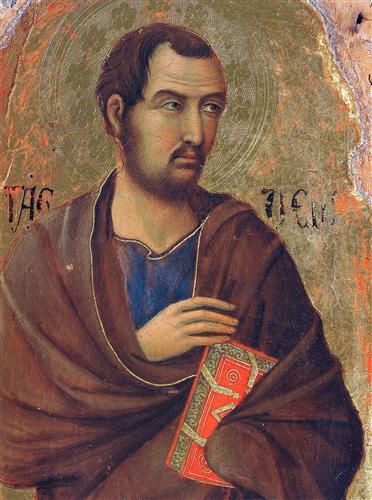
This Fresco of the Apostle Jude was painted by the artist Duccio in 1311.

This Fresco of the Apostle Jude was painted by the artist Duccio in 1311.

According to the legend, St. Jude was a son of Cleopas and his mother Mary, a cousin of the Virgin Mary. Tradition has it that Jude’s father, Cleopas, met the risen Christ on the evening of Resurrection Day while walking to Emmaus and that he was martyred because of his forthright and outspoken devotion to the risen Christ. Opinion is divided on whether Jude the apostle is the same as Jude, the “brother” or cousin of Jesus, who is mentioned in Mark 6:3 and Matthew 13:55-57, and is the traditional author of the Epistle of Jude. He is the patron of impossible causes because the Letter of Jude in the New Testament urges Christians to persevere in difficult times.

The Order of Preachers (the Dominicans) began working in present day Armenia soon after their founding in 1216. There was a substantial devotion to St. Jude in this area at that time, by both Roman Catholic and Orthodox Christians. This lasted until persecution drove Christians from the area in the 18th century. Devotion to Saint Jude began again in earnest in the 19th century, starting in Italy and Spain, spreading to South America, and finally to the United States (starting in the area around Chicago) owing to the influence of the Claretians and the Dominicans in the 1920s.

Saint Jude is the patron saint of the Chicago Police Department. His other patronages include desperate situations and hospitals, perhaps most famously the St. Jude Children’s Research Hospital in Memphis, Tennessee, which has helped many children with terminal illnesses and their families since its founding in 1962. The saint’s feast day is June 19 in the Eastern Orthodox Church, when he is celebrated as “brother of The Lord,” a son of Joseph by a previous marriage.

Wedding Magic: Cranes

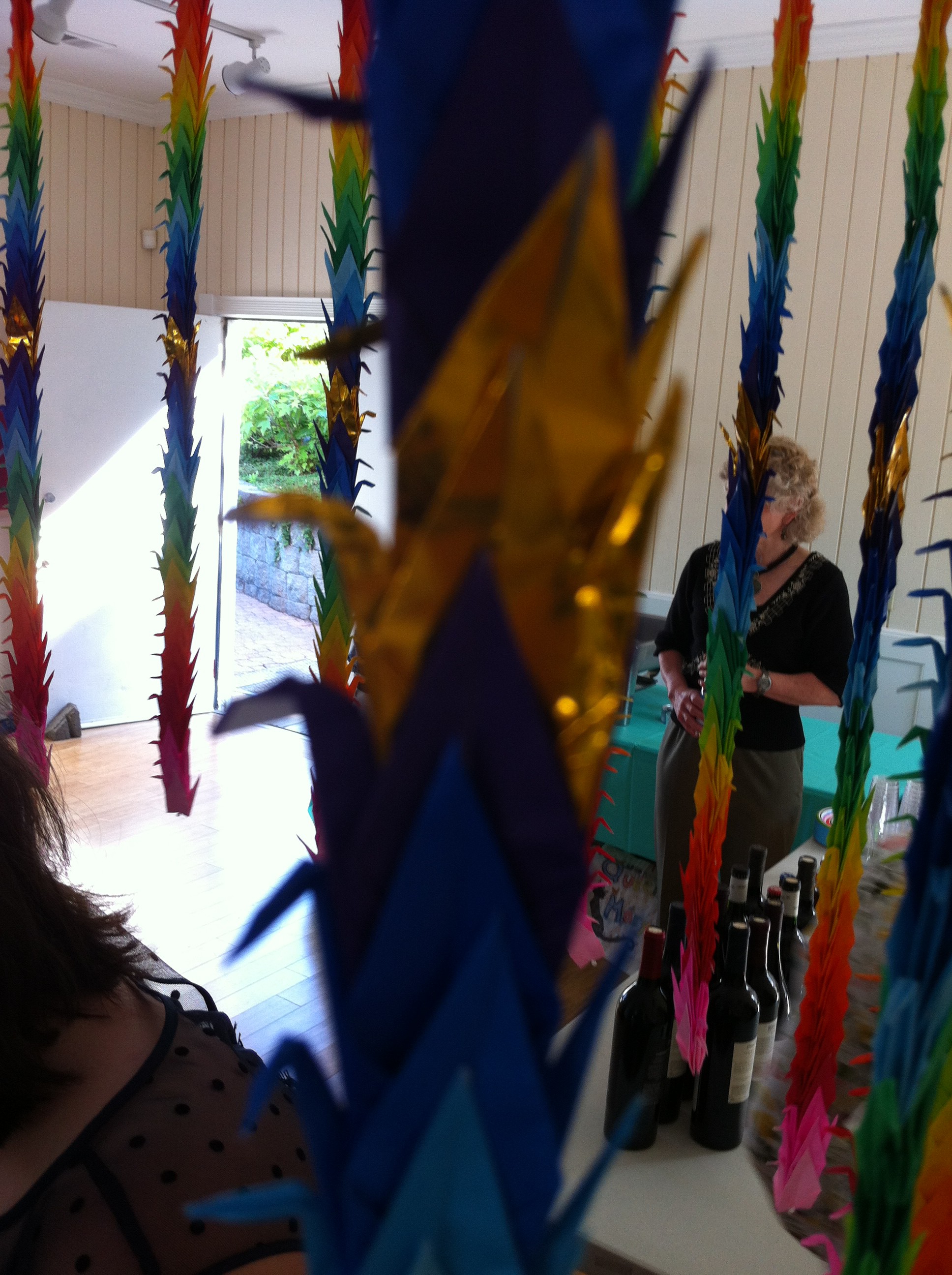
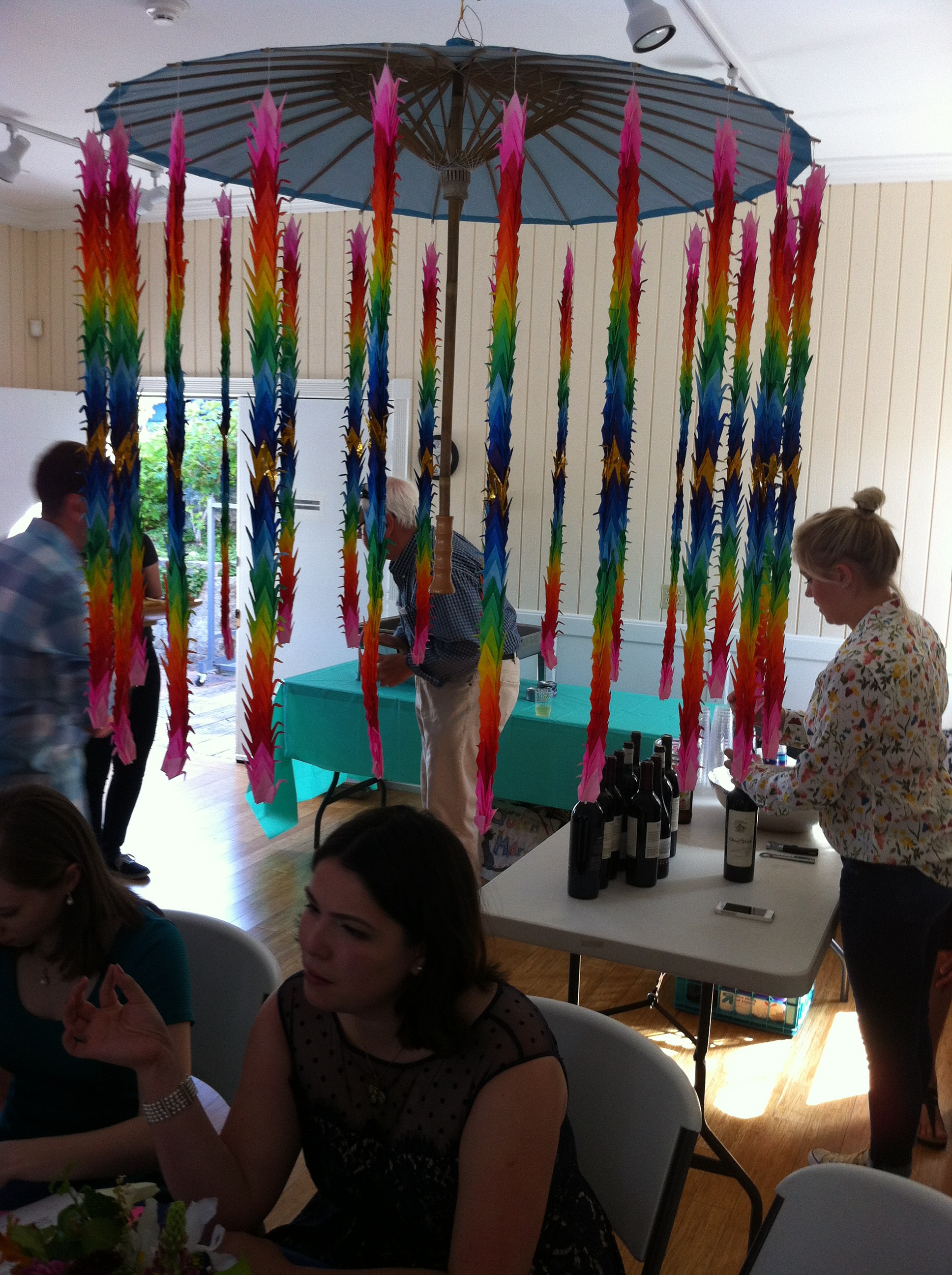
My niece sitting beneath the umbrella adorned with 1,000 paper cranes at her wedding rehearsal dinner.

My niece sitting beneath the umbrella adorned with 1,000 paper cranes at her wedding rehearsal dinner.

A close-up of the 1,000 origami cranes my niece and her new husband folded for their wedding.

A close-up of the 1,000 origami cranes my niece and her new husband folded for their wedding.

I was thrilled and honored to attend the recent wedding of my niece in Seattle. As part of the festivities, she and her husband-to-be had folded 1,000 origami cranes to display at the rehearsal dinner and wedding reception.

Why 1,000 origami paper cranes? An ancient Japanese legend promises that anyone who folds a thousand origami cranes will be granted a wish by a crane. Some stories believe you are granted eternal good luck, instead of just one wish, such as long life or recovery from illness or injury. This makes them popular gifts for special friends and family. The crane in Japan is one of the mystical or holy creatures (others include the dragon and the tortoise) and is said to live for a thousand years: That is why 1000 cranes are made, one for each year. In some stories it is believed that the 1000 cranes must be completed within one year and they must all be made by the person who is to make the wish at the end. Cranes that are made by that person and given away to another aren’t included: All cranes must be kept by the person wishing at the end.

Although the thousand paper cranes are traditionally given as a wedding gift by the father, who is wishing a thousand years of happiness and prosperity upon the couple, in this case my niece and her husband made the cranes themselves (in alignment with the custom that the cranes must be made by the person receiving the wish). Cranes can also be given to a new baby for long life and good luck. Hanging them in one’s home is thought to be a powerfully lucky and benevolent charm.

A hearty “Congratulations!” to Mary and Erik and may the 1,000 cranes bring all the prosperity and good fortune any couple could hope to receive!