Candlemas (February 2, 2019)=Beginning of Spring

Marking the 40th day after Christmas, Candlemas celebrates the triumph of light/spring over darkness/winter. Candles blessed on this day were among the most powerful talismans available to ordinary folk in the Middle Ages.

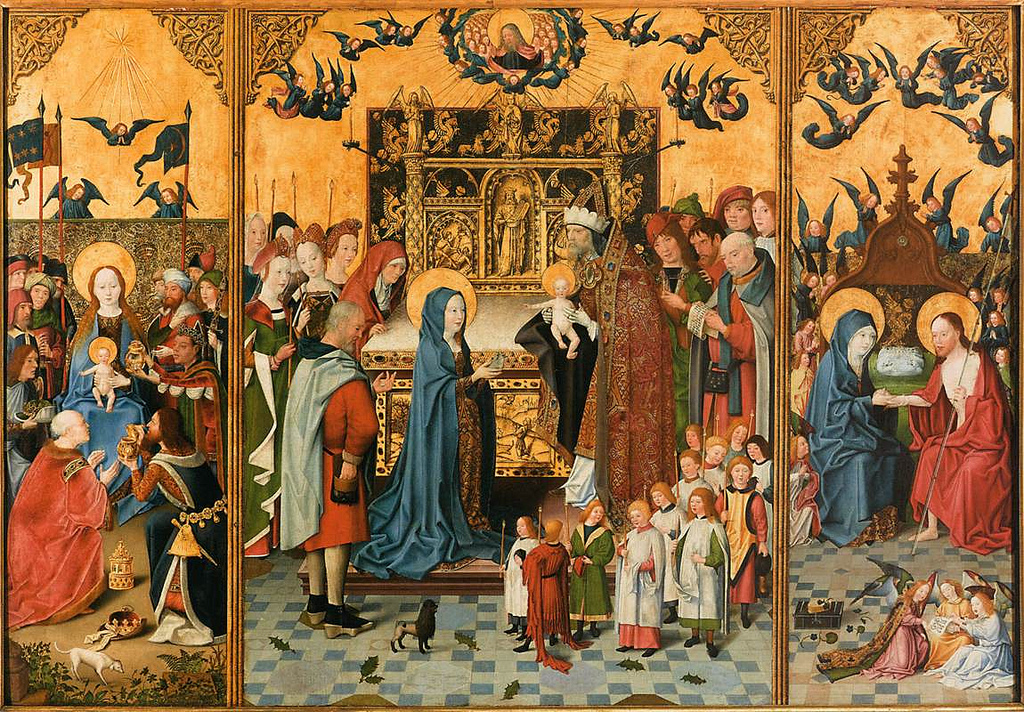
Candlemas, the name taken from the custom of blessing the year’s supply of candles on this day, is the 40th day after Christmas and marks the day Jesus was brought into the Temple by the Mother of God and acclaimed by the elder Simeon as “the light of revelation to the Gentiles and the glory of … Israel.” He also told the Mother of God that a sword would pierce her own heart during the ministry of her Son.

Candlemas, attached to the older feast of Imbolc and the quarter-day between Winter Solstice and Vernal Equinox and thus marking the first day of spring, was even more popular than Christmas in many areas (such as those under the influence of Byzantium and Byzantine Christian culture). People would flock to the churches to obtain the candles blessed on this day as the power of these candles to dispel darkness, death, illness, demons, and nearly anything else that might be considered dangerous to humans was widely reputed to make them the most powerful weapons in the medieval arsenal against evil.

It was also common in western Europe for new archbishops or other leading churchmen to receive their pallium (the “stole,” a vestment similar to a scarf that drapes around the shoulders) on this day, woven from wool sheared from lambs on St. Agnes’ day (January 21).
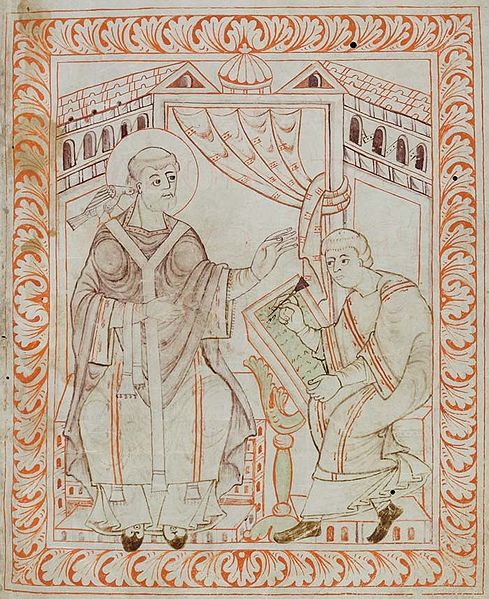
10th century illumination of St. Gregory the Great wearing his pallium.
10th century illumination of St. Gregory the Great wearing his pallium.
St. Agnes in Prague

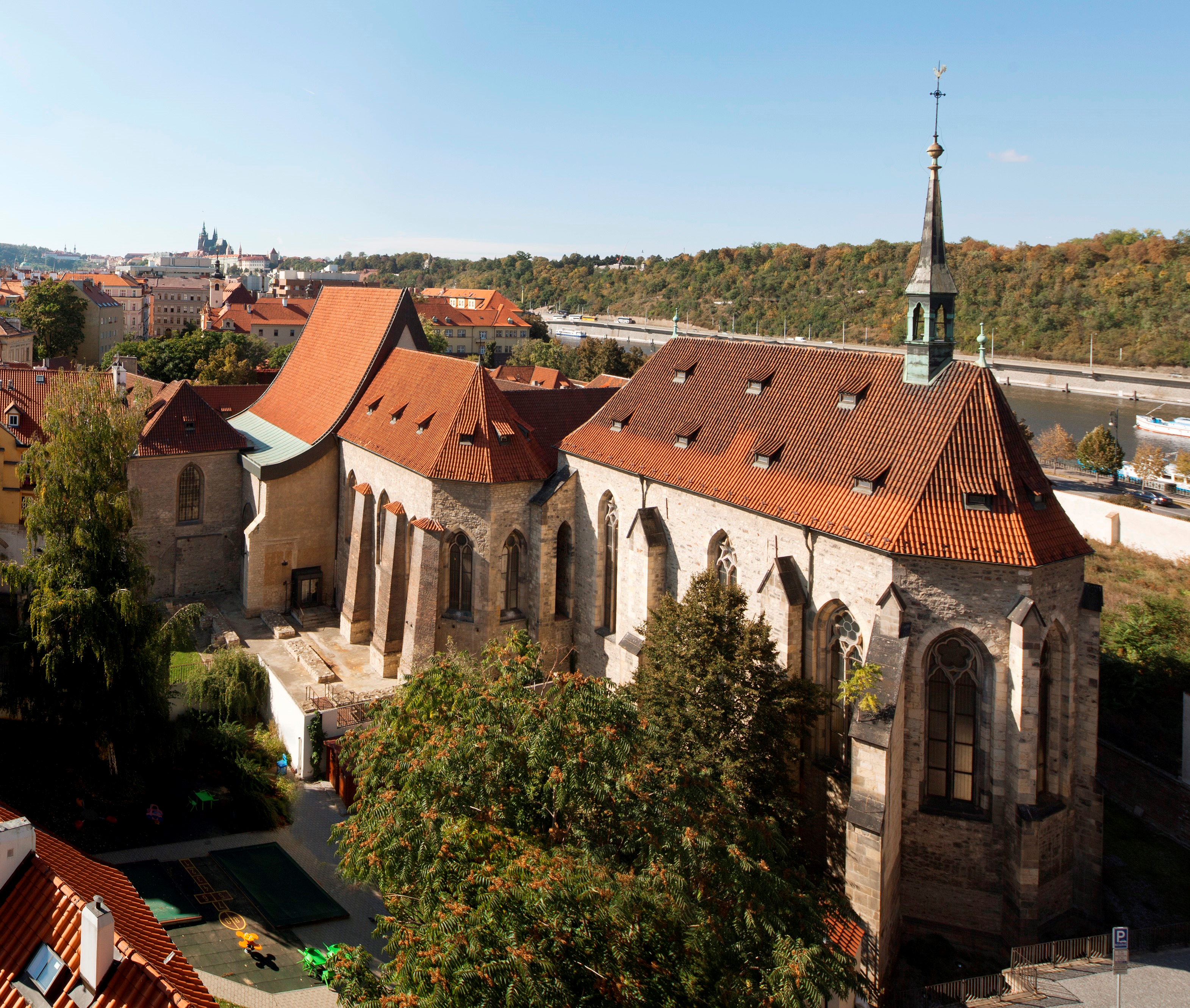
A view of the St. Agnes convent in Prague; the national museum’s stunning collection of medieval art is displayed here.

In the well-known Christmas carol, “Good King Wenceslaus looked out” from his castle in Prague and saw a poor beggar struggling to get home during a blizzard. The king asked his page if he knew who the poor man was and the page answered that he did; the poor man, the page told the king, that the poor man lived several miles away in a hovel near beneath the bluffs overlooking the river that runs through Prague. The poor man’s house was also on the edge of the forest, near “St. Agnes’ fountain.”

St. Agnes was a Czech princess who was born in AD 1200. She became a Franciscan nun–known as “Poor Clares”–and established a convent along the edge of the river, on what was then the edge of the city, right against the forest and in the shadow of the bluff on the other saide of the river. There was a well and a fountain in the convent courtyard which the nuns used for their drinking water. The convent is now the site where the National Museum of the Czeck Republic displays the collection of medieval art.

The princess shared a name with a much earlier St. Agnes, a young woman who lived inn Rome and who was executed for her Christian faith during the Great Persecution of Diocletian in AD 304; this Agnes refused to marry because she wanted to embrace life as a Christian ascetic. Agnes’ bones are conserved beneath the high altar in the church of Sant’Agnese fuori le mura in Rome, built over the catacomb that housed her tomb. Her skull is preserved in a separate chapel in the church of Sant’Agnese in Agone in Rome’s Piazza Navona.

According to Robert Ellsberg, in his book Blessed Among all Women: Women Saints, Prophets, and Witnesses for our Time,
“…the story of Agnes the opposition is not between sex and virginity. The conflict is between a young woman’s power in Christ to define her own identity versus a patriarchal culture’s claim to identify her in terms of her sexuality. According to the view shared by her ‘suitors’ and the state, if she would not be one man’s wife, she might as well be every man’s whore. Failing these options, she might as well be dead. Agnes did not choose death. She chose not to worship the gods of her culture. …Espoused to Christ, she was beyond the power of any man to ‘have his way with her’. ‘Virgin’ in this case is another way of saying Free Woman.”

This Roman St. Agnes was very popular throughout Europe during the Middle Ages. The well and fountain in Prague might have been associated with a church dedicated to her even before the princess built her famous convent there.

The young woman martyred in Rome was a member of a very prominent and wealthy family, which is why the Roman authorities cared that she had embraced the illegal Christian faith. The princess who became a nun evidently knew St. Clare herself, the founder of the Franciscan nuns and a friend of St. Francis of Assisi. Both women named Agnes–the Roman virgin-martyr and the Czech virgin-princess-nun–live on in the Christmas carol we sing every December.

St. Nina and the Georgians

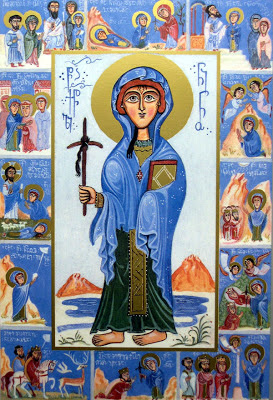
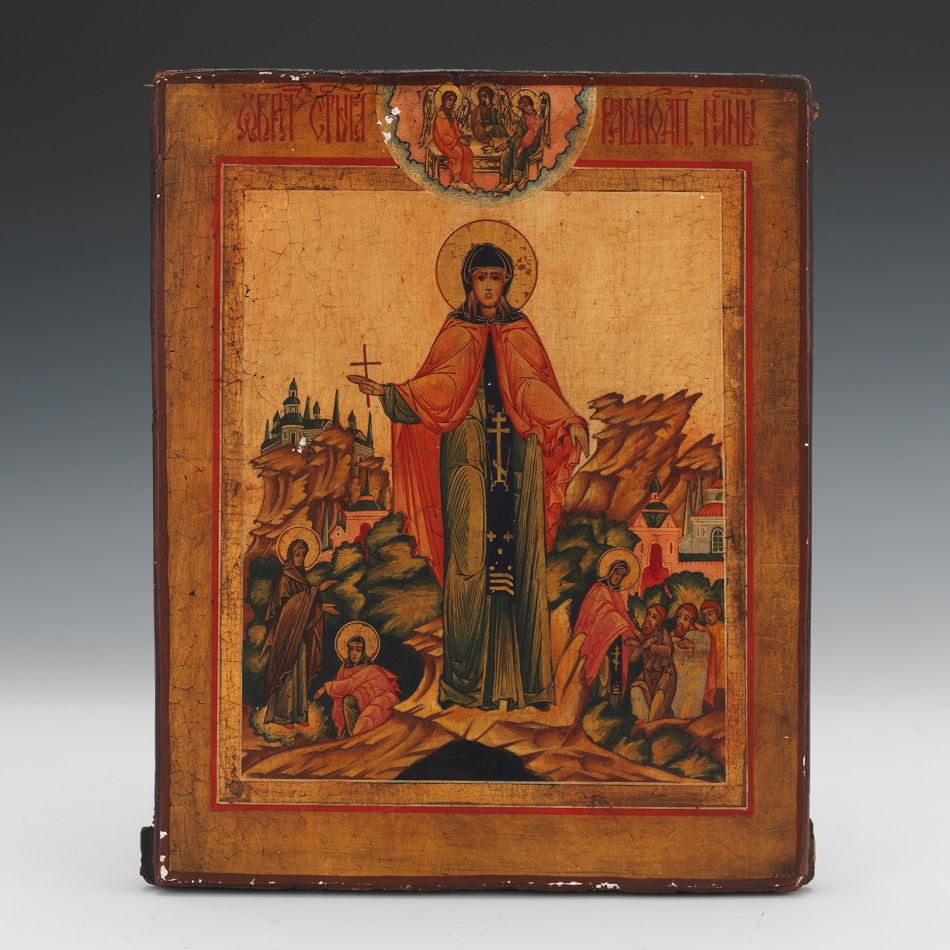
This 20th century icon of St. Nina shows her holding her cross made of sturdy grape vines.

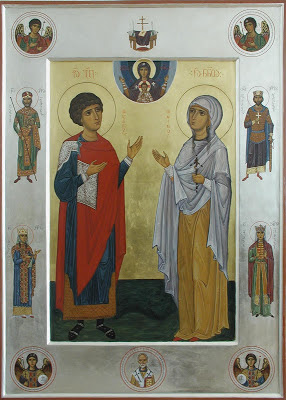
St. Nina, said to be a relative of the famous St. George who killed the dragon, is thought to be the saintly missionary who brought Christianity to the people of Georgia just as St. Patrick brought Christianity to the Irish. Nina was a young girl of a pious family who was apparently abducted and sold into slavery in Georgia. Her prayers healed both the king and the queen on different occasions. Deprived of any other devotional aids, she made a cross from very sturdy grape vines and is often depicted holding the vine-cross. She has many feast days in Georgia, commemorating various events in her life; her principal feast day is January 14, the anniversary of her death in AD 340, her “birthday into heaven.”

The people of Georgia have a fascinating collection of folklore and tales. According to one story, God decided to make life easier for those who were driven out of Eden and forced to work hard on Earth. After a long time of thinking, God decided to create a beverage that would let people return to Paradise for even a short time. He invited all the angels and the devil to taste his creation: wine.

Everyone liked wine, including the devil, but the devil felt obligated to compete with God. So, the devil created chacha, a potent alcoholic drink made from the remains of crushed wine grapes, and invited God to taste it. God drank one glass of chacha, then a second, a third and a fourth. After the fourth, he said to the devil, “Those who will drink three glasses of chacha may be on my side, but anyone who drinks more than that will be yours!”

This icon depicts St. Nina of Georgia, holding her grapevine cross, with her relative St. George the Great-Martyr.

A contemporary icon from Georgia, depicting St. Nina holding her cross made of grape vines, with scenes from her life.