Hampton Court

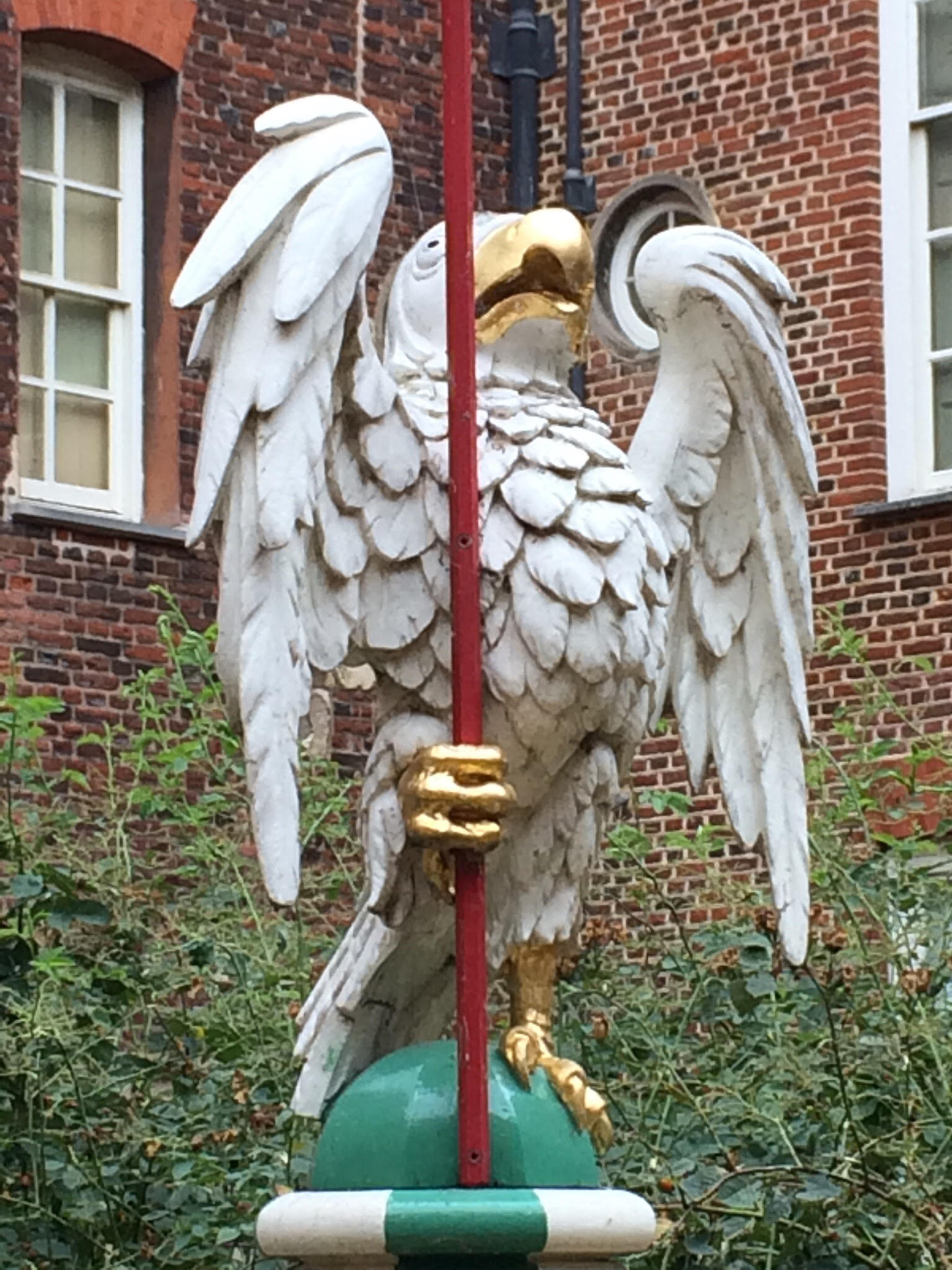
There are ten statues of heraldic animals, called the King’s Beasts, that stand on the bridge over the moat leading to the great gatehouse of Hampton Court. These statues represent the ancestry of King Henry VIII and his third wife Jane Seymour. Queen Elizabeth I replaced some of these animals when she was crowned. This is the white falcon of the Plantagenets.

Only a short train ride from London, Hampton Court is one of the royal palaces of the British monarchs, built by Cardinal Wolsey for himself in 1515. But he gave it to King Henry VIII as a bribe in 1529, an attempt to keep his position as Chancellor and counselor of the king despite his failure to obtain the Pope’s permission for Henry to set aside his wife Katherine of Aragon to marry Anne Boleyn. It has been used by the British royalty ever since although King George II was the last monarch to actually live there.
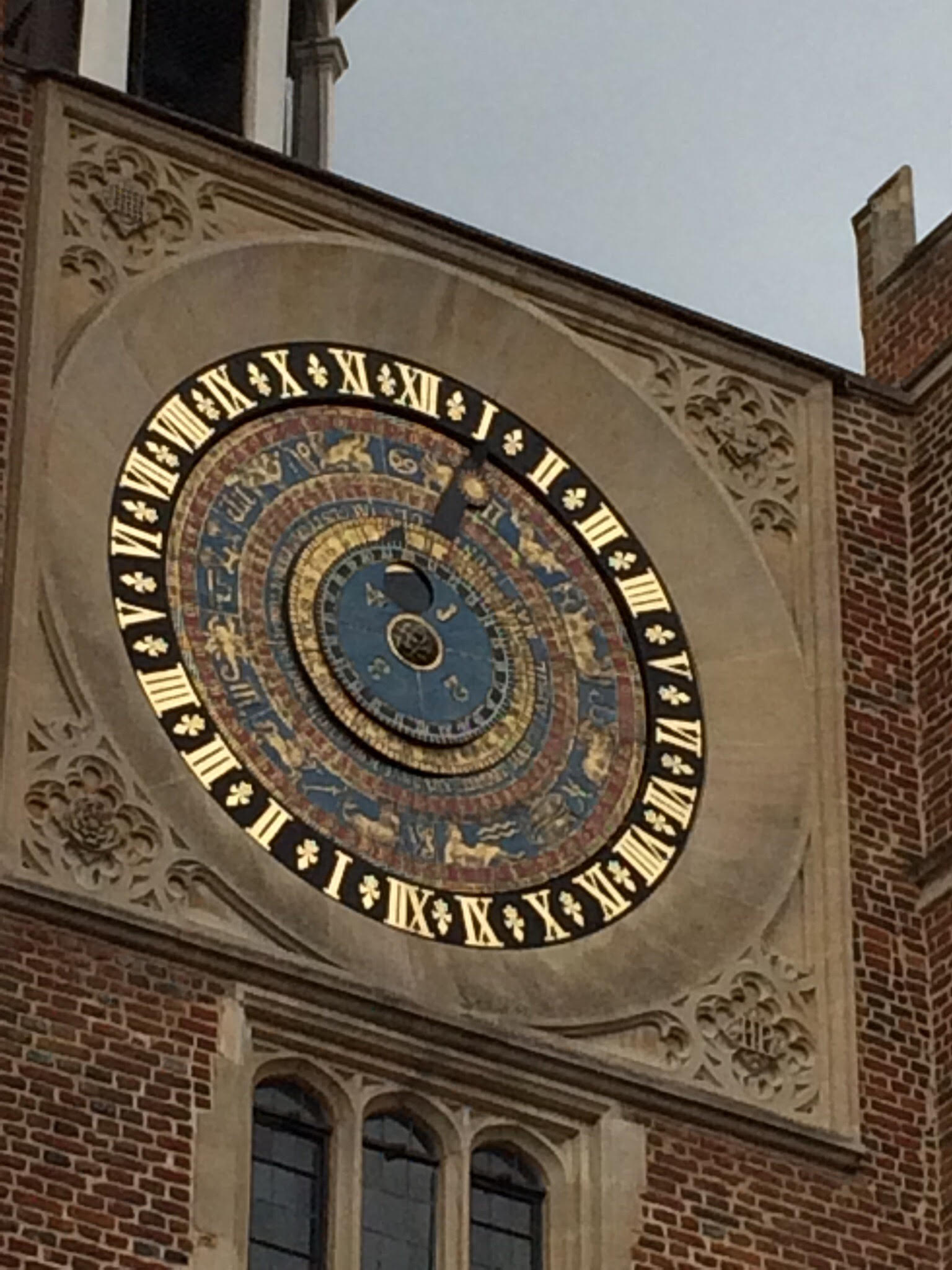
This clock was installed in 1540 on the gatehouse to the inner court at Hampton Court Palace. This pre-Copernican and pre-Galilean astronomical clock is still functioning.
The clock is 15 feet in diameter with three separate copper dials revolving at different speeds and displays the following information:
-Hour
-Month
-Day of month
-Position of the sun in the ecliptic
-Twelve signs of the zodiac
-Number of days elapsed since the beginning of the year
-Phases of the moon
-Age of the moon in days
-Hour when the moon crosses the meridian and thus high water at London Bridge.
The information about tides at London Bridge was of great importance to those visiting this Thames-side palace from London, as the preferred method of transport at the time was by barge, and at low water London Bridge created dangerous rapids.
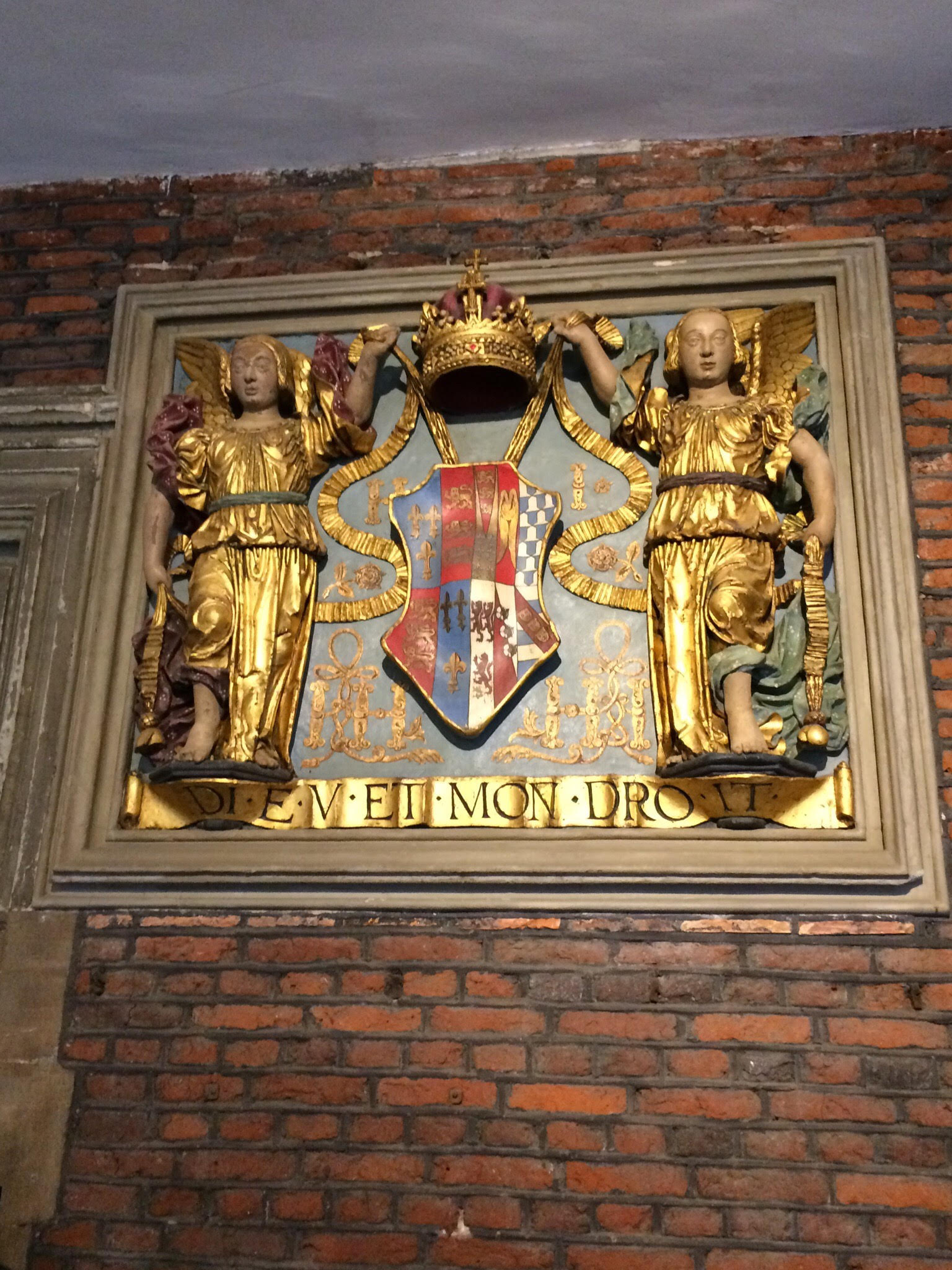

This set of angels, crown, and shield mark the entrance to the royal chapel at Hampton Court. Jane Seymour was Henry VIII’s third wife; she died at Hampton Court after giving birth to Henry’s son Edward. king Henry was devastated at the sudden loss of his ‘perfect’ queen. Her heart is buried beneath the altar of the chapel. A sad white wraith carrying a lighted taper is seen walking hallways of the palace and is thought to be Jane Seymour’s ghost.
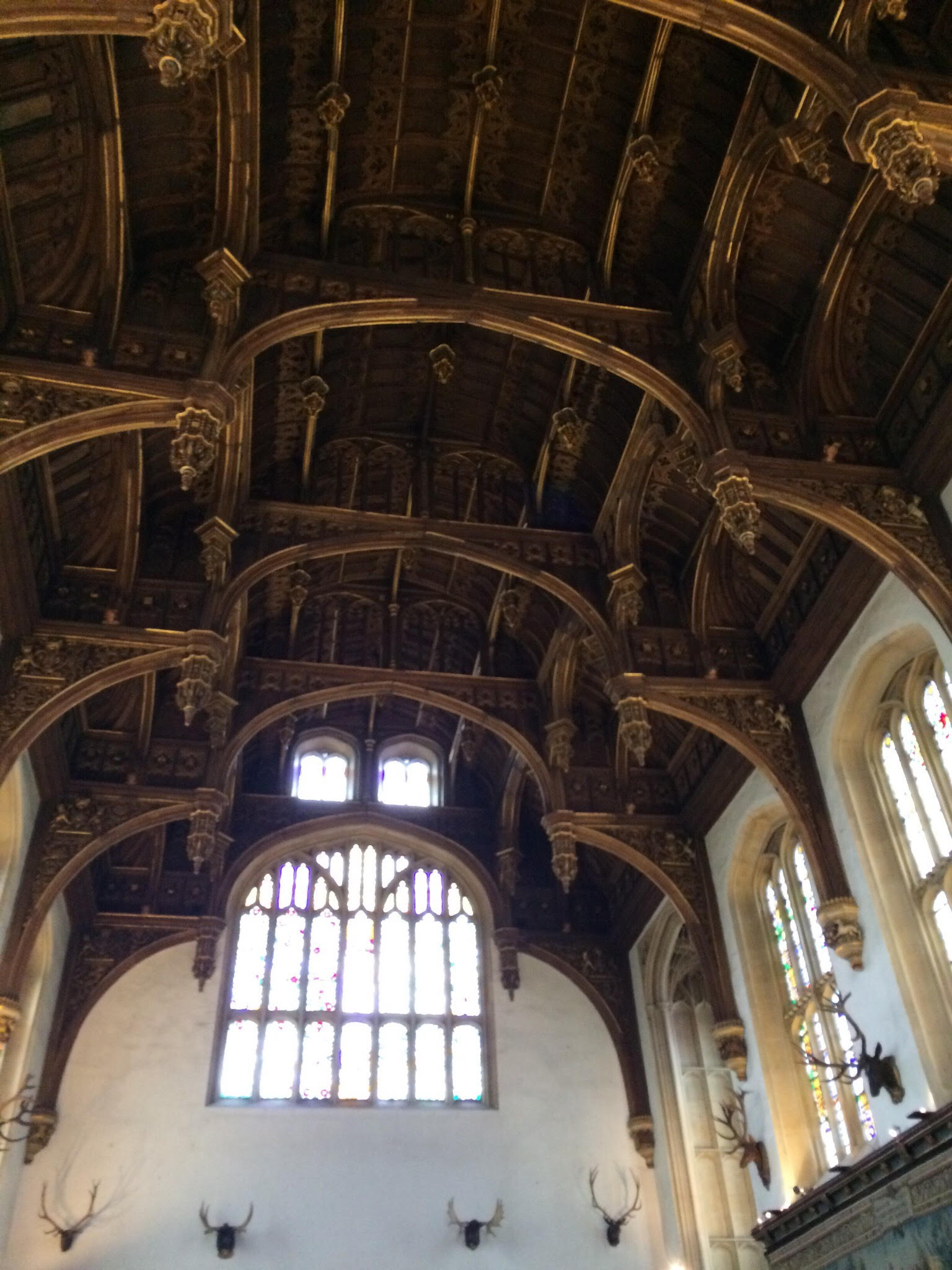

Feasts and banquets were held in the Great Hall of Hampton Court. Dishes included game, roasted or served in pies, lamb, venison and swan. More unusual items, such as conga eel and porpoise could also be on the menu. Only the king was given a fork, with which he ate sweet preserves. Forks were used to serve, cook and carve, but eating with them didn’t become popular until the 17th century.
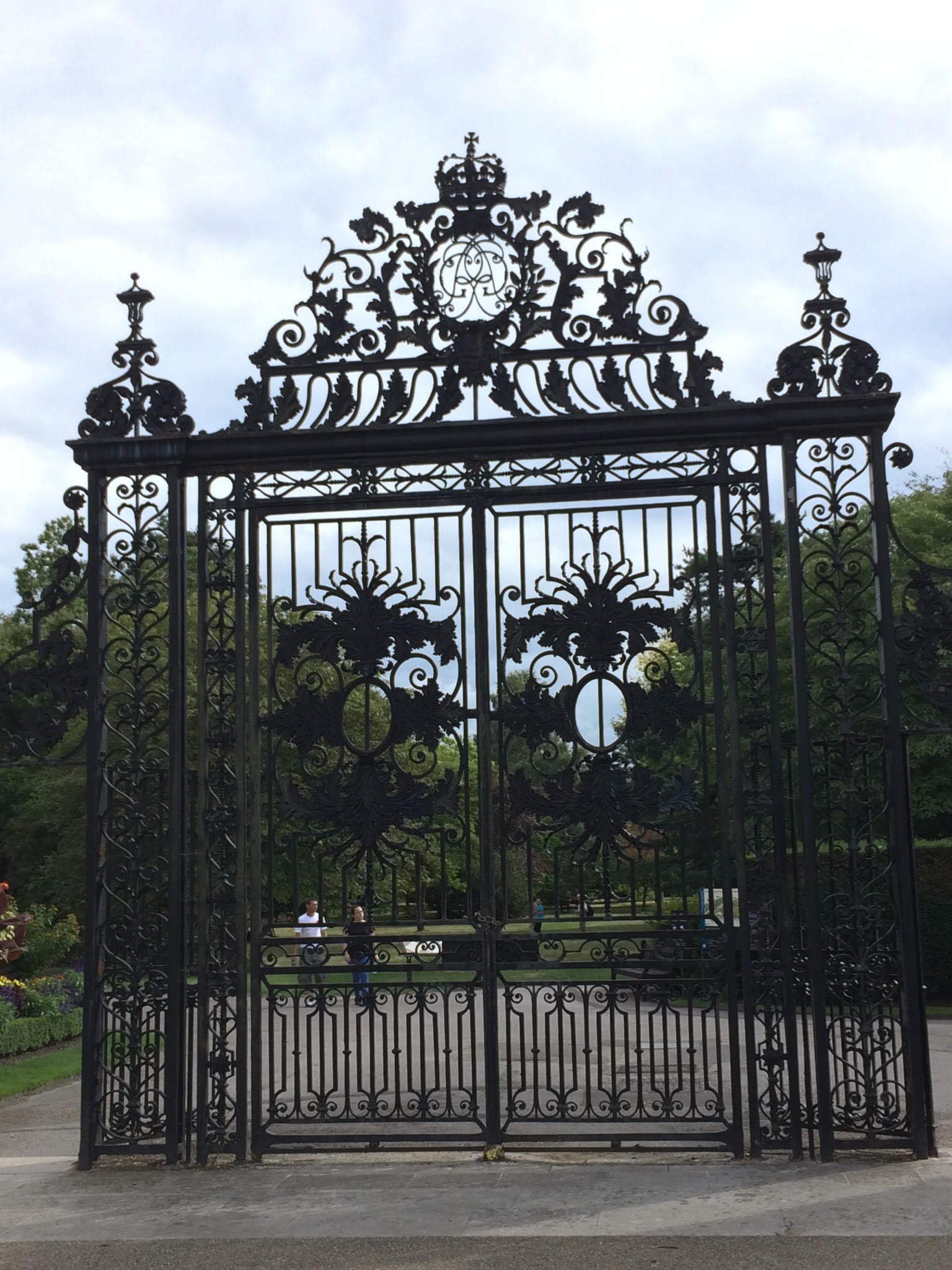
Lion’s Gate at Hampton Court. (photo by S. Morris)
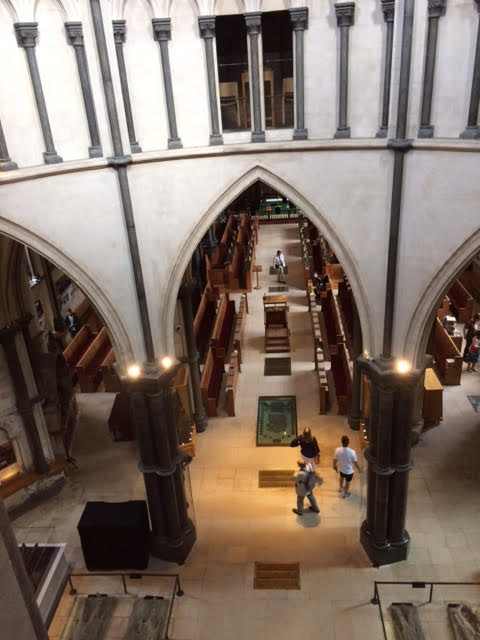
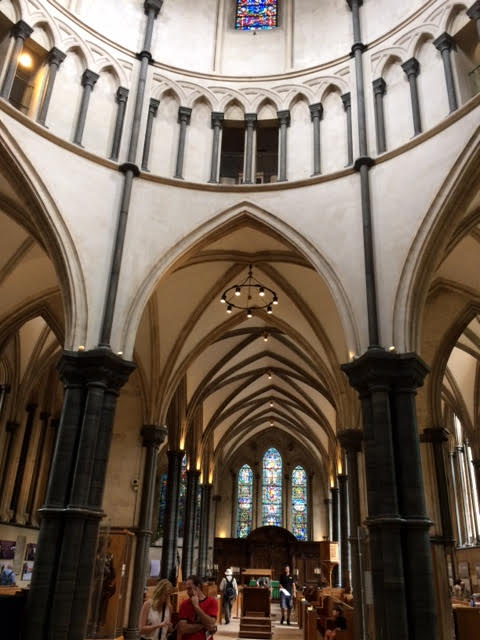
Temple Church

The Temple Church in London was built by the Knights Templar, the order of crusading monks founded to protect pilgrims on their way to and from Jerusalem in the 12th century. The Church is in two parts: the Round and the Chancel. The Round Church was consecrated in 1185 by the patriarch of Jerusalem. It was designed to recall the holiest place in the Crusaders’ world: the circular Church of the Holy Sepulcher in Jerusalem. (photo by S. Morris)

Temple Church in London is a beautiful, hidden gem in London. Most Americans that know about it only know about it because it was featured in Dan Brown’s Da Vinci Code. But the Temple Church is vital to the history of the British monarchy and–much later–the foundation of the United States as well.

Temple Church was King John’s London headquarters in 1214-5. From here he issued two vital preliminary charters, and here in January 1215 the barons confronted him for the first time with the demand that he subject himself to the rule of a charter, the Magna Carta. The ideas of the Magna Carta are the basis for the US Declaration of Independence and Constitution.

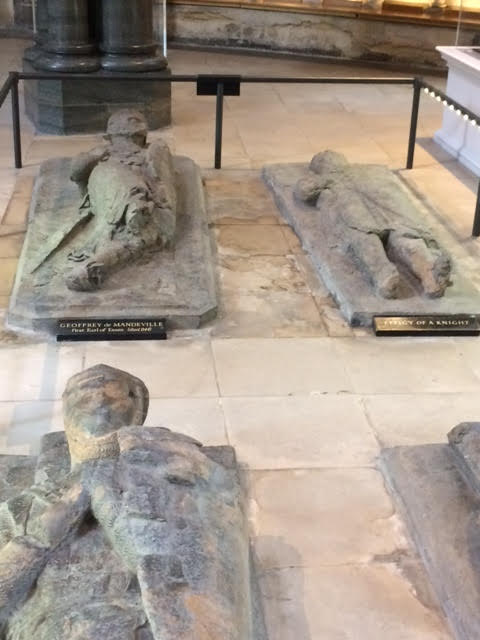
The hero of the Magna Carta was William Marshal, Earl of Pembroke. He mediated between John and the barons, secured the agreement embodied in Magna Carta and was one of the King’s advisors at Runnymede. When John died the Marshal became guardian of the boy-king Henry III and of the kingdom. He re-issued Magna Carta under his own seal in 1216 and 1217, and so ensured its survival. He was buried in the Temple’s Round Church, where his effigy still lies.

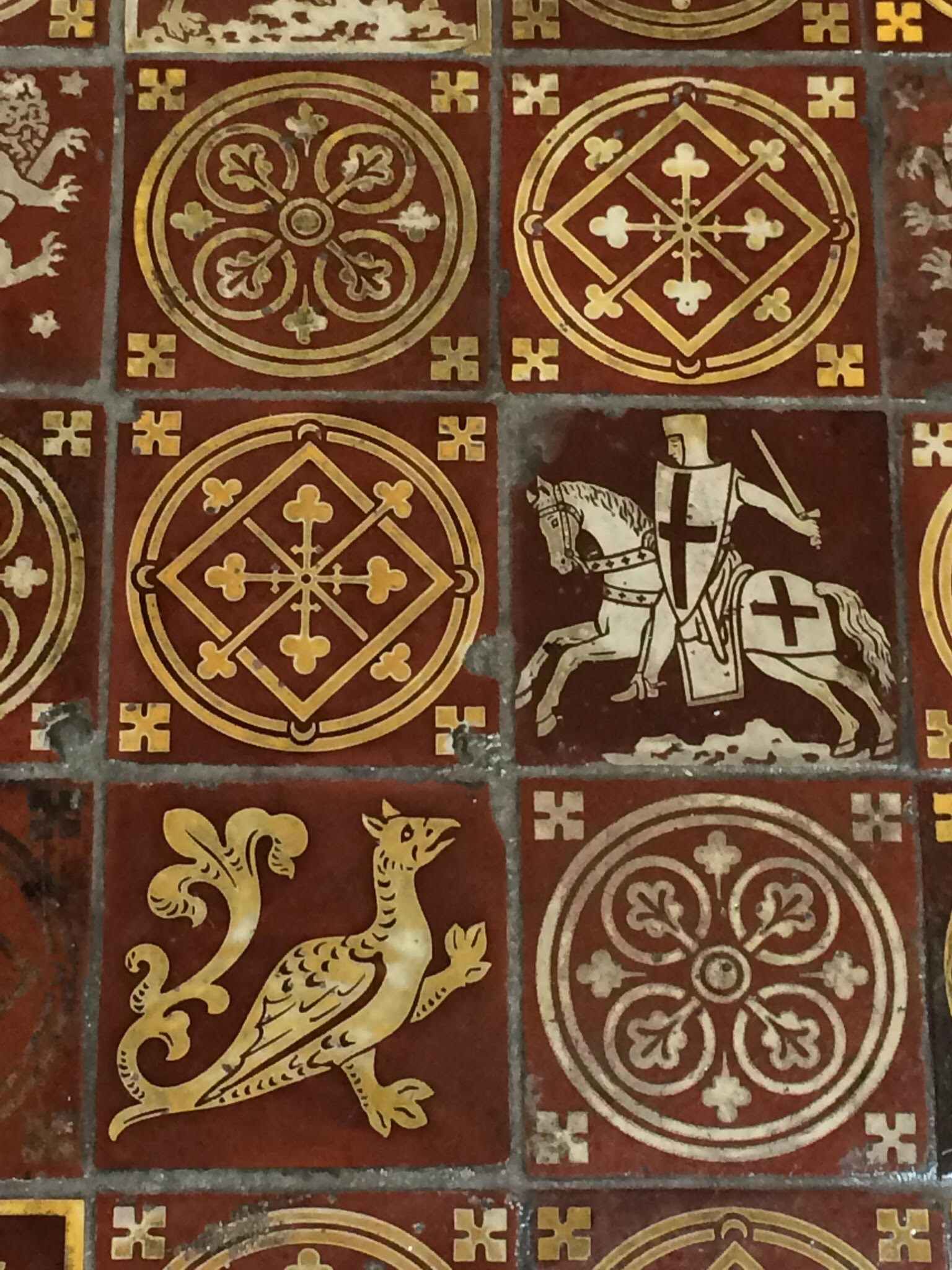
Floor tile in Temple Church, London. (photo by S. Morris)

Swords in Church and the Kiss of Peace

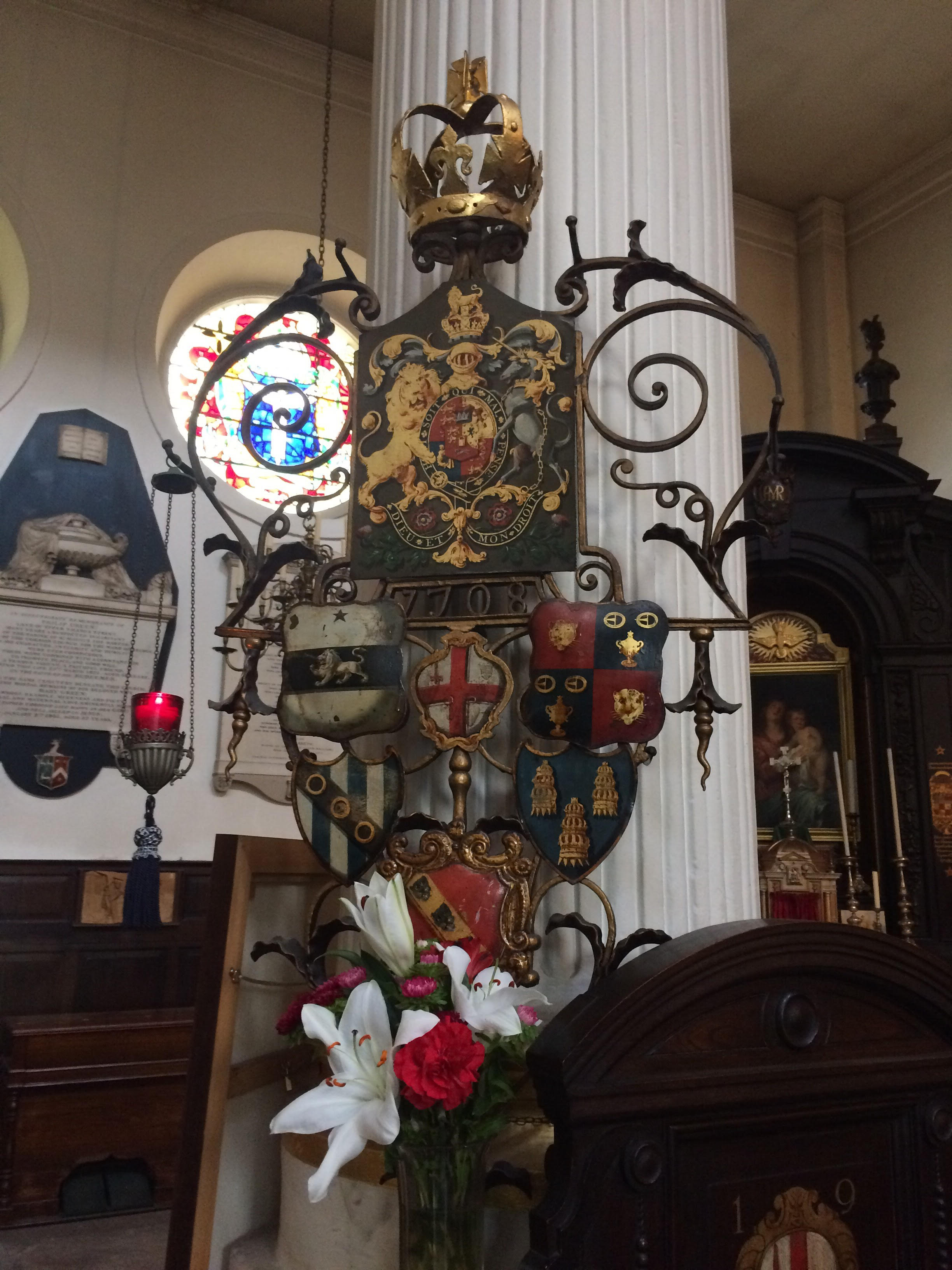
Sword rest in St. Magnus the Martyr Church, London. (photo by S. Morris)

Sword rests, or sword stands as they are sometimes called, were originally installed in the churches of London to hold the Lord Mayor’s sword-of-state when he visited a different church every Sunday–a practice which ceased in 1883.

This practice of setting aside the sword was rooted in a medieval practice of men setting their swords in a prominent place in church so that no fighting would erupt during Mass. The swords were all kept up front so that no one could secretly get theirs to start a fight or secretly steal someone else’s as they slipped out the door. Churches were considered sanctuary spaces where fighting was forbidden. If blood was spilled in a church it had to be torn down and rebuilt. Or it had to be at least re-consecrated with a complicated–and expensive–process of prayer and ritual. Truces between enemies were automatic if they were in a church together.

The Kiss of Peace, exchanged between members of the Church just before receiving Holy Communion, was thought to be the most important act in preparation for Communion. St. Augustine, for example, speaks of it in one of his Easter Sermons:

“Then, after the consecration of the Holy Sacrifice of God, because He wished us also to be His sacrifice, a fact which was made clear when the Holy Sacrifice was first instituted, and because that Sacrifice is a sign of what we are, behold, when the Sacrifice is finished, we say the Lord’s Prayer which you have received and recited. After this, the ‘Peace be with you’ is said, and the Christians embrace one another with the holy kiss. This is a sign of peace; as the lips indicate, let peace be made in your conscience, that is, when your lips draw near to those of your brother, do not let your heart withdraw from his. Hence, these [the Kiss itself as well as Holy Communion] are great and powerful sacraments.”

Hence, the sword rest is an objective witness to the Kiss of Peace and its importance in the life of the community.