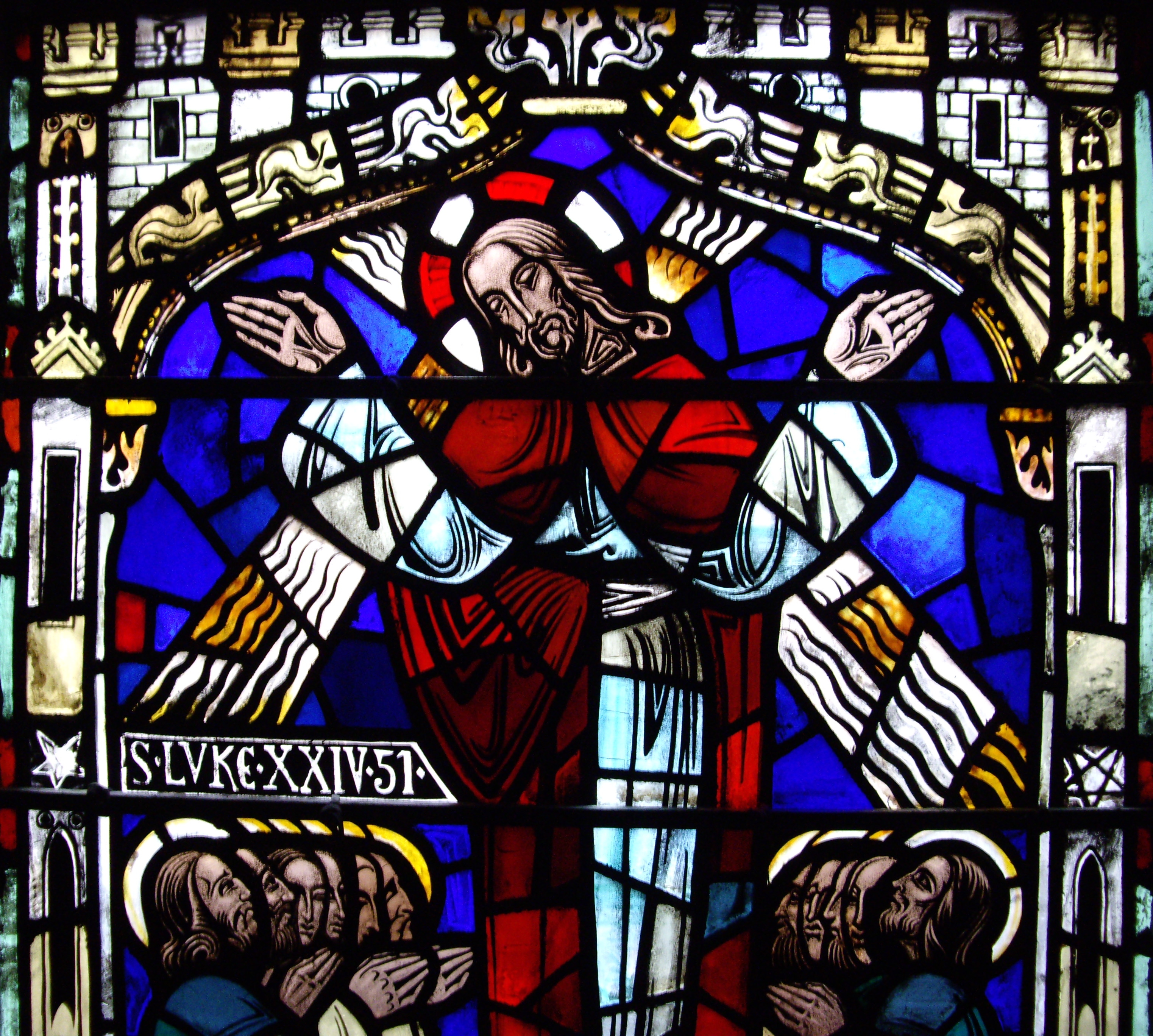
Ascension Day, celebrated on the 40th day after Easter, is always a Thursday and marks the last post-Resurrection appearance of Christ to the apostles.
Ascension Day was a vital day in the pre-modern and agricultural cultures of Christian Europe. In many places it marked the beginning of the ploughing and planting seasons and in England there were processions to ask for God’s blessing on the crops to be planted. These processions often included “beating the bounds,” a practice in which young men would be led around the boundaries of each local farm and their backs lightly beaten so as to impress upon them where the limits of each farmer’s lands were; beating the boys’ backs helped stamp the landmarks and boundaries of each field into the boys’ memories so that any future disputes between farmers could be resolved by asking the boys what they remembered of the processions.
Some parishes continue the custom (e.g. the church of St Michael at the North Gate in Oxford). Today members of the parish walk round the parish boundaries, marking boundary stones (e.g. by writing on them in chalk) and hitting them — rather than the boys of the parish — with sticks. In addition to settling disputes between farmers, knowledge of the parish boundaries was once important since churches had certain duties such as the care of children born out of wedlock in the parish. One of the purposes served by beating the bounds was that of warning the young men of the parish that any sexual misbehavior ought to take place with women who lived outside the parish.
In Venice the ceremony of the Wedding with the Sea was traditionally celebrated on the Feast of the Ascension, while in Florence the holy day was observed by having a dove slide down a string from the high altar of the cathedral to ignite a large decorative container filled with fireworks in front of the main entrance of the cathedral.
There is a veritable treasure trove of folklore and folk practices associated with Ascension Day in the Encyclopedia of Superstitions, Folklore, and Occult Sciences, which you can read here. You can also read more in the very interesting study Eastertide in Pennsylvania which describes Pennsylvania Dutch customs.